
Redhill / Oven care
Oven Cleaning Redhill
When another person is responsible for the property, an oven-cleaning enquiry needs a clear line of agreement. For Redhill, establish who can approve the scope and cost, who knows the appliance and who can provide entry. Share the same brief so the appointment does not depend on conflicting assumptions.
- Establish who can approve the proposed work
- Share current appliance details with the booker
- Connect entry arrangements with the agreed scope

Keep the decision and the description together
The person calling may not be the owner or the person using the oven. Before enquiring about oven cleaning in Redhill, clarify who can authorise the work. Ask for a current description of the appliance and known damage rather than relying on an old list of property contents.
Give the complete address and ask about availability by phone before organising other people’s time. Published area information is a starting point for an enquiry, not confirmation of a particular visit. Explain any deadline, but keep the agreed appliance clean separate from property requirements set by somebody else.
A useful shared brief names the compartments, accessories and priority marks. It also identifies optional work and the person who can agree a change. This lets the person providing entry understand the task without being asked to make unexpected decisions on behalf of the responsible contact.
Keep the responsible person involved throughout
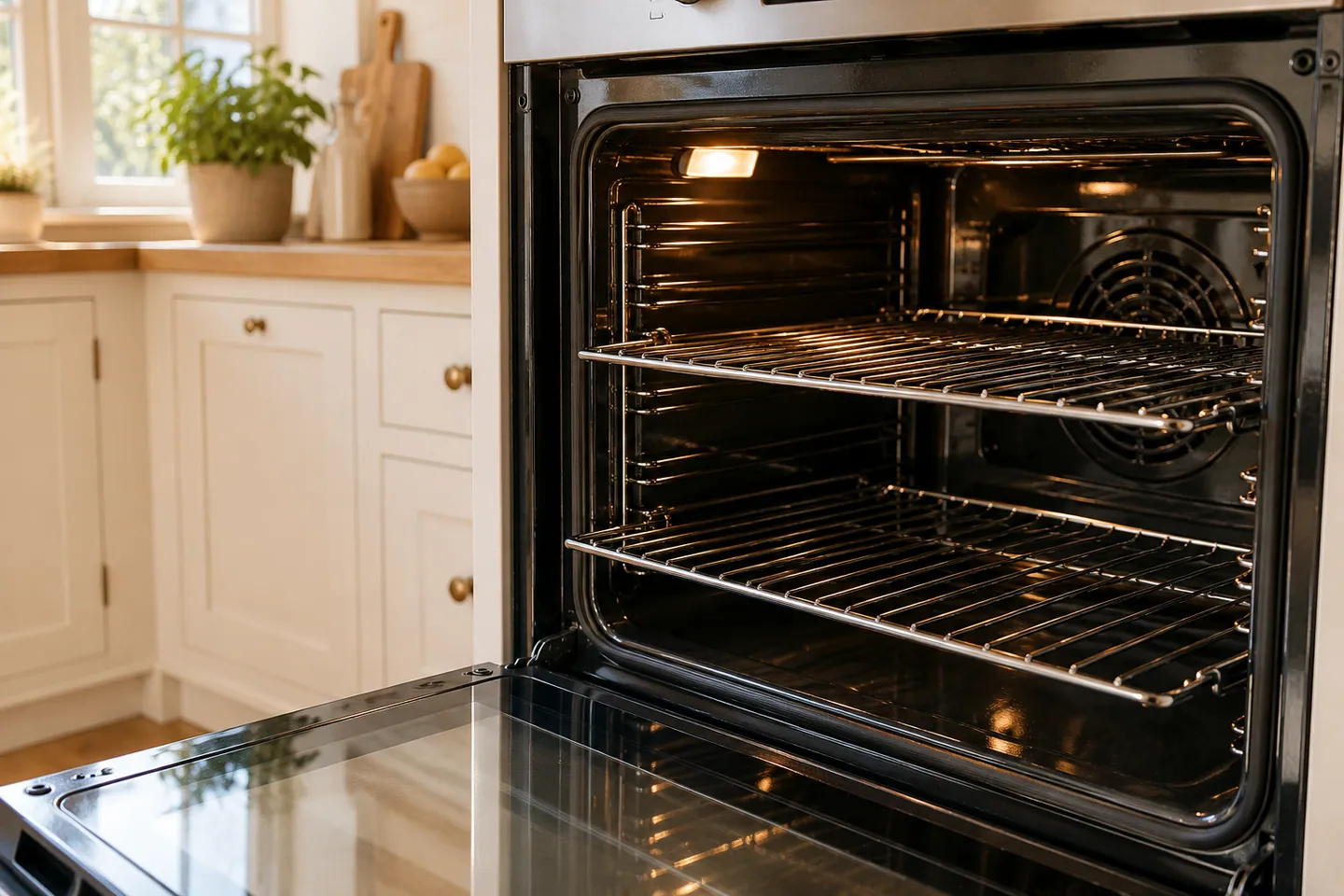
Confirm the authorised task on arrival
With the oven cold, identify the appliance and included parts against the shared brief. Point out known damage and the areas that prompted the enquiry. Specialist liners, self-cleaning features and unusual fittings should be discussed before cleaning. If the appliance or requested scope differs from what was described, resolve that with the appropriate person rather than treating presence at the property as authority to approve additional work.
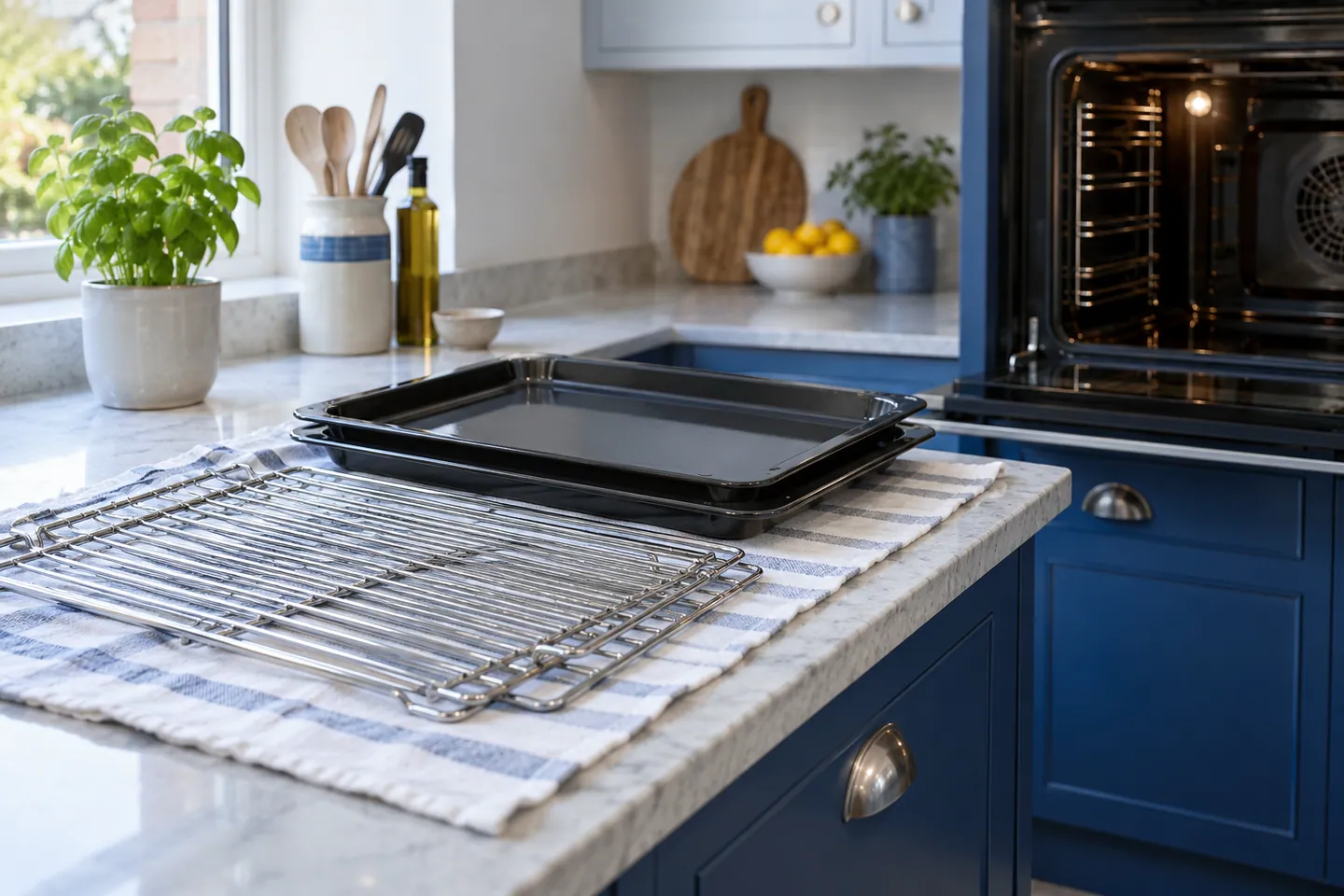
Keep cleaning within the agreed boundaries
Suitable accessible interior and exterior surfaces, removable racks and trays can form part of the oven clean. Door glass is subject to model-specific access. The work should not silently extend to loose cookware, surrounding cupboards or another appliance. If an extra request arises, clarify the proposed work and any change to price or allowance with the person able to approve it.
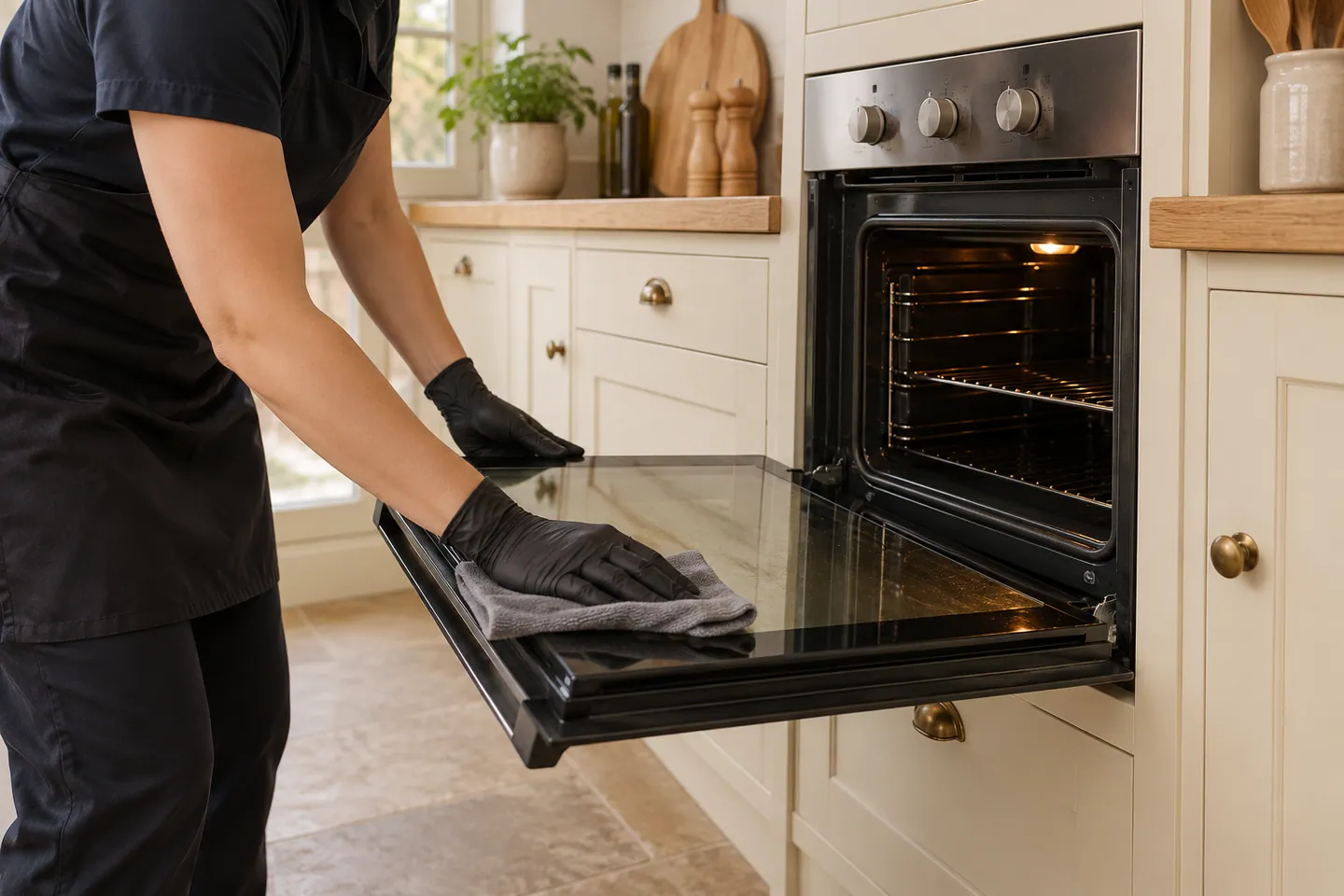
Make the final review useful to the contact
Review included surfaces and ask about marks that remain. Check agreed accessories are in place and confirm guidance for next use. Pass relevant information to the responsible person, especially where a permanent mark or damaged finish remains. Do not describe cleaning as a repair or promise that the result will meet an unrelated inspection standard; report the actual agreed work and its practical limits.
Gather a reliable appliance description
A category helps, but the number of compartments, fittings and their condition makes the enquiry actionable. Ask someone with recent access if details are uncertain.
Single oven
Identify its cavity, shelves and tray, plus whether it is fitted or freestanding. Include the make and model if available and mention any separate cookware to be considered.
Double oven
Describe both compartments and confirm which are required. A smaller oven or grill can have a separate door and set of accessories that should be named in the brief.
Range cooker
List the cooking cavities rather than assuming every section needs work. Keep the hob and extractor distinct from the oven request even if they appear together in a property description.
Prepare through the person with access
Arrange for the oven to be cold, food and loose pans removed, and nearby belongings cleared. Ensure the route to the kitchen is practical and the included accessories identifiable. Keep the manual available where possible, especially for specialist surfaces.
Nobody needs to remove glass, detach liners or move a fitted appliance to prepare. Report faults and damage beforehand. If the property is not regularly occupied, check practical readiness and access directly instead of assuming the person providing entry has already dealt with every requirement.
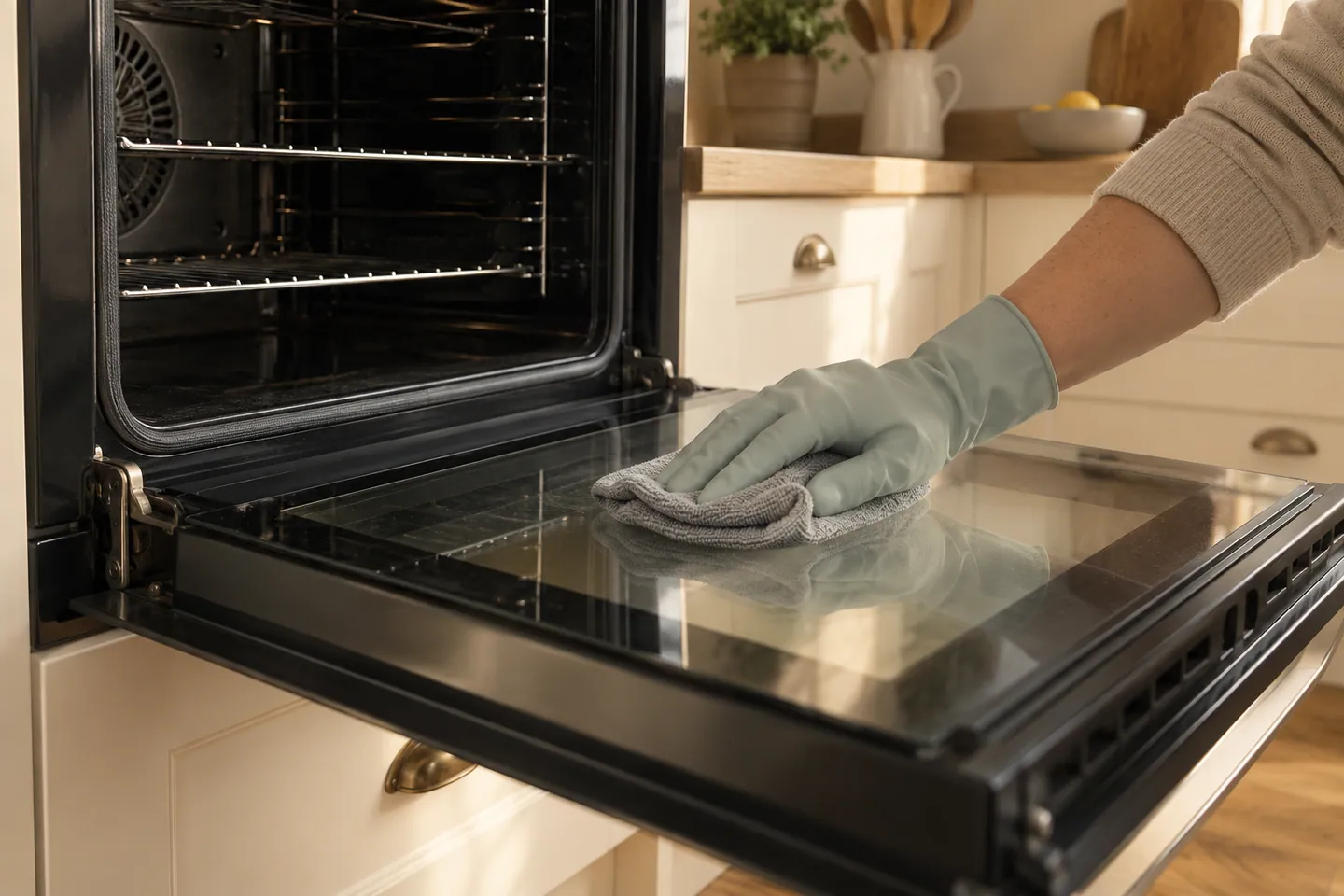
Use one brief for everyone involved
Cleaning work to identify
- Suitable accessible oven interior and exterior areas
- The shelves, trays and glass access agreed for the model
- A review of existing condition and remaining marks
Separate decisions
- Technical diagnosis, repairs and replacement parts
- Unapproved extra appliances or wider property cleaning
- Guarantees about inspections, deposits or handover decisions
Authority to provide entry is not automatically authority to add work. Make that arrangement clear before the appointment. A concise scope and confirmed price help the responsible person and the person on site work from the same information.
Agree cost before circulating the appointment
Single ovens are published at a guide of £50–75, doubles £75–100 and ranges £100–130. Obtain the actual quote for the described model, condition, cavities and accessories before passing on a total. Do not present an initial guide as a price already accepted by the responsible person.
For extras, identify hob cleaning or kitchen deep cleaning separately. Typical oven work may take around one to two hours depending on scope and deposits; ask for the appropriate allowance before arranging a tightly timed key or access handover.
Pass care information to whoever uses the oven
Follow the appliance manufacturer’s instructions for suitable routine cleaning, including specialist liners. Once cold and safe, address appropriate spills and keep removable trays under review. Existing scratches, worn coatings or permanent stains can remain and should not be repeatedly treated as fresh residue.
If you coordinate future work, ask for an updated condition description first. Cooking habits, accessories and access can change, so a previous visit does not establish an identical next job. New operating faults should be reported separately because cleaning is not appliance diagnosis or repair.
Authority, access and property arrangements
Who should approve the quotation?
Identify the person responsible for authorising the work and cost. The booker should know that arrangement before accepting an appointment or discussing optional additions.
Can one person book and another provide entry?
Yes, provided the arrangements are agreed. Share the appliance brief, access information and known condition so the person on site understands the authorised work.
What if the oven has changed?
Update the description before the visit where possible. A different model, missing fittings or new damage may affect the suitable cleaning scope and quote.
Does a property deadline establish a finish time?
No. Explain the deadline and ask about availability and allowance. A typical duration remains conditional and does not guarantee a particular finishing moment.
Will cleaning satisfy another person’s inspection?
No specific inspection outcome should be promised. Establish separate property requirements with the responsible person and agree the cleaning work on its own terms.
Can the person admitting the cleaner request extras?
Clarify their authority in advance. Additional work should have an agreed scope and price rather than being inferred from their ability to provide entry.
Area information for your enquiry
Explore the service areas directory, or choose a relevant nearby area below. When calling, give the full postcode so the address and appointment options can be confirmed.
Arrange your Redhill oven clean
Discuss the appliance, address and work you want included before agreeing the quote and visit.