
John’s Oven Cleaning / London & M25
Hob Cleaning London
Grease around burners, dried spills on glass and residue around controls need different treatment. Tell us which hob you have so the clean can be discussed around its materials and condition.
- Gas, ceramic and induction surfaces
- Suitable supports and caps considered
- A separate scope for the cooking surface
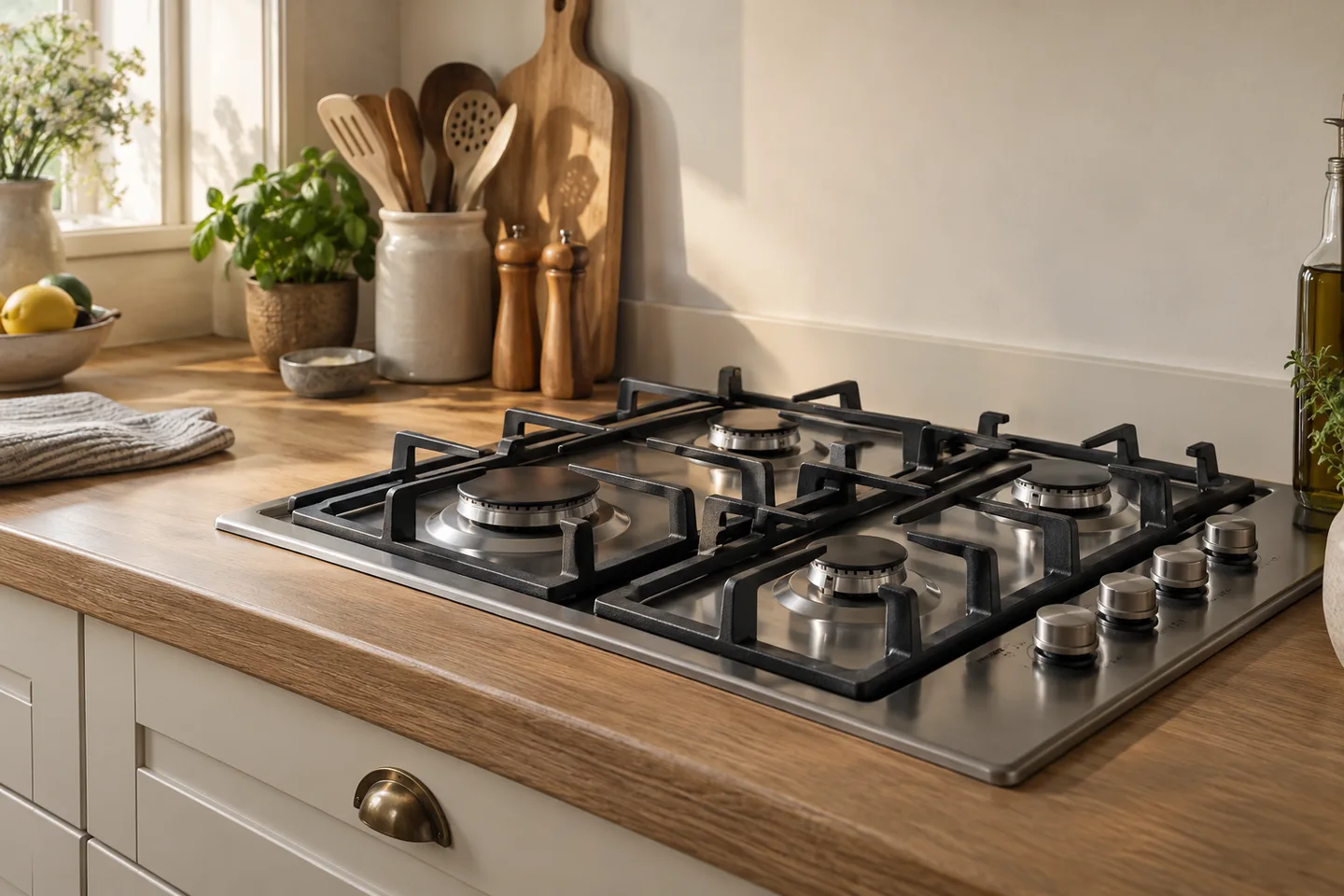
Start with the surface, not the stain
A hob combines several materials in a small area. A gas model can have metal supports, burner caps and a finished base; a glass model can contain touch controls and marked cooking zones. What suits one part may be unsuitable for another. Identifying the hob accurately matters before a cleaning method is chosen.
When you call John’s, say whether yours is gas, ceramic, induction or solid-plate electric, and describe the size and number of zones. Mention chips, cracks or worn markings. Cleaning removes suitable deposits; it does not repair a damaged surface or resolve an electrical or gas fault. A discussion of condition helps separate dirt from wear.
The components to include in your quote
The service concerns the cooking surface and the accessible areas agreed for the visit. On a gas hob, discuss removable supports and caps as well as the base. On smooth glass, mention dried food, grease around the controls and residue at the edges. The cleaner needs to know which components can be removed according to the manufacturer.
Ask specifically about knobs, seals and joins with the worktop. These can be overlooked when a quotation simply says “hob”. An extractor is a separate appliance, while the oven beneath has its own requirements. Arrange oven cleaning alongside the hob if both need attention, with each item described in the quotation.
- Cooking surface and accessible edges
- Suitable removable supports and caps
- Controls and joins within the agreed scope
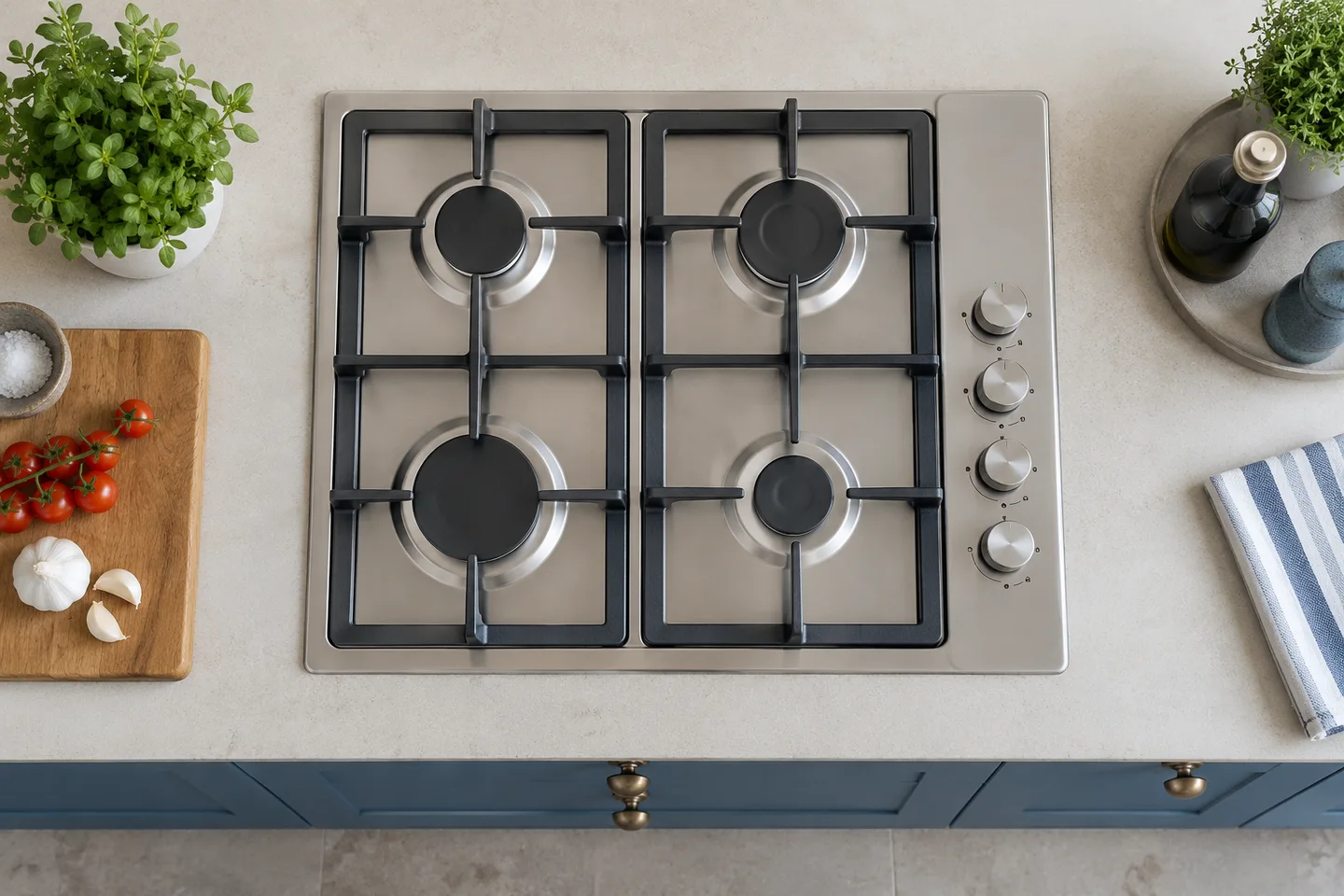
Gas hobs: the supports, caps and base
Food spills collect beneath pan supports and around burners. Explain the supports’ material if you know it and keep the appliance instructions to hand. Components should only be removed and replaced in the way permitted for that model; ordinary surface cleaning is not a reason to alter a gas connection.
A burner that is difficult to light, a damaged cap or a persistent fault is important information. Do not describe a performance problem simply as dirt and assume cleaning will resolve it. Specialist repairs and gas work are separate from a surface-cleaning enquiry. After removable components have been handled, ask about the final checks and the guidance for using the appliance again.
Ceramic, induction and electric plates
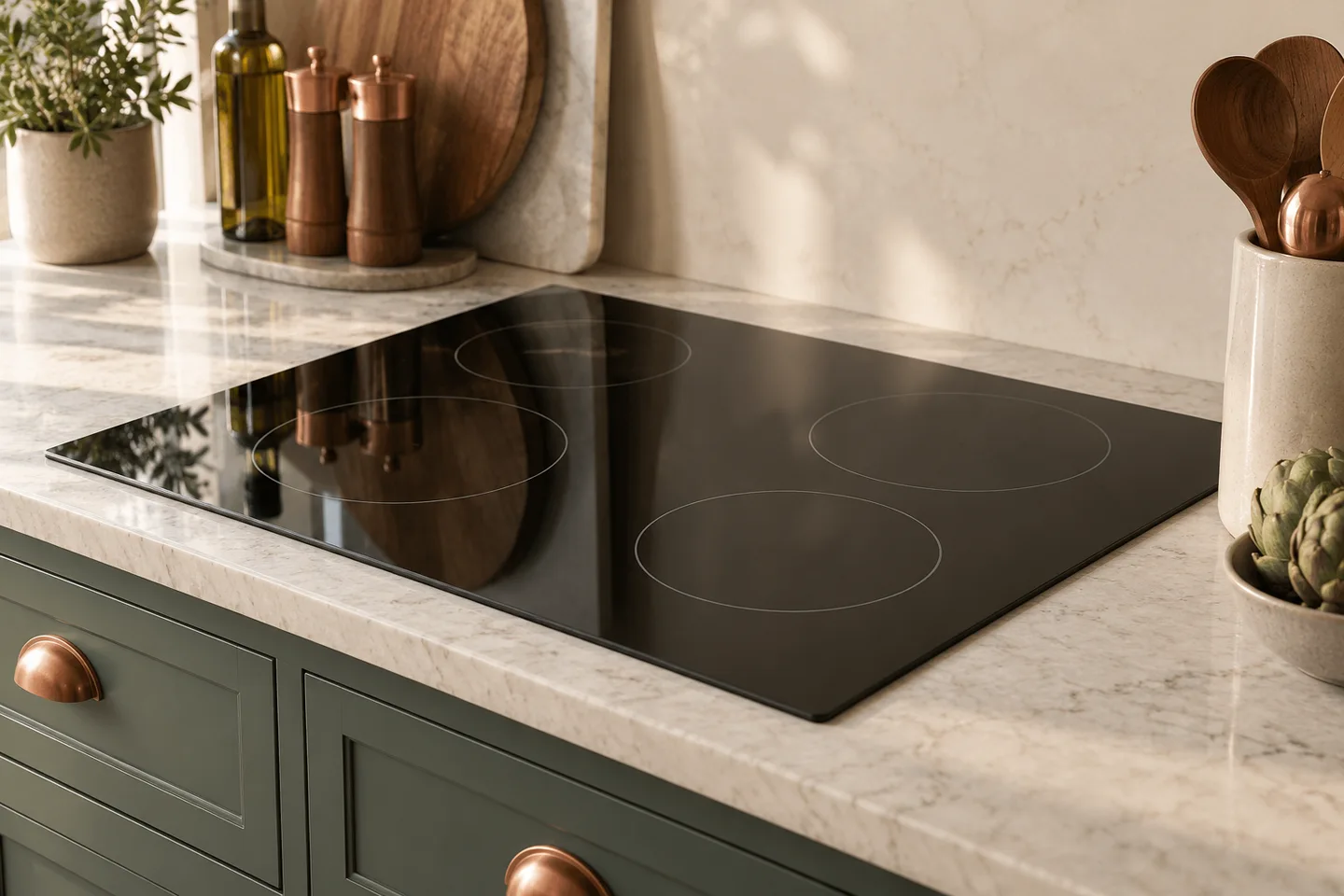
Dried food on glass can resemble a permanent mark, while scratches and worn graphics can remain after a clean. Discuss condition before work starts so the difference between removable residue and damage is understood. Appropriate tools and products depend on the finish and the manufacturer’s advice.
Solid electric plates have a different construction from glass, although both use electricity. Describe rust, flaking finishes or damaged edges rather than assuming they can be cleaned back to new. For worktops and cupboards around the hob, consider a kitchen deep clean instead of extending the hob booking to unspecified surfaces. That keeps the planned work and price clear.
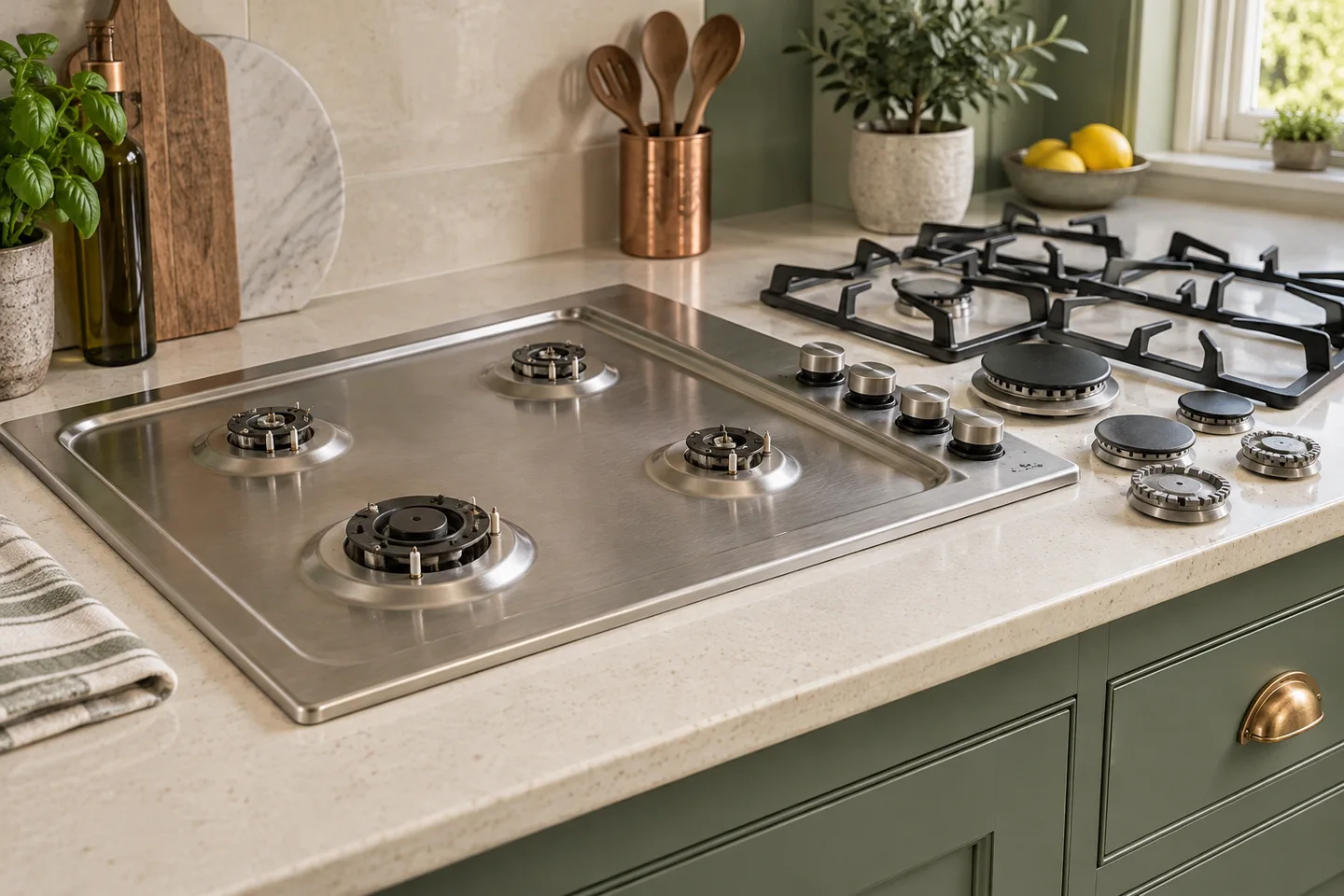
Making the cooking area ready
Allow all cooking zones and removable parts to become cold. Clear pans, utensils, ingredients and small appliances from the immediate work area. Make sure there is access to the controls and explain restrictions before the appointment. Follow the manual about switching off; do not disconnect services yourself as part of preparation.
Mention specialist worktop materials next to the hob, particularly if previous products have marked them. If you have already tried a cleaner, explain what was used and where. That helps the remaining residue to be assessed without guessing. Leave fitted parts in place unless a specific removable item has been discussed for preparation.
- Cold cooking zones and clear access
- Loose cookware removed
- Existing damage and previous products disclosed
How the visit is discussed and checked
The starting point is the hob’s type, condition and agreed tasks. Suitable accessible surfaces and removable components receive attention using an approach appropriate to their materials. Areas around controls and edges need care because they contain joins, graphics and fittings rather than one uninterrupted surface.
Review the finish and ask about marks that remain. Not all staining is removable and scratches cannot be cleaned away. No single duration for every hob is confirmed here, so request an allowance for yours. If a tiled splashback is greasy too, discuss the tiles and grout separately; they may require different treatment from the appliance below.
Published prices and a complete quotation
The website’s estimated guide is £30–£45 for a single gas hob, £35–£50 for electric, £40–£55 for induction and £40–£60 for ceramic. These are published ranges; the type, condition and work required determine the quotation for your appliance.
Before booking, ask whether the figure covers the supports, caps, controls and edges you have discussed. Confirm VAT treatment and any applicable access or parking costs. Where a hob is combined with oven or extractor cleaning, request a clear combined quote. A price for one appliance should not be taken as including others, and heavy residue may need a different allowance from routine deposits.
Tell a removable mark from a damaged finish
It is useful to describe where a mark sits and how long it has been present. A ring around a cooking zone, a greasy edge and a chip in the glass are not the same kind of problem, even if they appear together. Avoid testing increasingly abrasive products simply to establish what the mark is. Give the cleaner the model information and explain any treatment already attempted. On a hob installed close to stone, timber or painted surfaces, identify those neighbouring materials as well. The work should be planned with the surrounding finishes in mind, especially where a liquid can collect at a join rather than remain on the cooking surface.
Looking after the hob after cooking
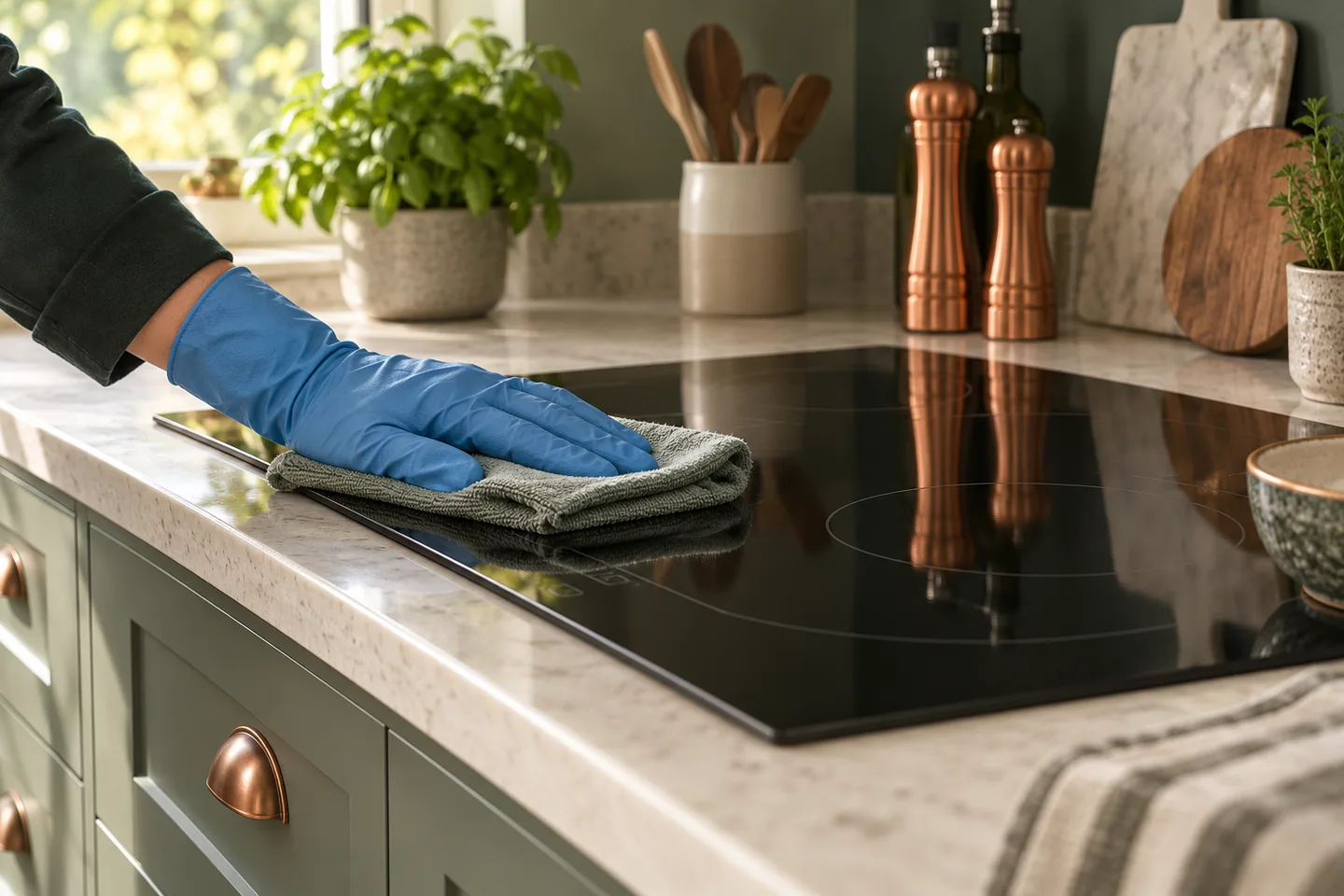
Wait until the surface is safe to handle and follow the manufacturer’s instructions for routine wiping. Tackling spills appropriately helps prevent further deposits from repeated heating. Choose cloths and products for the actual material rather than applying the same approach to glass, metal and enamel.
Notice worn markings, damaged supports and components that no longer sit correctly. These are maintenance concerns, not reasons to scrub harder. A professional visit is useful when residue becomes difficult to manage or detailed attention is needed before a tenancy change or wider kitchen clean. The interval depends on use; a busy family hob and an occasionally used cooker will not accumulate the same deposits.
A quote for your appliance
Published guide prices
Confirm the price for your hob type and the supports, caps or other components included. An oven or extractor requires a separate item in the quotation.
| Appliance or work | Published guide |
| Single gas hob | £30–£45 |
| Electric hob | £35–£50 |
| Induction | £40–£55 |
| Ceramic | £40–£60 |
Published price source — checked 15 October 2026.
Before you book
Hob Cleaning questions
Do you clean induction and ceramic hobs?
Both are listed among the available hob services. Give us the exact model and describe the surface so the proposed work matches its construction and condition.
Will scratches disappear after cleaning?
No scratch-removal promise is made. Food residue can be removed where suitable, but scratches, chips and worn graphics are changes to the material and may remain.
Are pan supports part of the price?
Discuss their number, material and condition when requesting a quote. Confirm that they are included rather than assuming every removable accessory is covered by the published guide.
Should I remove control knobs beforehand?
Leave fitted controls in place unless preparation is specifically agreed for your model. Removing parts without suitable instructions can create a problem unrelated to surface dirt.
Does the price include the extractor?
An extractor is a separate appliance. Ask about adding it, its agreed work and cost. The hob guide ranges should not be understood as extractor-cleaning prices.
Can cleaning fix an ignition problem?
A cleaning appointment is not a repair service. Explain the fault beforehand and seek appropriate appliance advice; do not rely on a surface clean to resolve a gas or electrical problem.
A direct conversation
Discuss your cleaning visit
Tell us your postcode and the appliance or surfaces needing attention. We’ll discuss the work, quote and available appointments.