
Ruislip / Oven care
Oven Cleaning Ruislip
Several shelf levels do not necessarily mean several identical removable parts. For oven cleaning in Ruislip, count the actual racks and trays and mention telescopic fittings or unusual supports. The model details help clarify what is suitable to clean, while a clear accessory list gives the quote and visit a practical basis.
- Count fitted accessories rather than shelf positions
- Identify telescopic runners and special supports
- Keep the agreed accessory list visible at review

A shelf level is not an accessory count
An oven can have more support positions than shelves, and sliding fittings can differ from ordinary wire racks. When asking about oven cleaning in Ruislip, explain what is actually fitted and what needs attention. Do not estimate the accessory list simply by counting the lines inside the cavity.
Telescopic components and specialist supports deserve their own mention. Provide the make and model where possible, and refer to the manual rather than assuming they can be soaked or detached like another shelf. Accurate information helps define appropriate work without promising a universal method for every fitting.
Include any spare racks or additional trays you want considered. If they belong to separate cookware rather than the oven, say so. Keeping ordinary shelves, special fittings and personal cookware distinct makes the enquiry more useful than asking for everything inside the appliance to be cleaned.
Check the fittings, then work through the list
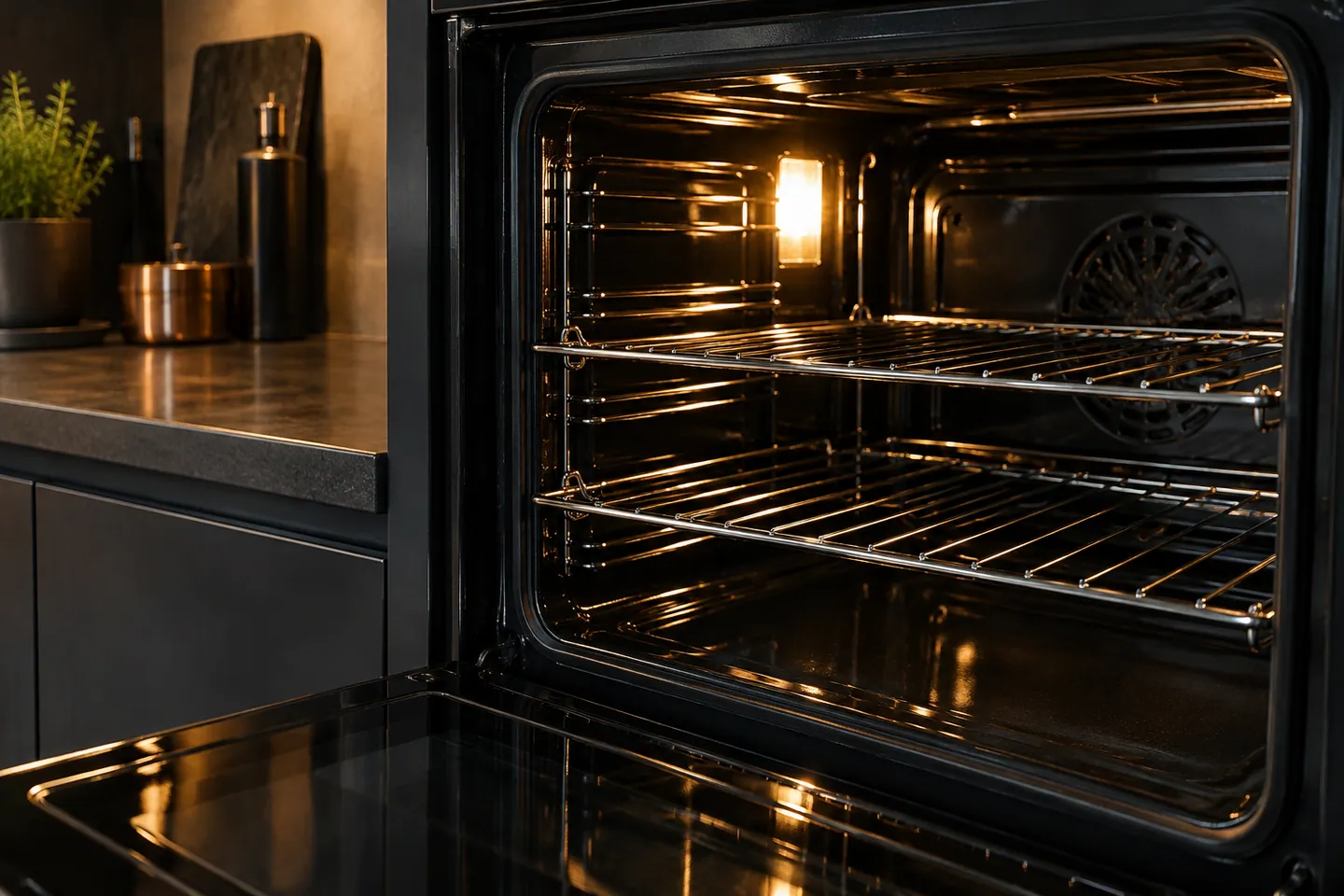
Match the accessory list to the cold oven
At the beginning, identify the included racks, trays and sliding fittings before work starts. Point out heavy residue, worn coatings or a part that sticks or feels loose. Confirm the manufacturer guidance for unusual components and the other surfaces in the brief. This is an opportunity to clarify the actual fittings rather than forcing out a component that does not behave like an ordinary shelf.
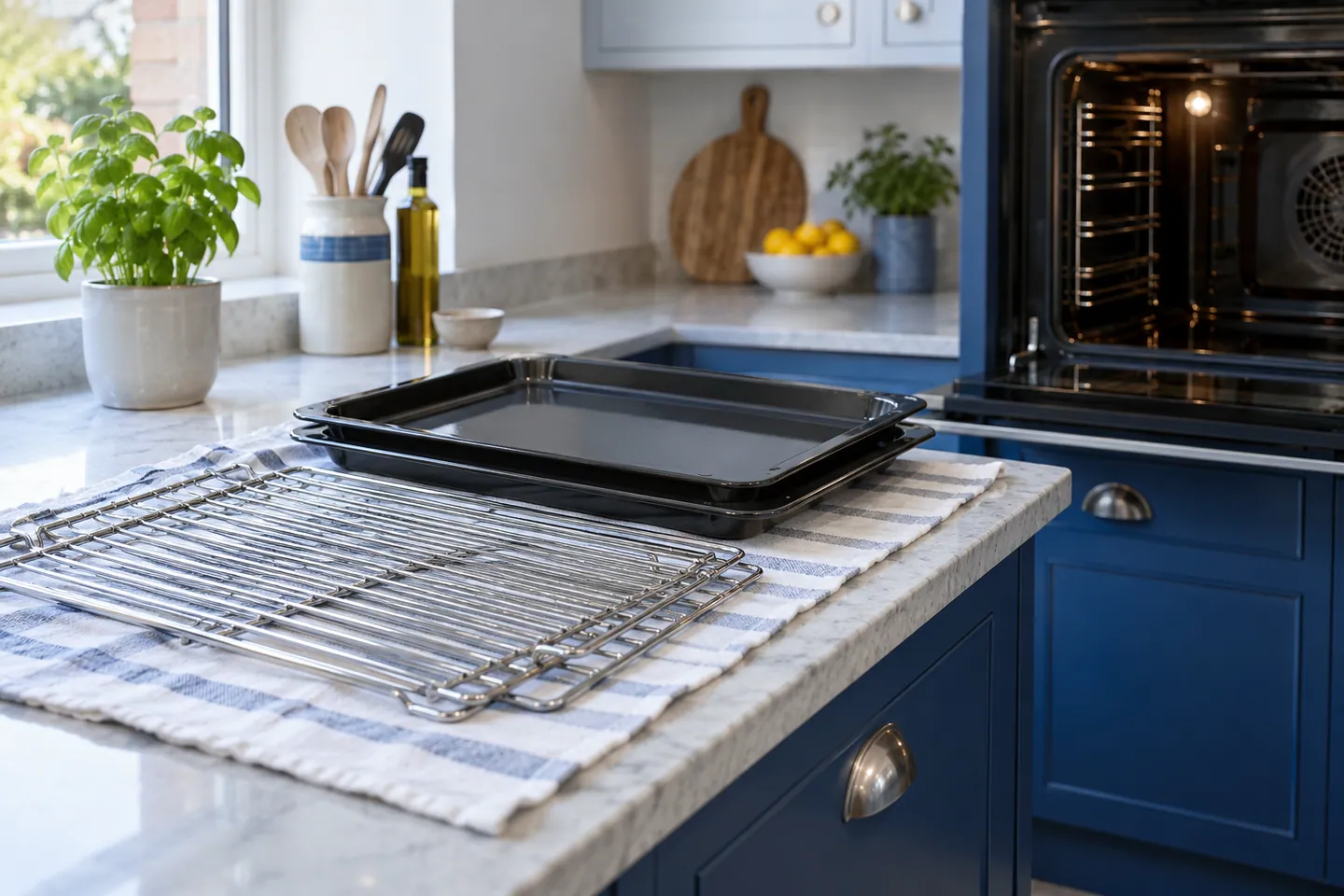
Consider removable parts alongside the cavity
Suitable agreed racks and trays can be cleaned with attention to their material and condition, while the accessible cavity and exterior form the rest of the oven job. Specialist runners should not be treated as interchangeable with plain wire shelves. Door-glass access remains model dependent, and liners or self-cleaning features need identifying too. Keep extra accessory requests explicit instead of expanding the list once the work begins.
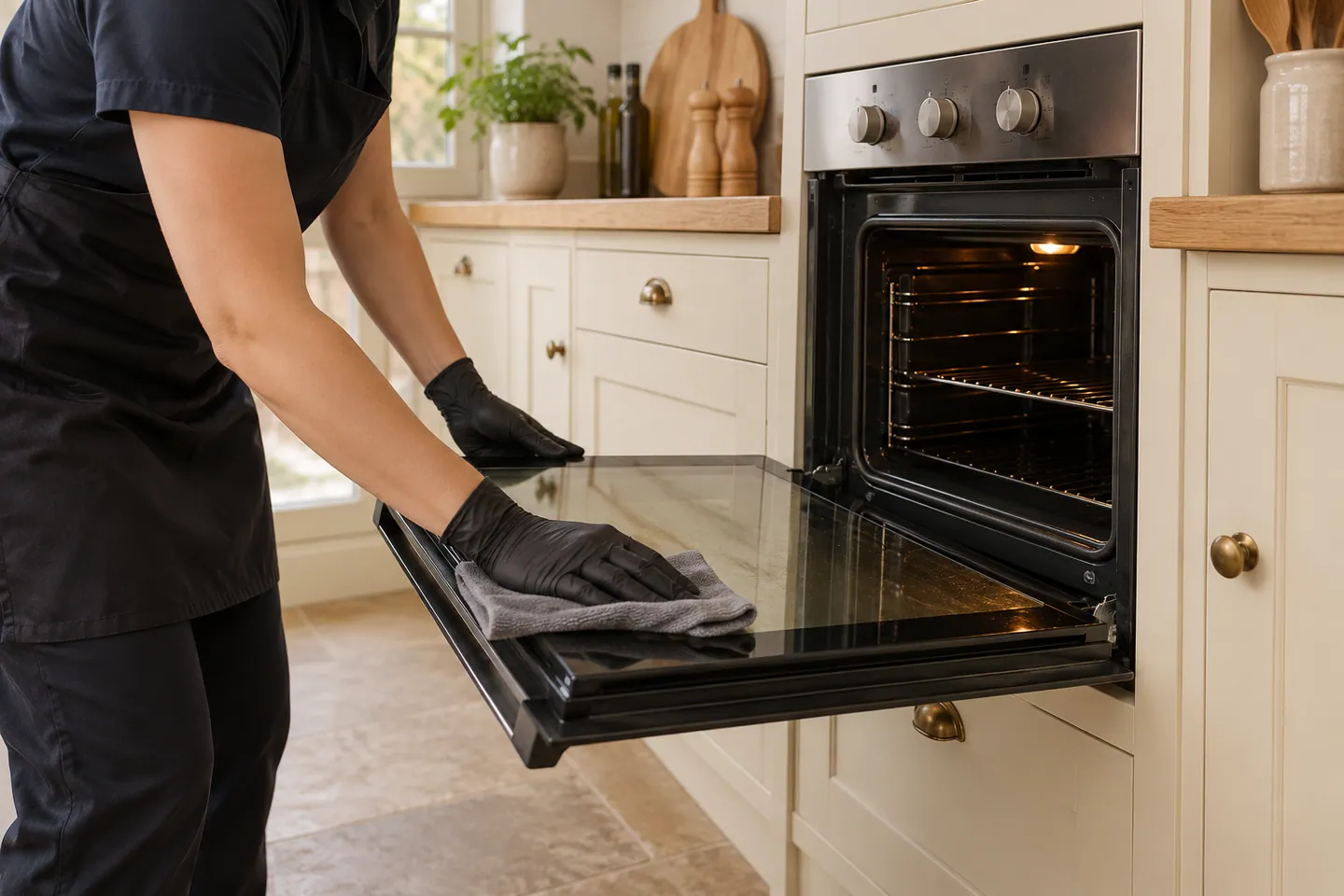
Check the included fittings at the final review
Look over the cleaned areas and the components named in the quotation. Check the agreed removable items are back in place and ask about any marks that remain. Clarify model-specific guidance for subsequent use and routine care. A worn or mechanically damaged runner is a separate issue from residue, so the final discussion should not imply that cleaning has repaired a difficult sliding mechanism.
Give each compartment its own fittings list
The oven category and number of cavities help organise the enquiry. Add the accessories associated with each rather than treating the entire appliance as one rack set.
Single oven
Describe the one cavity, ordinary shelves, trays and any telescopic parts. State whether it is built in and mention special liners or a shared grill function.
Double oven
List accessories for both compartments and explain which are required. A smaller oven or grill may have its own tray and support grid that should not be overlooked.
Range cooker
Identify the individual cooking cavities and their fittings. Overall width does not reveal the accessory count, and hob work needs a separate cleaning request.
Leave special fittings in place until discussed
Have the oven cold, remove food and loose cookware, and clear the working area. Keep included accessories identifiable and have the manual ready where possible. Do not dismantle runners, remove seals or detach door glass as preparation.
Report sticking fittings, damaged glass or known faults before the visit. Leave the installed oven in position. Give the full Ruislip address and entry details when arranging the appointment, and make sure anyone providing access knows which accessories were included and which were not.
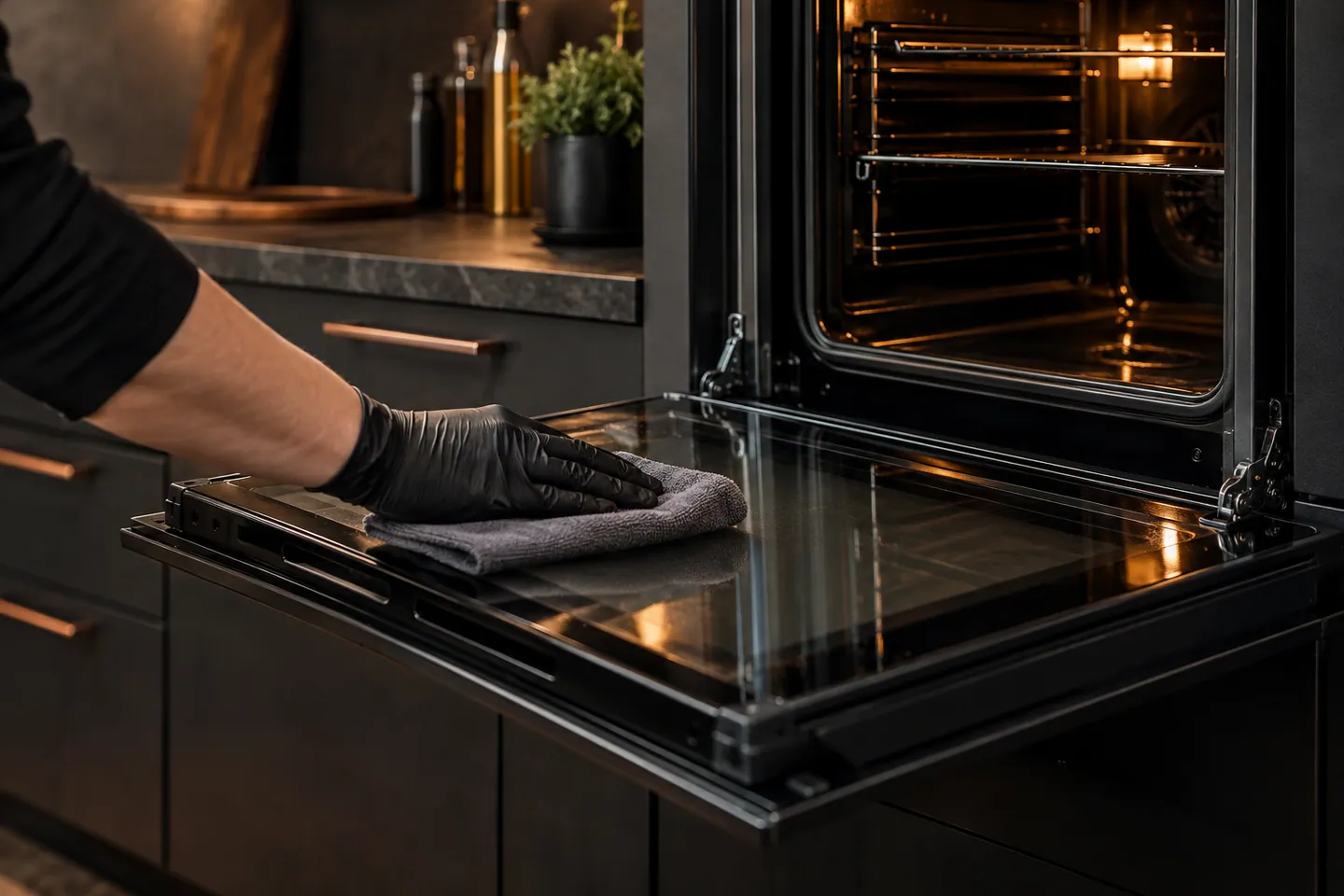
Define the component boundary
Items to confirm for cleaning
- Suitable accessible oven interior and exterior areas
- The removable shelves and trays specifically identified
- Special fittings only as suitable and expressly agreed
Do not infer from a rack clean
- Repairing or replacing sliding mechanisms and supports
- Automatic dismantling of telescopic assemblies or door parts
- Renewing damaged coatings, permanent stains or corrosion
More shelf positions do not necessarily mean more removable racks. Use the actual accessory list when discussing the quote. Ask about unfamiliar fittings before booking instead of removing them to find out how they are constructed.
Price the actual fittings and cavities
Guide figures are £50–75 for single ovens, £75–100 for doubles and £100–130 for ranges. Ask for the confirmed amount after the model, condition, accessories and compartment count have been described. Additional trays and unusual fittings should be part of that conversation from the start.
If other work is needed, request hob cleaning or kitchen deep cleaning independently. Typical oven visits may take around one to two hours depending on scope and deposits. Confirm the allowance for your list rather than assuming every accessory fits a fixed finish time.
Maintain the components according to their instructions
Follow the manufacturer’s directions for ordinary racks, special runners and liners; do not transfer a method from one to another by assumption. Once cold and safe, deal with suitable fresh residue before repeated cooking adds build-up. Check trays independently from the cavity walls.
Plan professional cleaning around the deposits and your cooking routine. If a runner becomes difficult or a support is damaged, report that as a component concern rather than simply requesting a stronger clean. Fault diagnosis, replacement parts and repairs are separate from the ordinary surface-cleaning brief.
Shelf levels and sliding fittings
Should I count the support slots?
Count the actual shelves and trays instead, then mention special runners or supports separately. Empty positions do not establish how many accessories need cleaning.
Are telescopic fittings just ordinary racks?
Do not treat them that way by assumption. Give the model and follow the component instructions so suitable work can be discussed before anything is removed.
Can a sticking runner be repaired during cleaning?
Repair is not implied. Describe the issue beforehand and separate mechanical condition from removable deposits when discussing the suitability of the proposed clean.
What about spare shelves in a cupboard?
Mention them if you want them considered and confirm inclusion in the quote. Accessories outside the oven are not automatically part of the original brief.
Do I need to dismantle the support frame?
Leave it in place and discuss the model. Preparation should provide a cold oven and clear access rather than an assembly task that was never agreed.
How do I check the work afterwards?
Review the named accessories alongside the agreed cavity and glass areas. Ask about remaining marks and appropriate routine care for each type of fitting.
Area information for your enquiry
Explore the service areas directory, or choose a relevant nearby area below. When calling, give the full postcode so the address and appointment options can be confirmed.
Arrange your Ruislip oven clean
Discuss the appliance, address and work you want included before agreeing the quote and visit.