
Greenford
Oven Cleaning Greenford
For oven cleaning in Greenford, describe where the deposits are and which parts need attention. John’s can discuss suitable cleaning for accessible surfaces, racks, trays and model-dependent glass access. Agree the scope and quote with realistic expectations, then confirm the appointment using the complete address and appliance details.
- Describe deposits by surface and location
- Keep cleaning results distinct from heating claims
- Discuss persistent marks before agreeing the visit

Say where the grease is rather than how the oven performs
A clear description might mention hardened residue on the cavity floor, a greasy rack or a cloudy area of glass. Those details help an oven cleaning enquiry more than a guess that dirt must be causing every cooking problem. For Greenford bookings, start with what you can observe and the appliance information you know.
The oven cleaning service is intended to address suitable deposits within the agreed scope. It should not be treated as a promise of lower energy use, faster heating or repaired controls. If the oven behaves unusually, mention the symptom separately and seek appropriate appliance advice rather than presenting an assumed cause as fact.
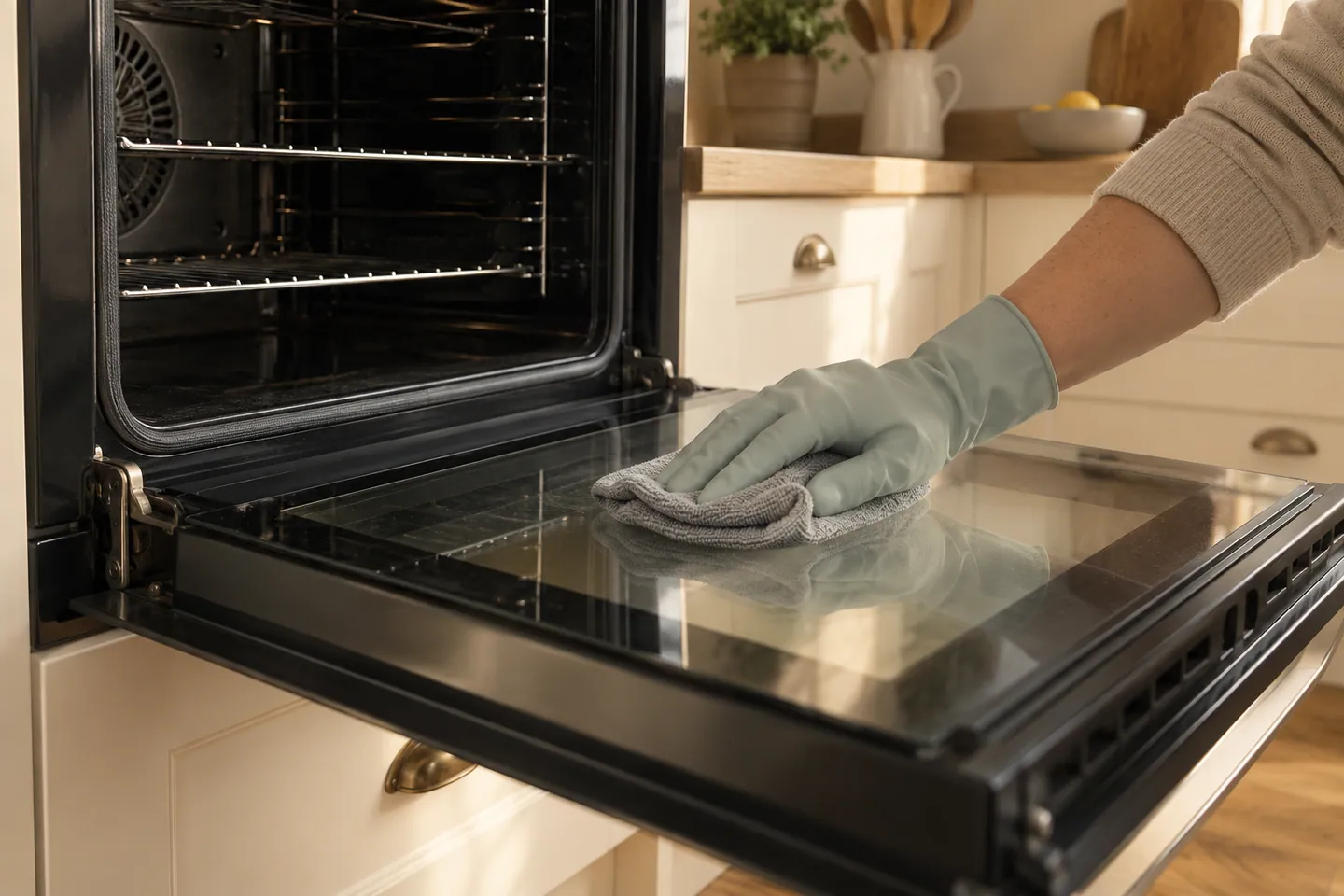
Turn a general concern into a useful surface list
Name the accessible cavity surfaces, exterior, racks and trays that need attention. Suitable removable accessories are cleaned separately, while access to glass and fitted areas depends on the model. If the deposit seems to be within the door, explain that location so the reachable surfaces can be discussed before expectations are set.
Describe any known material differences, such as specialist liners or a coated tray. Point out scratched glass, worn enamel and loose parts as well. A mark may be removable residue, permanent discolouration or surface damage; cleaning cannot turn all three into the same outcome, so discuss any particular concern in advance.
Keep fault symptoms on a separate note
Smoke, unusual smells or uneven cooking should not be diagnosed from a brief cleaning enquiry. Give an accurate account of the symptom, including when it happens, and obtain appropriate appliance guidance where needed. Cleaning is distinct from repair and does not certify that heating elements, seals or electrical controls are functioning correctly.
The same restraint applies when assessing the finished appearance. A cleaner can discuss the surfaces addressed and explain remaining marks, but a cleaner cavity is not proof of a measured performance improvement. Judge the cleaning against the agreed work, while keeping technical questions with a suitable appliance professional.
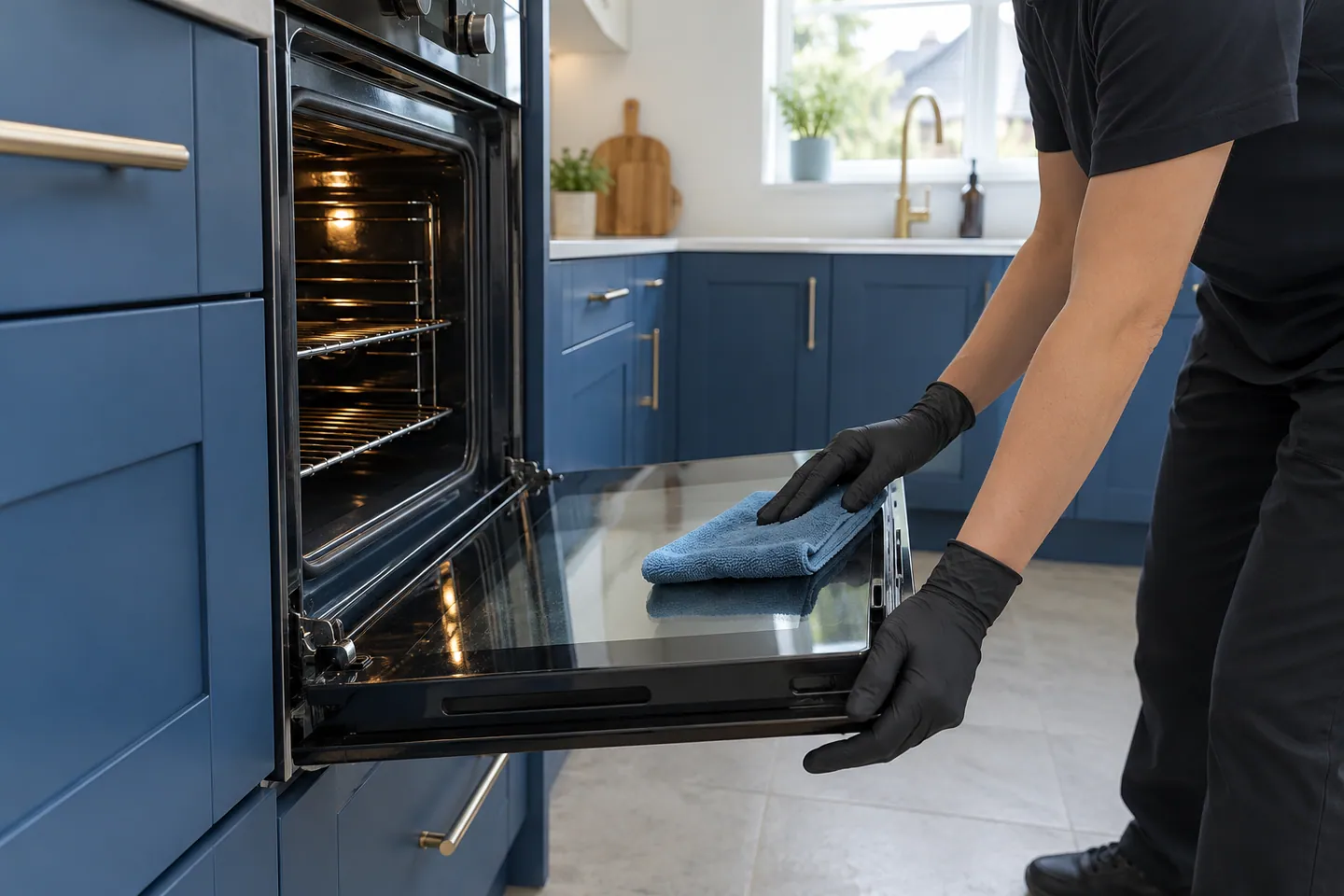
Identify the appliance without guessing its functions
Use the number of cooking compartments, approximate size and model reference to make the request specific. A manufacturer name alone does not identify the door design or materials. If the upper section’s function is unclear, say so rather than assuming a second door automatically means another oven.
Single oven space
Describe the shelves, trays and any grill function within the cavity. Mention special coatings and identify the surface with the heaviest visible residue.
Double oven configuration
List the compartments and say which are included. Explain the grill arrangement and accessories for each space so the work does not depend on a broad label.
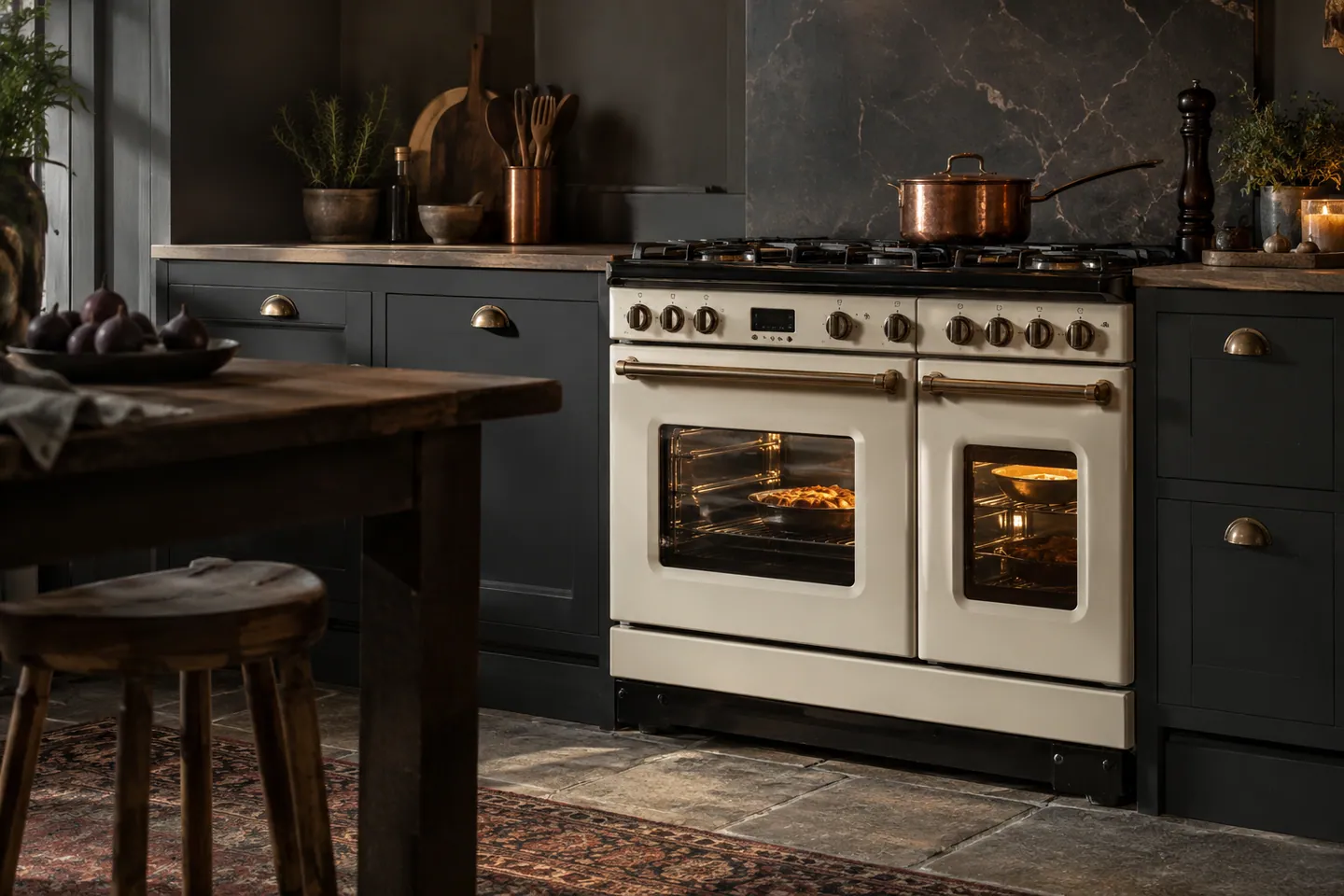
Range cooker configuration
Give the width and number of cooking cavities. Separate ovens from storage, and identify a hob or extractor as an additional cleaning enquiry if required.

Use the condition description when requesting a quote
Published guide prices range from £50–£75 for singles, £75–£100 for doubles and £100–£130 for range ovens. Describe the deposits, size and components before asking for the total for your appliance. The guide does not establish one price for every level of build-up or every Greenford address.
Ask how VAT is treated and whether any applicable access or parking costs need to be included. If needed, request hob cleaning separately with the surface type. Confirm the total for the listed tasks rather than treating an oven guide as a quotation for every appliance around the cooking area.
Avoid obscuring the starting condition
Allow the appliance to become completely cold and clear the space in front and nearby. Leave fitted panels and glass in place. Avoid trying several aggressive products immediately before the visit, since that can alter the surface or leave residues that need to be explained. Tell us if something has already been applied.
Provide the complete Greenford address and postcode, with relevant access arrangements, to check availability. Keep the model reference and a brief description of existing damage available. Remove unrelated stored cookware, but make the shelves and trays included in the scope easy to identify so they are not confused with excluded pieces.
Leave time to check the work
Allow time to look at the cleaned oven with us and ask about any remaining marks. Some visits take around one to two hours, depending on the appliance and extra work. Mention a fixed deadline before booking so we can discuss a workable appointment.
Review the agreed surfaces afterwards and ask about marks that remain. Confirm the appropriate guidance before cooking again, taking account of the appliance and products used. The oven care blog can help you explore future maintenance topics, while the visit is the opportunity to clarify the actual work completed.
Choose a routine based on deposits and materials
Once cold, address fresh spills with a method permitted by the manual and pay attention to trays as well as cavity walls. Avoid unapproved liners and keep openings clear. If grease has also collected on surrounding surfaces, discuss kitchen deep cleaning as a separate defined task rather than expanding the oven scope by implication.
Oven cleaning questions in Greenford
Will oven cleaning reduce my Greenford energy bill?
A cleaning enquiry should not promise an energy saving. The service addresses suitable deposits on agreed surfaces; measured performance and energy questions are distinct from the appearance and scope of a clean.
How should I describe heavy grease?
Say where it is, how much of the surface it covers and which components are affected. Photos may help where accepted, but an accurate location and accessory list are useful even without diagnosing the residue.
Does a burning smell prove the oven only needs cleaning?
No. Describe the symptom and seek appropriate appliance advice where needed. A cleaning request should not substitute for diagnosis or assume that removing visible deposits will resolve every cause of an unusual smell.
Will the glass become completely clear?
Suitable accessible residue can be discussed, but scratches, permanent marks and inaccessible internal surfaces are different issues. Ask about the particular panel and model before assuming the entire door can be dismantled.
Should I scrape the worst deposit off beforehand?
Avoid an aggressive attempt that might damage a surface. Keep the oven cold, explain the condition and follow the preparation advice given. Fitted components should be left in place rather than removed to expose more residue.
When should I book another professional clean?
Base the decision on cooking use, the deposits that develop and what routine care can manage appropriately. Follow the manual for maintenance; there is no single cleaning interval that suits every appliance or household.
Service enquiries around Greenford
Check the service areas directory and give your full address when asking about availability. You can also read about the service in these nearby areas:
Discuss your Greenford oven clean
Call with the appliance details and postcode to confirm the scope, quote and appointment options.