
Richmond / Oven care
Oven Cleaning Richmond
A printed border or marking on oven glass is part of its design, not a deposit to remove. For a Richmond oven-cleaning enquiry, identify those details alongside the areas that need cleaning. Discuss the model, accessible glass faces and interior fittings so the work respects the surfaces you actually have.
- Identify printed borders before treatment
- Clarify which glass faces can be reached
- Separate finish wear from removable cooking residue

Look at the design as well as the mark
Door glass can include printed borders, markings and contrasting trim. When requesting oven cleaning in Richmond, explain where residue sits in relation to these features. Do not assume that a dark edge is grease or that all glass surfaces can be treated in exactly the same way.
The model and manual provide useful context for both construction and care. Mention worn printing, scratches, chips or previous attempts to clean the area. A clear description lets the enquiry focus on suitable work without turning an important design detail into an assumed cleaning target.
Access also matters: a mark on the cooking-side face differs from one apparently between panes. A visible inner layer does not establish that the door will be separated. Discuss the relevant faces explicitly rather than relying on a general promise to clean the glass.
Let the glass design guide the sequence
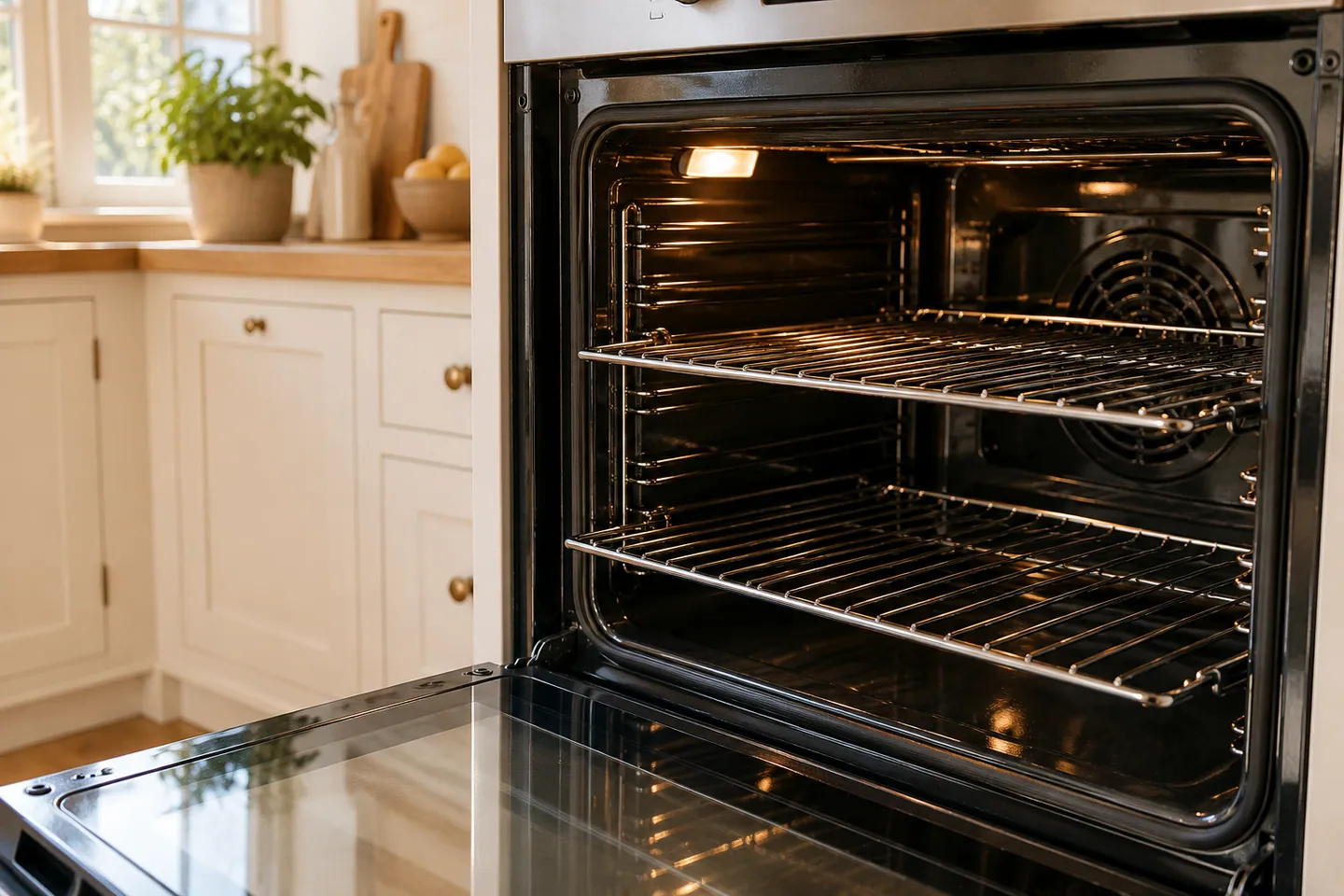
Point out borders and condition with the oven cold
Before cleaning starts, identify the printed areas, the residue and any existing damage. Confirm the model-specific access discussed during booking and the other parts included in the clean. Mention specialist liners or unfamiliar fittings inside the cavity too. This opening review should make the door’s construction and condition clear without requiring you to remove glass or trim yourself.
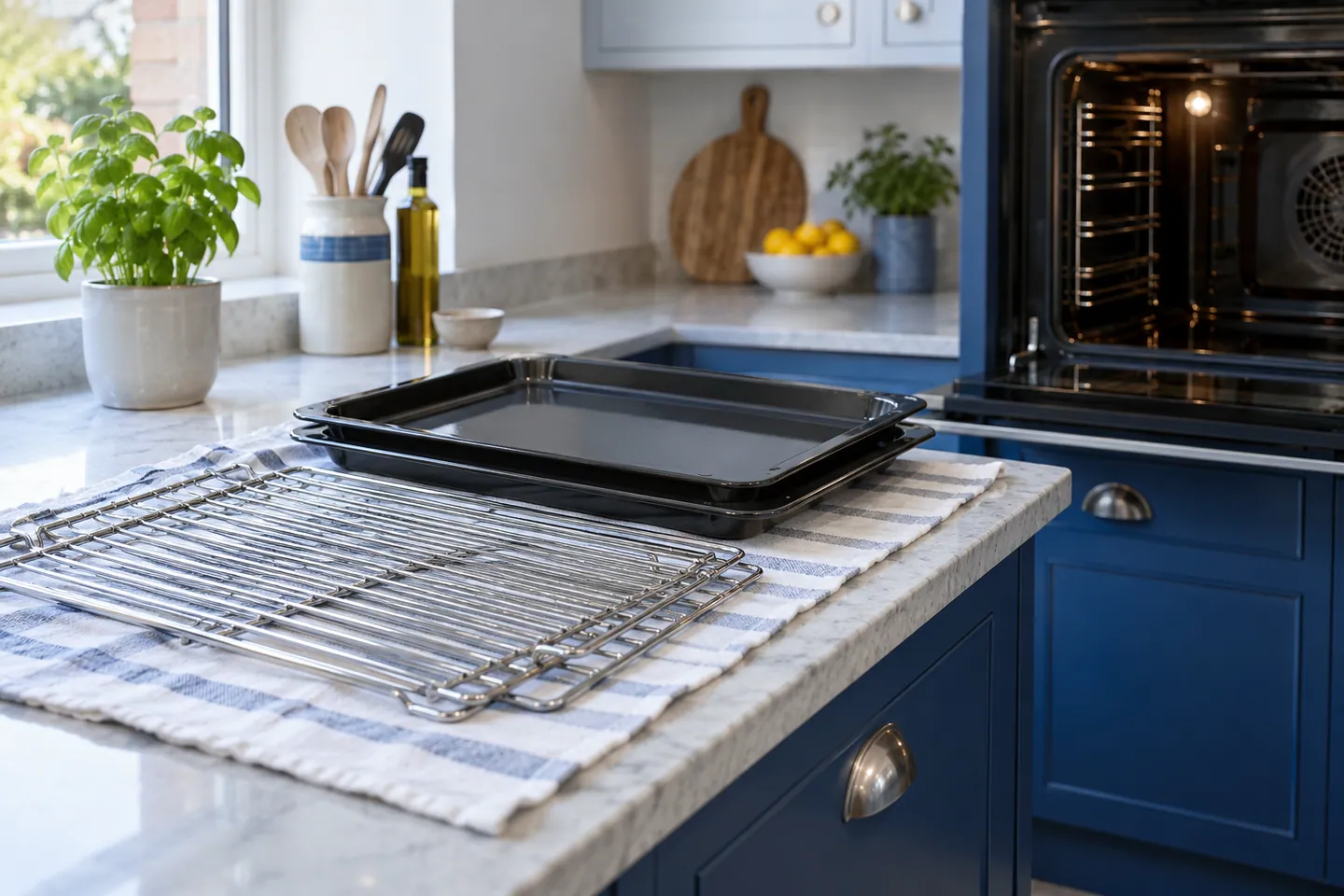
Treat suitable surfaces as distinct materials
The agreed work may include appropriate accessible glass faces, the oven interior and exterior, and removable racks or trays. Printed areas and adjacent trim need consideration as finishes, not simply as ordinary metal or bare glass. Do not assume harder treatment can reverse worn printing or scratches. Where access or condition limits the work, keep that boundary clear rather than extending the clean into unplanned dismantling.
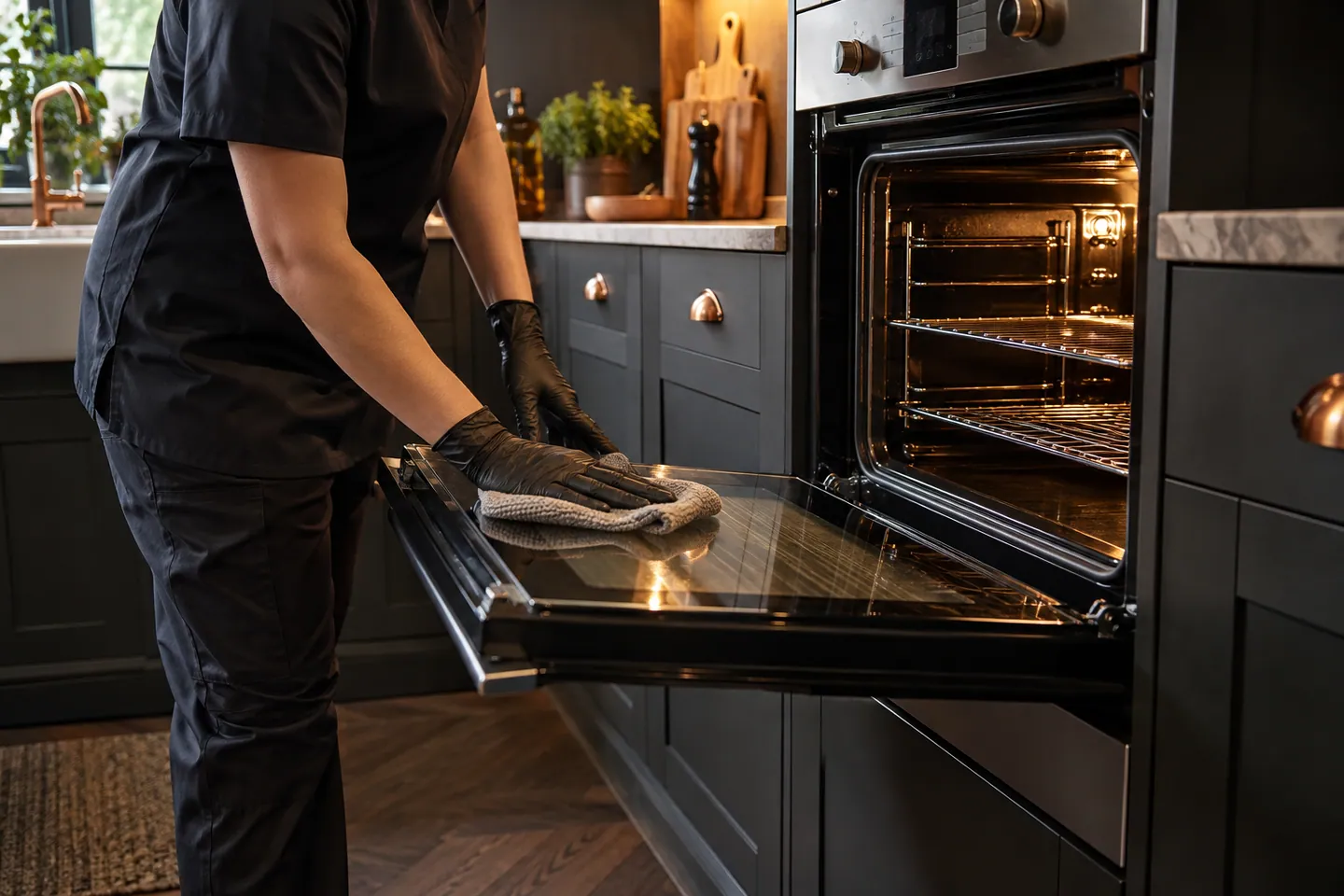
Review the glass in the context of the whole clean
Look at the included glass areas and ask about any remaining marks. Check the rest of the agreed oven work and removable accessories as well. Clarify which appearance differences are permanent wear or inaccessible areas rather than deposits. Ask about suitable care and next use for the model, so the final discussion helps you maintain the appliance without repeatedly attacking the same printed edge.
The door design is only part of the description
Add the number of cavities and accessories to the glass details. Similar-looking doors can belong to ovens with quite different cleaning requirements.
Single oven
Describe the cavity, shelves and tray and the printed features on its door. State whether the oven is built in and mention any specialist interior lining.
Double oven
Identify both doors and compartments. Printed borders, glass access and residue may differ, so explain the condition of each rather than treating the pair as identical.
Range cooker
List the cooking cavities to be included and describe any different door finishes. The hob and extractor need their own requests despite their proximity to the oven doors.
Leave the door assembled for the visit
Allow the oven to cool fully and remove food and loose cookware. Clear belongings from the working area and keep the included accessories identifiable. Have the manual and model reference available where possible, including relevant glass-care instructions.
Do not detach panes, scrape printed borders or remove trim to prepare. Report damage or awkward door movement in advance. Provide the full Richmond address, entry details and timing needs when booking. If another person will meet us, give them the glass-care concerns and agreed appointment details.
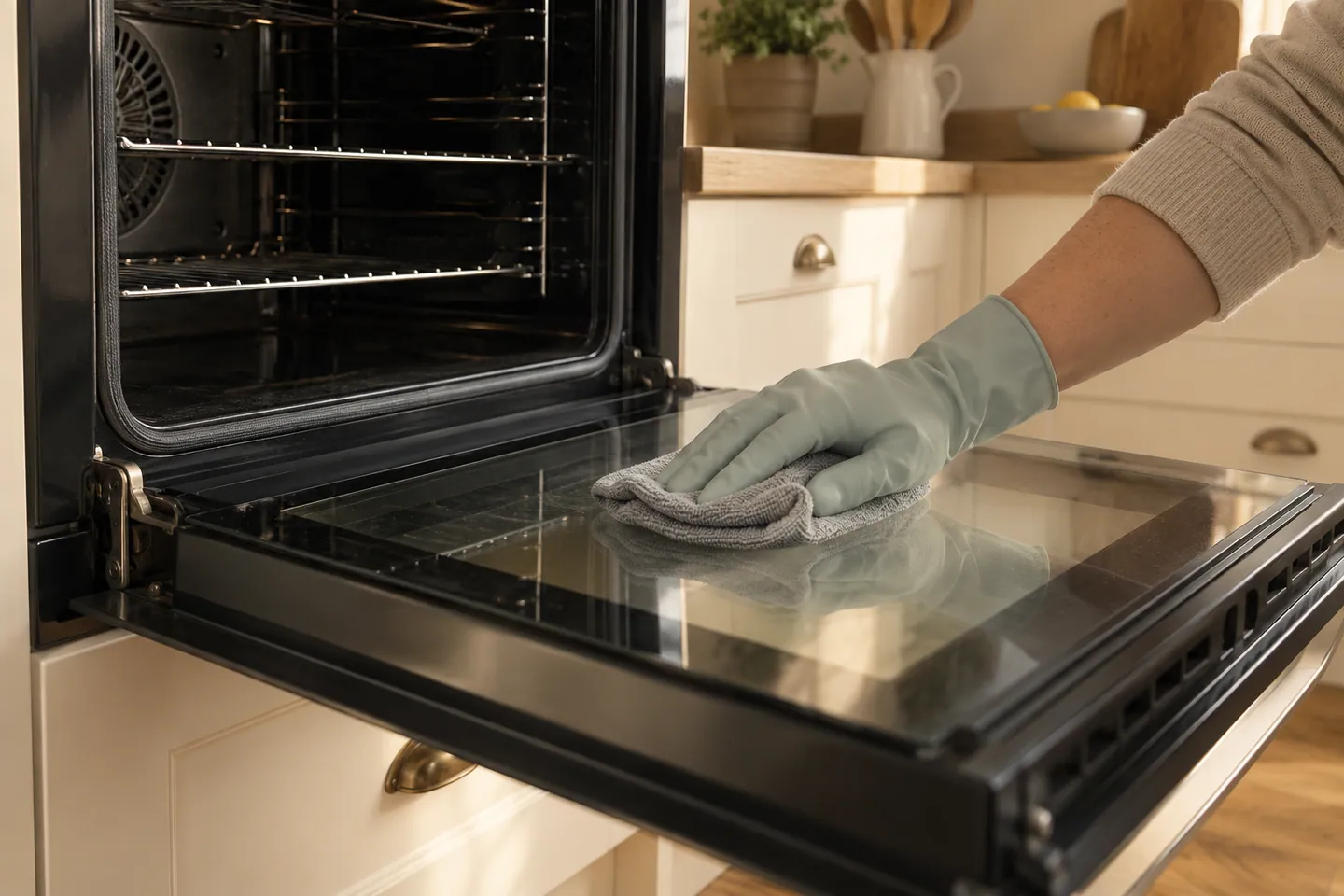
Distinguish cleaning from changing a finish
Confirm suitable work
- Accessible glass faces appropriate to the oven design
- Suitable cavity and exterior surfaces agreed for the job
- The removable racks and trays named in the quote
Outside the cleaning brief
- Renewing printed borders, scratches or missing coatings
- Guaranteed access to every space between glass panels
- Repairing hinges, controls or other faulty components
Ask which glass areas are included before accepting the quote. A clean can address suitable cooking deposits, but it cannot recreate worn markings or repair a damaged pane. Additional surfaces should be identified separately instead of inferred from a door-glass request.
Quote from the appliance and its condition
The published single-oven range is £50–75, with doubles at £75–100 and ranges at £100–130. Confirm the actual price after describing the model, compartments, fittings and glass concerns. These guide figures do not establish a guaranteed finish or unrestricted door access.
For nearby appliances, discuss hob cleaning separately; for surrounding tiled surfaces, ask about tile and grout cleaning. A typical oven visit may take around one to two hours depending on scope and condition, so confirm an allowance for the complete agreed work.
Keep future care sensitive to the surface
Follow the manufacturer instructions for printed glass, trim and specialist liners. Once the oven is cold and safe, deal with suitable fresh splashes using an appropriate method. Do not borrow advice intended for plain glass and assume it applies unchanged across a printed finish.
Monitor trays and cavity deposits as well as the door when judging the next professional clean. Cooking habits and actual residue are a better guide than one fixed interval. Faults need separate appropriate advice; cleaning does not establish why a door mechanism or heating function is behaving unusually.
Printed borders and door-glass questions
Is the dark border something to remove?
It may be a printed design feature rather than residue. Describe it and supply the model information instead of scraping it or assuming every dark area is dirt.
Can worn printing be restored by cleaning?
Cleaning cannot recreate a worn finish. Mention the condition beforehand and keep expectations focused on suitable removable deposits rather than restoration of the original design.
Will the door be separated into every pane?
Access is model dependent and should be agreed. Visibility between glass layers does not automatically mean that dismantling every layer is included or appropriate.
Should I use the same method on glass and trim?
Follow the specific appliance instructions. Adjacent surfaces may have different finishes and care needs even where they look similar or share the same door.
What if a pane has a chip?
Report the damage before booking and leave the glass in place. Suitability needs discussion; a cleaning quote should not be treated as a glass-repair service.
Can a loose hinge be checked during cleaning?
Describe it in advance, but do not assume diagnosis or repair is included. The cleaning brief concerns suitable surfaces and accessories on the appliance.
Area information for your enquiry
Explore the service areas directory, or choose a relevant nearby area below. When calling, give the full postcode so the address and appointment options can be confirmed.
Arrange your Richmond oven clean
Discuss the appliance, address and work you want included before agreeing the quote and visit.