
Leytonstone / Oven care
Oven Cleaning Leytonstone
If the area around the fan cover concerns you, include the oven model in your Leytonstone enquiry. What can be reached or removed depends on the appliance’s design and condition. Describe the visible deposits and other components requested so John’s can agree a useful cleaning scope without an assumption of complete dismantling.
- Describe the visible fan-cover concern
- Use the model to clarify appropriate access
- Keep cleaning distinct from fan servicing
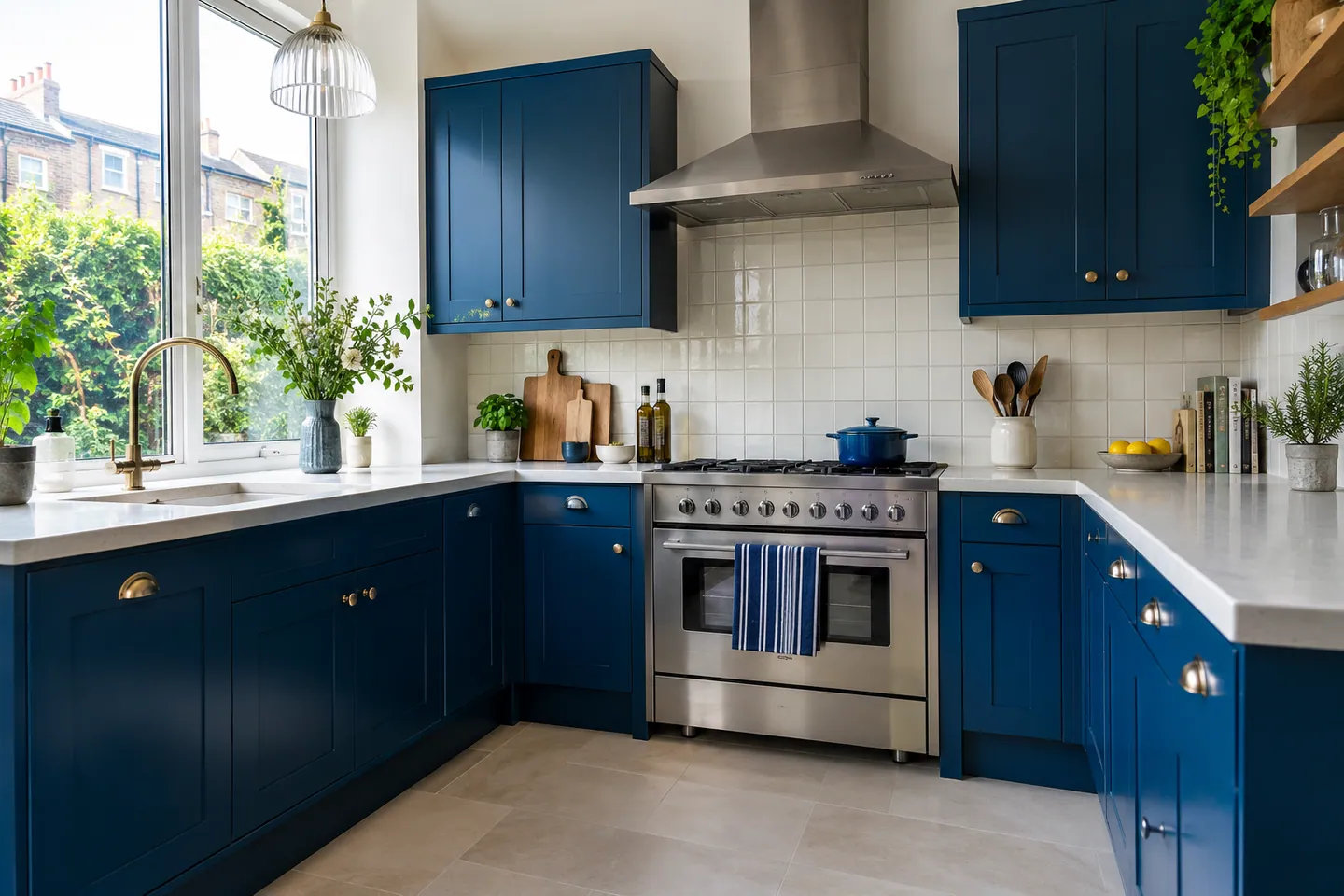
The rear of the cavity needs a precise question
Grease around the rear cover can prompt a request to clean “behind the fan”, but that phrase can imply more than the accessible surface you are looking at. Explain the location of visible deposits and whether your concern involves the cover, the cavity around it or a component you cannot see. Keep fixed fittings intact while making the enquiry.
John’s serves Leytonstone through its London oven cleaning service. Give the full postcode and model number if available. An image of the open cavity can locate the concern, while the model helps establish the relevant construction and appropriate access rather than borrowing expectations from another oven.
If the concern is actually noise, poor heating or an intermittent fan, describe that too. Those symptoms should be considered as potential operating issues. A cleaning quote can address suitable deposits without implying a fan-motor service, fault diagnosis or a change in the appliance’s performance.
Establish the rear-cover scope before treatment

Match the rear-cover concern to this oven
At the start, point out the area requested and any known damage or loose fittings. Confirm specialist liners and the other components in the booking. The condition discussion establishes appropriate access for the model rather than a general rule about taking off every cover. An unknown history or unfamiliar screw should not become a reason to dismantle a component by guesswork.
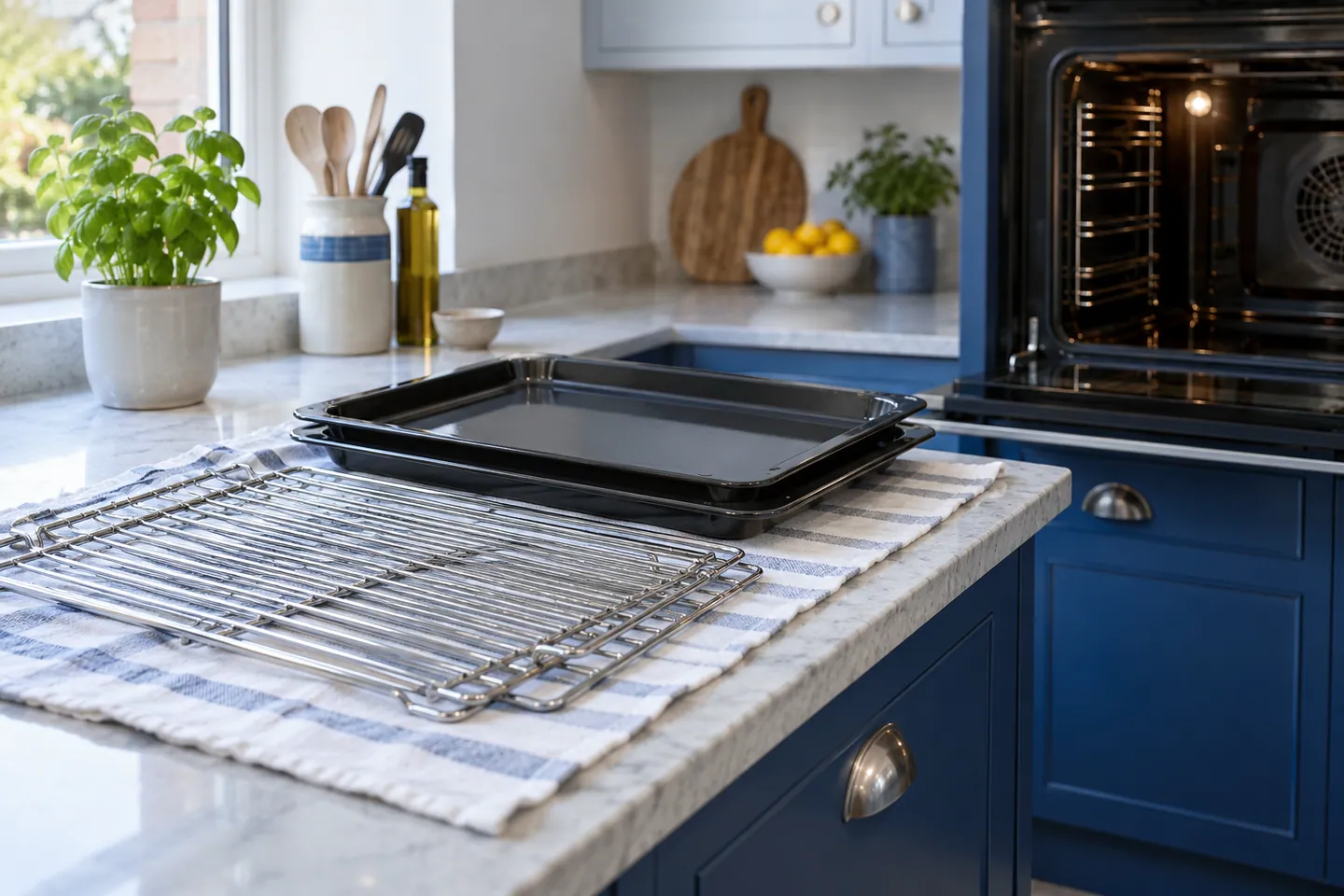
Clean within the confirmed access
Reachable interior and exterior areas and suitable removable shelves or trays can form the agreed work. Glass access is also model-specific. Component removal is conditional on the design, not implied by the word deep-cleaning. The treatment should suit the surfaces and deposits present, with any limit understood instead of treating a fixed panel as though it were a loose baking tray.
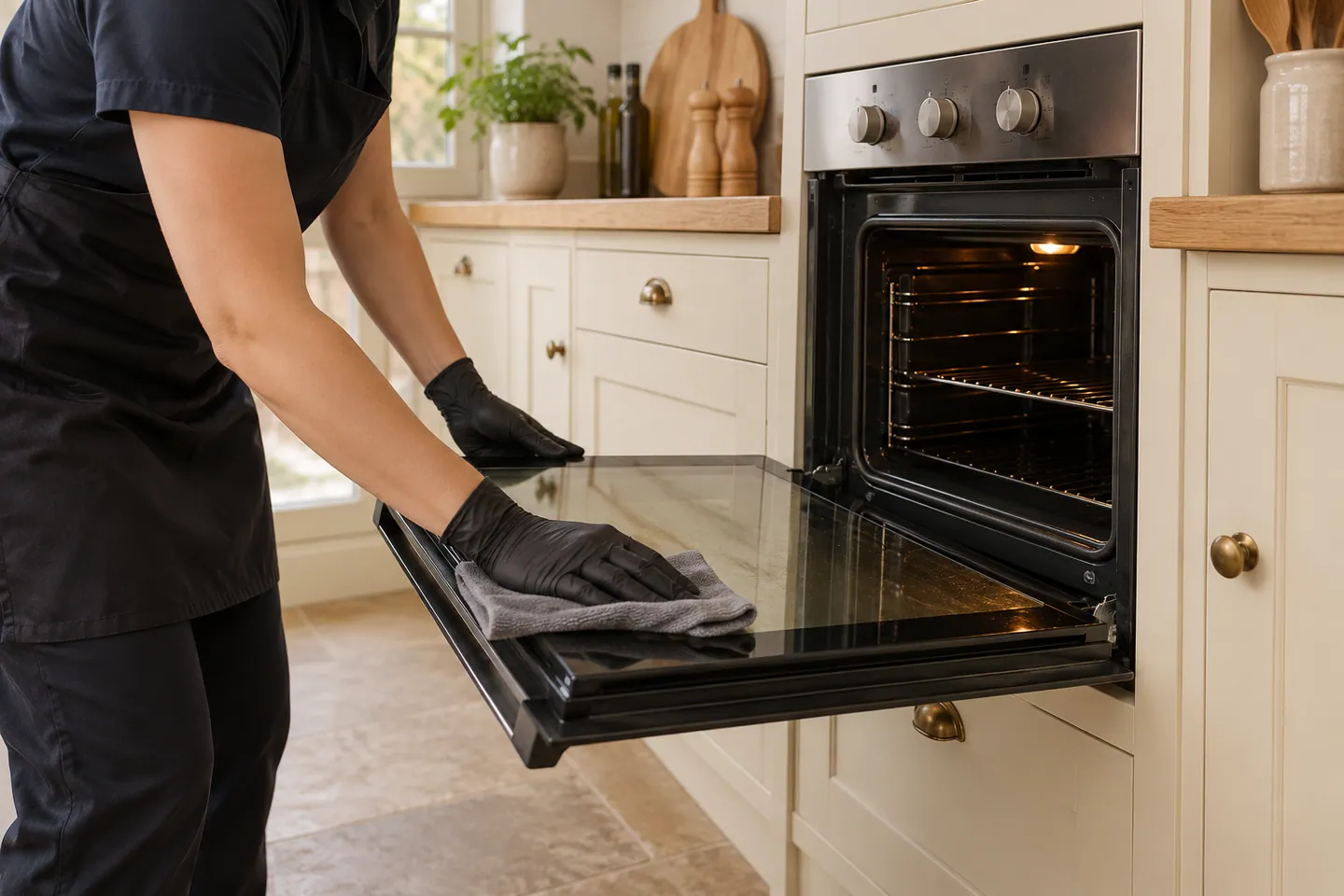
Explain the completed surfaces and limits
Review the agreed accessible areas and ask about any remaining mark or inaccessible position. Check the listed accessories are accounted for and confirm the guidance before using the oven again. If a mechanical symptom remains, it needs appropriate appliance advice rather than an expectation of repeated cleaning. The completed job should be understandable in terms of its confirmed components and realistic cleaning purpose.
Describe the other cooking spaces too
A rear-cover enquiry still needs an appliance layout. Identify each requested cavity and separate grill, together with the racks and trays that belong in the cleaning scope.
Single fan oven
One cooking space may combine fan and grill settings. Include the suitable accessories and explain the rear area of concern without describing every setting as another cavity.
Double oven
Say which compartment contains the cover you mean and whether both spaces are requested. The upper and lower sections may have different construction and patterns of use.
Range appliance
List every oven and separate grill included. Locate the rear-cover concern in that layout, and request the hob independently if that surface also needs attention.
Prepare access without opening the cover
Allow the oven to become completely cold, remove food and unrelated cookware, and keep the agreed fittings available. Clear room to open the door and work in front of it. Do not loosen the fan cover or move a fitted unit yourself as preparation; explain any existing access difficulty beforehand.
Arrange who will provide entry and mention relevant restrictions. Around one to two hours can suit some cleans, but model, size, deposits and extra tasks affect the allowance. For wider room work, discuss kitchen deep cleaning separately so the schedule reflects every agreed task.

Make model-specific access part of the agreement
Components to discuss
- Appropriate reachable rear and cavity surfaces
- Suitable named racks and removable trays
- Exterior and door glass accessible on the model
Work not established by the quote
- Universal removal of fan covers or fixed panels
- Fan-motor repair, servicing or diagnosis
- Restoration of scratches, corrosion or damaged enamel
Ask what is included around the rear of the cavity rather than assuming a hidden area will be reached. Suitable residue removal does not correct damaged fittings or an operating fault. If access to one particular position determines the value of the visit for you, settle that expectation before booking.
Confirm the amount after access is understood
The published oven guides are £50–£75 for singles, £75–£100 for doubles and £100–£130 for ranges. Request the Leytonstone total after describing the model, requested cavities, condition and access concern. Check VAT treatment, included fittings and any applicable parking or access costs.
Request hob cleaning separately where wanted, with the surface type identified. An extractor has an independent £25–£40 published guide. A combined quote should name the added appliances rather than assume a rear-cover discussion covers the whole cooker or surrounding kitchen.
Maintain reachable surfaces within the instructions
For cooled everyday spills, use the method permitted by the oven manual. Care for suitable trays separately and keep ventilation areas unobstructed. Avoid improvised foil on the base unless the manufacturer allows it, and do not use routine care as an occasion to open fixed components unnecessarily.
Decide on future cleaning by the build-up you can observe and your cooking habits. The between-cleans oven guide offers general habits alongside model instructions. A newly noisy fan, loose fitting or heating change belongs in a separate appropriate assessment rather than an assumed cleaning remedy.
Questions about the fan-cover area
Will the fan cover definitely be removed?
Do not assume that. Give the model and explain the concern, then ask what access is appropriate and included. Construction, condition and suitability determine the scope for the particular oven.
Should I undo the screws beforehand?
Leave fixed components in place for the appointment. A screw does not establish that a panel should be removed for your requested clean, and uncertain dismantling is not useful preparation.
Can the clean stop a noisy fan?
Cleaning should not be booked as a promised cure for a mechanical symptom. Describe the noise before arranging the visit and seek suitable appliance advice where diagnosis or repair is needed.
Is the visible cover included with the cavity?
Ask for the relevant accessible surfaces to be named. That makes a distinction between appropriate treatment of what can be reached and an assumption about opening the area behind a component.
What details help you assess a fan-cover enquiry?
Provide the complete address and postcode, model, cooking layout and requested fittings. Include photographs that locate the concern and practical entry details so the scope and appointment can be agreed clearly.
Area information for your enquiry
Explore the service areas directory, or choose a relevant nearby area below. When calling, give the full postcode so the address and appointment options can be confirmed.
Arrange your Leytonstone oven clean
Discuss the appliance, address and work you want included before agreeing the quote and visit.