
Kensington / Oven care
Oven Cleaning Kensington
A spill hidden beneath a tray or liner needs a clear description before cleaning. For Kensington, identify the loose accessory, the surface below it and the oven model without dismantling anything. John’s can then discuss suitable deposits, accessible components and the wider cleaning scope you want included in the appointment.
- Identify the surface beneath loose accessories
- Describe liners and their instructions
- Include the source tray as well as the spill
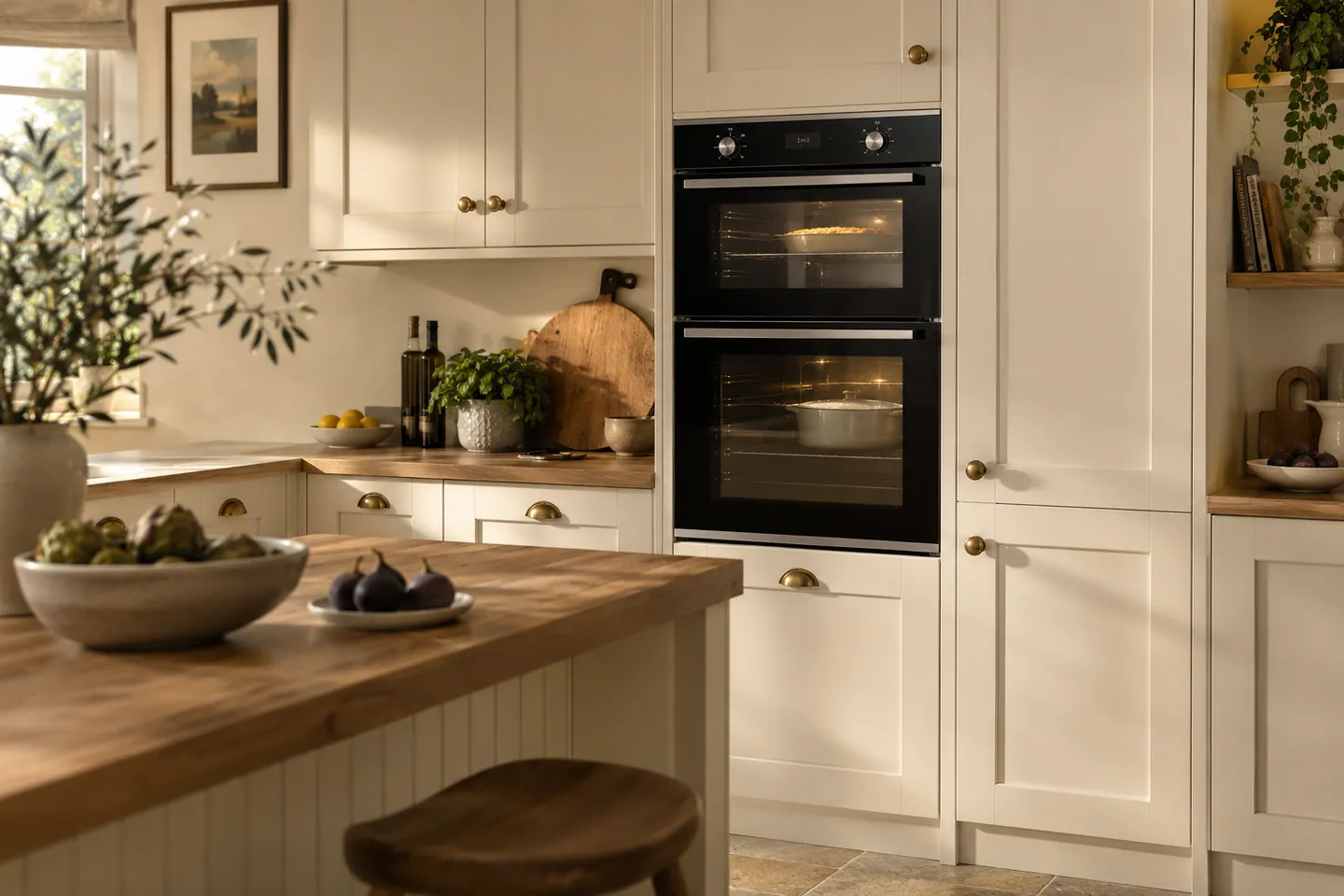
Find the surface, not an assumed treatment
A dark patch beneath a roasting tray can be easy to miss until the tray is moved. A loose liner can conceal residue too. When the oven is cold, identify ordinary removable items if they can be handled safely without force, and explain what is visible underneath. Fixed panels and uncertain fittings should stay in place for the access discussion.
John’s serves Kensington within London and offers oven cleaning for a clearly described appliance. Give the full postcode, model and compartments requested. If the spill is your main concern, say where it sits and whether an accessory covers it, rather than assuming every oven base has the same material or design.
Keep the accessory in the conversation. Its underside may also carry residue, and its coating may differ from the cavity. Knowing what caused the obstruction helps define the job, but it does not establish that an aftermarket product is suitable for every position inside the appliance.
Follow the spill beneath the accessory

Look at the exposed area and the accessory
Show the cleaner the location on the cold appliance and identify anything you have removed normally. Point out existing scratches, chips or marks you cannot identify. The surface may be enamel, a specialist liner or part of a model-specific construction, and the clean should follow that information. This condition discussion also distinguishes suitable residue from a permanent change to the finish.
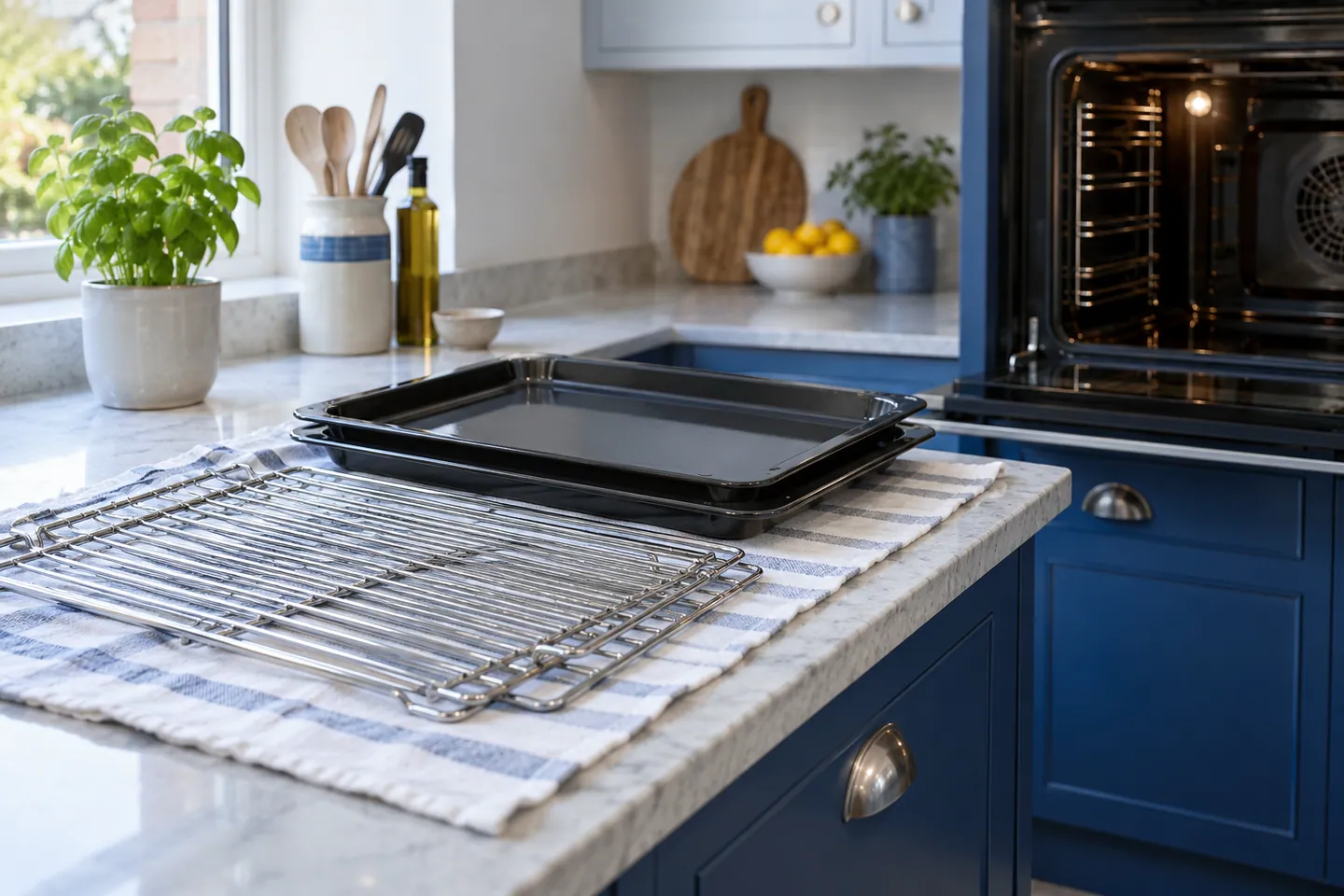
Clean the agreed surfaces as separate materials
Appropriate deposits on reachable oven surfaces can be treated alongside the suitable removable parts listed in the booking. A loose liner, coated tray and oven wall should not automatically receive identical handling. Material suitability matters beneath the accessory too. Door-glass access remains conditional on its construction, and a concern at the base does not imply dismantling fixed floor panels or hidden components.
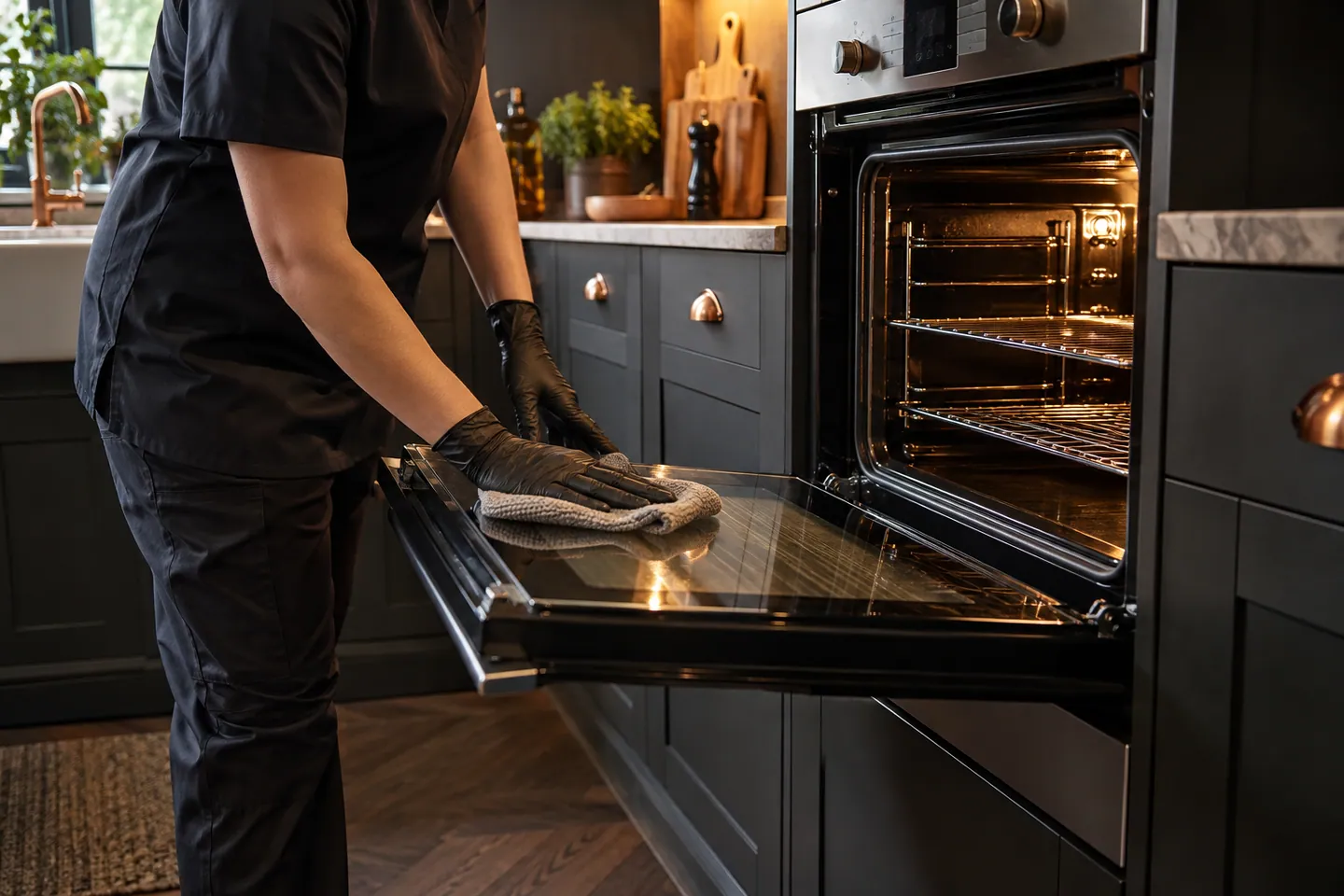
Check the formerly covered area at completion
Review the cleaned accessible surface and the agreed accessories, asking about any mark that remains. Account for the original scope rather than expecting restoration of damaged enamel or a lost coating. Confirm next-use guidance and how the model instructions apply to the accessory’s placement. The aim is a useful cleaning result and a clearer basis for routine care, not an assumed repair or installation change.
Connect the spill with the cooking layout
A model number helps establish surface design. Also identify the cooking spaces and which compartment contains the spill so the quotation reflects the appliance rather than a close-up alone.
Single cavity
Explain where the spill sits relative to a tray, rack or loose liner. Include the suitable fittings requested, even if they normally remain outside the oven.
Double oven
Name the affected upper or lower space and say whether both are included. A mark in one compartment should not leave the second cavity’s requested work unclear.
Range cooker
Count the oven cavities and separate grill. Locate the covered spill within that layout, and identify any hob work independently from the oven enquiry.
Prepare an accessible oven without removing panels
Allow the appliance to become completely cold. Remove food and unrelated cookware and keep the suitable requested fittings available. Clear room in front of the open door and the route into the kitchen. Do not unscrew a base, lift an uncertain fixed panel or pull a fitted oven out to investigate the deposit.
Explain any entry restrictions and who will meet the technician. Some oven cleans fit around one to two hours, but deposits, size, access and extras affect the allowance. If wider room surfaces also need work, discuss kitchen deep cleaning as an additional scope with its own timing.
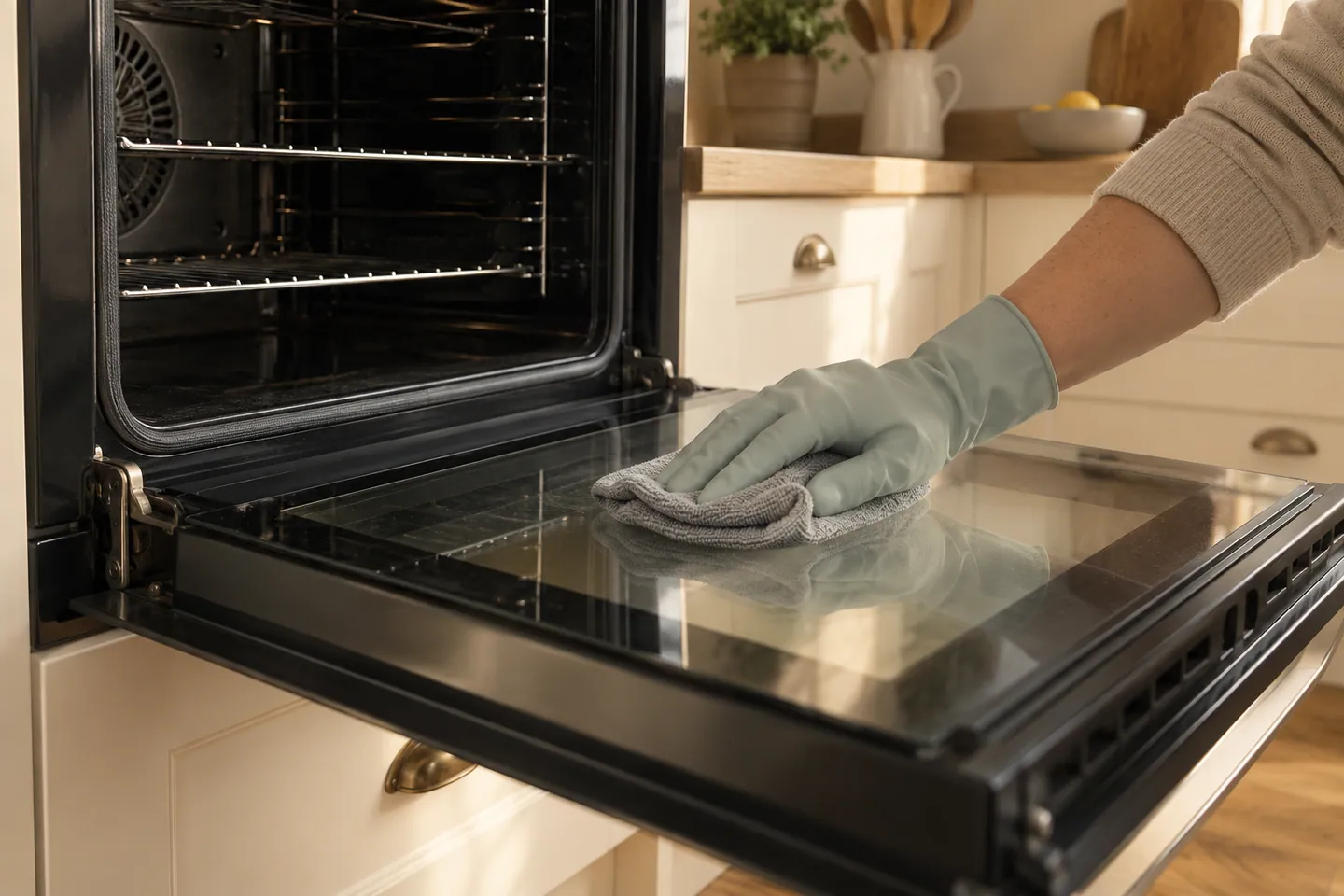
Keep the cleaning boundary visible
Work that may be included
- Reachable oven surfaces suitable for treatment
- Named racks, trays and accessories where appropriate
- Accessible glass according to the door design
Different tasks or expectations
- Removal of fixed panels by assumption
- Repairing worn enamel or accessory coatings
- Heating-element diagnosis or appliance repair
The agreed components should be listed, especially if an aftermarket liner or separate tin is involved. Tell the booking team about self-cleaning features and special surfaces. A spill can be cleaned only within suitable access and material limits; identifying it does not imply that every part beneath the cavity can be opened.
Build the quote around the actual compartment
Single ovens have a published £50–£75 guide, doubles £75–£100 and ranges £100–£130. Explain the appliance, the covered spill and requested accessories, then confirm the total for the Kensington visit. Check VAT treatment and any relevant parking or access costs before relying on the amount.
Request hob cleaning separately if cooking spills extend onto that surface. An extractor is another item, with its own £25–£40 guide. Make any combined quotation explicit so the cleaning of a cavity is not confused with an entire cooking-area service.
Avoid letting a covered spill become invisible again
Use the manual when choosing whether a liner or foil arrangement is permitted. Do not cover the cavity floor or ventilation openings by guesswork. After cooking and cooling, check suitable loose accessories and the surfaces you can normally reach, using the method allowed for each material.
A tray can need ordinary attention sooner than the oven walls. Looking at both helps you plan future cleaning around actual deposits rather than a universal interval. The daily oven-care article offers general ideas; the appliance instructions remain the reference for specialist surfaces and accessories.
Questions about covered spills and loose liners
Should I lift a loose liner to describe the spill?
Only handle ordinary loose items safely on a cold appliance without forcing or dismantling anything. If a piece seems fixed or its purpose is uncertain, leave it and explain the arrangement when enquiring.
Can the base panel be removed for cleaning?
Do not assume removal is part of the service. Provide the model and explain what you want reached so appropriate access can be discussed before the appointment.
Is an aftermarket liner included?
Identify it separately, with its instructions where available. Its material and suitability need checking, and inclusion should be confirmed instead of inferred from its position inside the oven.
Will a dark patch always disappear?
No. It may be removable residue, staining or damaged material. Describe the condition and ask about limits, particularly if the outcome for that specific patch determines whether you wish to book.
What details help arrange Kensington service?
Provide the full postcode, address, model and compartment list. Include the spill location, accessories requested and practical entry arrangements so timing and the agreed quote reflect the work.
Area information for your enquiry
Explore the service areas directory, or choose a relevant nearby area below. When calling, give the full postcode so the address and appointment options can be confirmed.
Arrange your Kensington oven clean
Discuss the appliance, address and work you want included before agreeing the quote and visit.