
High Wycombe / Oven care
Oven Cleaning High Wycombe
An oven left in a property can come with unanswered questions. For High Wycombe, describe its present condition and identify the appliance before deciding what cleaning would help. Confirm your full address, the suitable components and the appointment, keeping any ownership or repair questions separate from the requested cleaning work.
- Establish the condition you can actually see
- Identify fittings without guessing their history
- Agree the reachable surfaces before booking

Begin with what is in front of you
You may be responsible for arranging a clean without knowing who last used the oven or how it was maintained. Start with observations: the model if available, the number of cooking spaces, the deposits visible when cold and the fittings present. There is no need to fill gaps in its history with assumptions about previous occupants.
Ask John’s about professional oven cleaning at the complete High Wycombe address. Confirm availability for the property before coordinating entry. A published area page supports an enquiry, while the postcode, requested work and timing establish the practical visit you need.
If you are comparing the oven with a property inventory, keep that evidence distinct from the cleaning request. A photograph can record an existing mark, while another wider image shows the appliance and its layout. Together they help explain what is known today without asserting how the mark appeared or assigning responsibility for it.
From unknown history to an agreed clean

Identify the appliance and its existing condition
At the start of the visit, point out the marks you noticed and any known loose fittings or damage. Keep paperwork or a manual available if it helps identify the construction. A recorded condition gives the conversation a reliable basis: appropriate food deposits can be cleaned, while chipped enamel or damaged glass needs a different expectation. Unknown history does not mean every mark is removable.
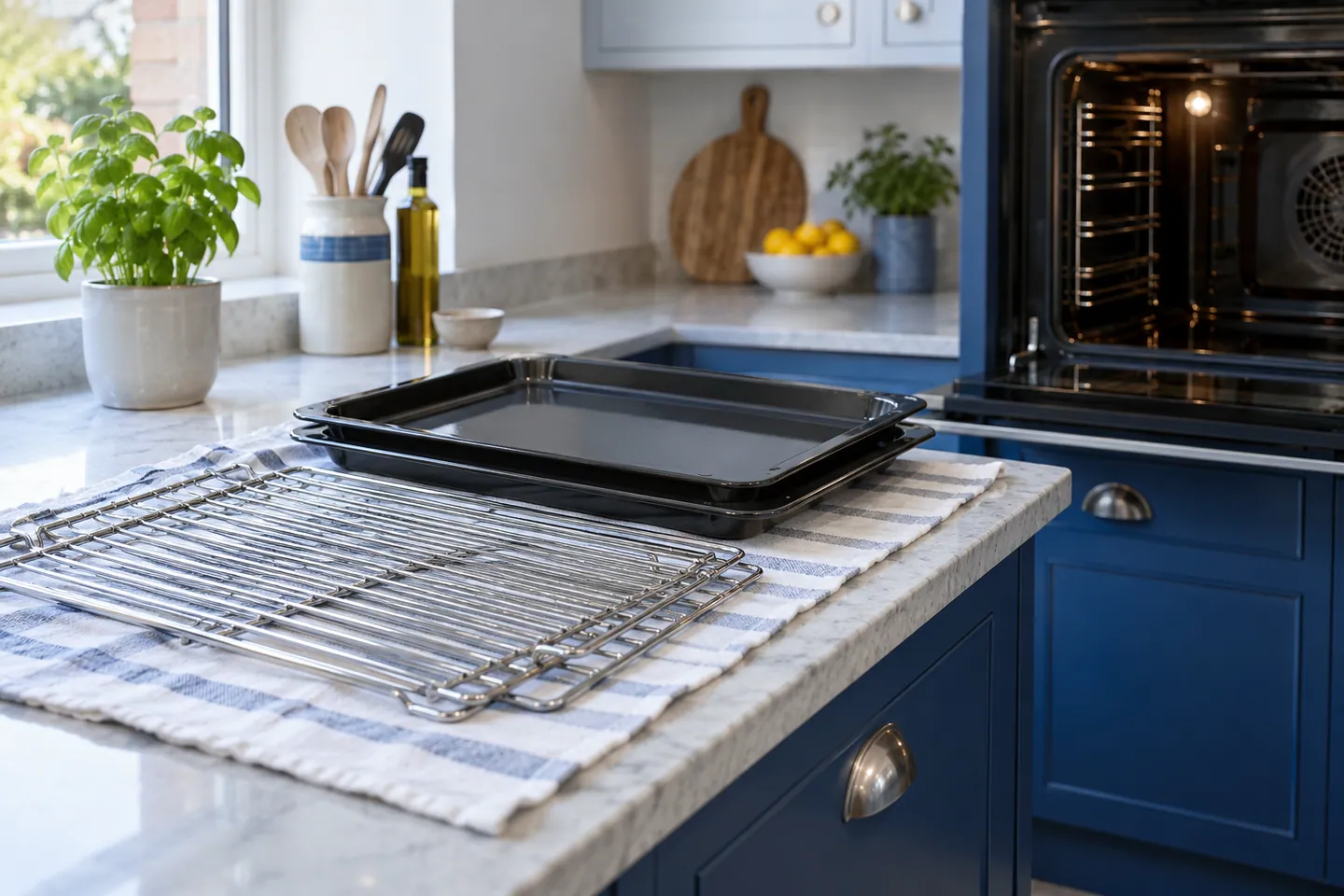
Sort the components into an agreed clean
Work can then follow the components identified for treatment, including suitable removable shelves and trays. An item left inside may be separate cookware, so its material and inclusion deserve checking. Door-glass access depends on the model. The cleaning approach should respect the surfaces actually present rather than rely on what a similar-looking appliance allowed at another property.
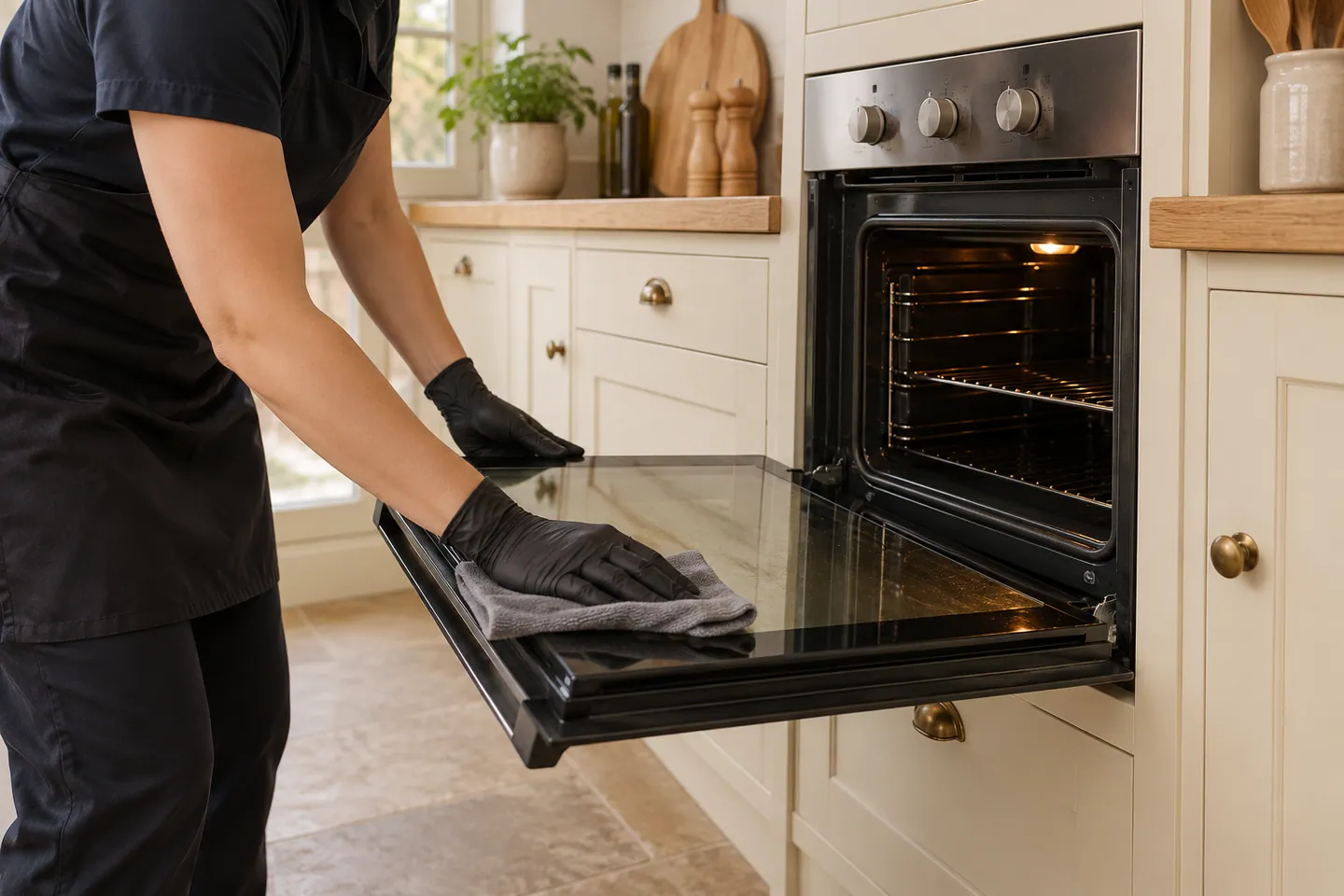
Compare the completed work with that starting point
After cleaning, look at the agreed accessible surfaces and discuss any marks that remain. Distinguish a clearer view of existing wear from residue still requiring explanation. Check the requested fittings are accounted for and ask about the guidance for the next use. This review concerns the cleaning carried out; it is not a technical inspection of the appliance.
Describe the cooking spaces without guessing
A make and model help, but a plain description of the layout also starts a useful quotation. Identify each heated cooking space and any separate grill, then list the accessories requested.
One main cavity
Mention an internal grill setting and the shelves or tray you want included. A single chamber can have several functions without becoming a double oven.
Two compartments
Describe the upper and lower spaces individually. An unfamiliar small door may open into a grill or second oven, so check its function where you can.
Several range cavities
List the cooking compartments and separate grill. Identify the hob independently, and distinguish storage drawers from spaces intended to cook food.
Make entry and access straightforward
Leave the oven completely cold and remove food and unrelated items. Retain the suitable fittings agreed for cleaning, including any stored elsewhere. Clear room to open the door and work in front of it. Do not remove panels or pull a fitted appliance forward simply because you do not know what is behind it.
If someone else controls entry, agree who will meet the technician and pass on the same condition information. For broader room work, discuss kitchen deep cleaning separately so cupboards or floors are not confused with oven components.

Define the work around present condition
Cleaning to discuss
- Reachable cavity and exterior surfaces
- Suitable identified racks and trays
- Glass surfaces accessible on this model
Separate questions to resolve
- Ownership and tenancy responsibility
- Fault diagnosis or replacement components
- Restoration of corroded or damaged finishes
The appliance’s current condition guides the clean. Mention self-cleaning features and specialist liners before treatment. If responsibility for authorising work is uncertain, resolve that separately; neither the presence of the oven nor the area page establishes ownership. Suitable cleaning does not reverse wear or repair faults.
Use a quote for this appliance and address
Published oven guides place singles at £50–£75, doubles at £75–£100 and ranges at £100–£130. Confirm your price after the layout, condition and components are understood. Ask how VAT and any applicable parking or access costs are handled for the High Wycombe visit.
An extractor has its own £25–£40 guide. Request hob cleaning expressly if wanted. Some oven visits take around one to two hours, but deposits, size, access and additional work affect the allowance; confirm timing before arranging another commitment.
Build a routine from the model instructions
Once you know the appliance, keep its manual or model details available for routine care. Attend to appropriate spills after cooling and care for removable trays according to their material. Avoid covering the base with foil unless permitted, and keep ventilation clear.
Future cleaning can follow your own cooking habits rather than the unknown habits of someone before you. If heating, door movement or another operating feature concerns you, seek suitable appliance advice. Repeating a clean cannot substitute for assessing a fault or repairing a damaged fitting.
Keep an eye on the accessories as you begin cooking regularly. A tray may need ordinary attention after a meal while the cavity remains relatively clear. Noticing that difference lets you maintain the parts you use most and decide when a fuller professional clean would offer practical value, rather than booking on an arbitrary calendar.
Questions about an oven already in the property
Must I know who used the oven before?
No. Describe its present condition and what you want cleaned. Past use may be unknown; observable deposits, model details and existing damage provide a more useful basis for the cleaning discussion.
What if there is no manual?
Look for accessible model information or purchase paperwork if available. Otherwise provide a careful layout description and photographs, without moving or dismantling the appliance to find a hidden label.
Are abandoned baking tins included?
Identify them separately and ask about suitability. Their presence does not make them original oven fittings, and an uncertain coating or damaged material may change what cleaning is appropriate.
Can a clean establish whether it works?
Do not treat cleaning as an operating assessment. Report symptoms and seek appropriate advice. Removing residue does not establish the condition of the heating system, controls or other components.
How do I arrange the High Wycombe address?
Supply the complete address and postcode, appliance description and requested work. Confirm property availability and entry arrangements before making plans that depend on a particular appointment.
Area information for your enquiry
Explore the service areas directory, or choose a relevant nearby area below. When calling, give the full postcode so the address and appointment options can be confirmed.
Arrange your High Wycombe oven clean
Discuss the appliance, address and work you want included before agreeing the quote and visit.