
Knightsbridge / Oven care
Oven Cleaning Knightsbridge
Glass, metal and enamel can sit side by side in one oven without sharing the same care needs. For a Knightsbridge clean, identify the model and any special finishes, then describe the deposits and suitable fittings requested. Agree the components and practical visit details around the appliance you actually use.
- Describe mixed materials within one appliance
- Flag specialist liners and coated accessories
- Agree suitable treatment by component

One oven can contain several cleaning questions
The frame, racks, cavity and door may all look like parts of one job, but their materials can respond differently to care. A method suited to one component should not automatically be transferred to another. Start your enquiry with the model and any information about special surfaces, rather than asking for the same strong treatment everywhere.
John’s serves Knightsbridge as part of its London coverage. Request oven cleaning with the full postcode and a description of the cooking spaces and deposits. Mention the finish only where you know it; uncertainty is useful information too, and a photograph can explain the position without proving the material.
Coated accessories deserve particular clarity. A tray bought separately may have instructions that differ from the oven manual. Keeping those details together helps establish a sensible scope and avoids assuming that every removable item belongs to the appliance or can be approached in the same way.
A component-by-component cleaning sequence

Recognise the materials and existing wear
At the beginning, show the surfaces that matter to your enquiry, including specialist liners, decorative trims and known damage. The condition discussion can separate suitable grease or food residue from scratches, lost coatings or permanent staining. The aim is to understand the appliance before treatment, using its construction and available care information rather than its general appearance alone.
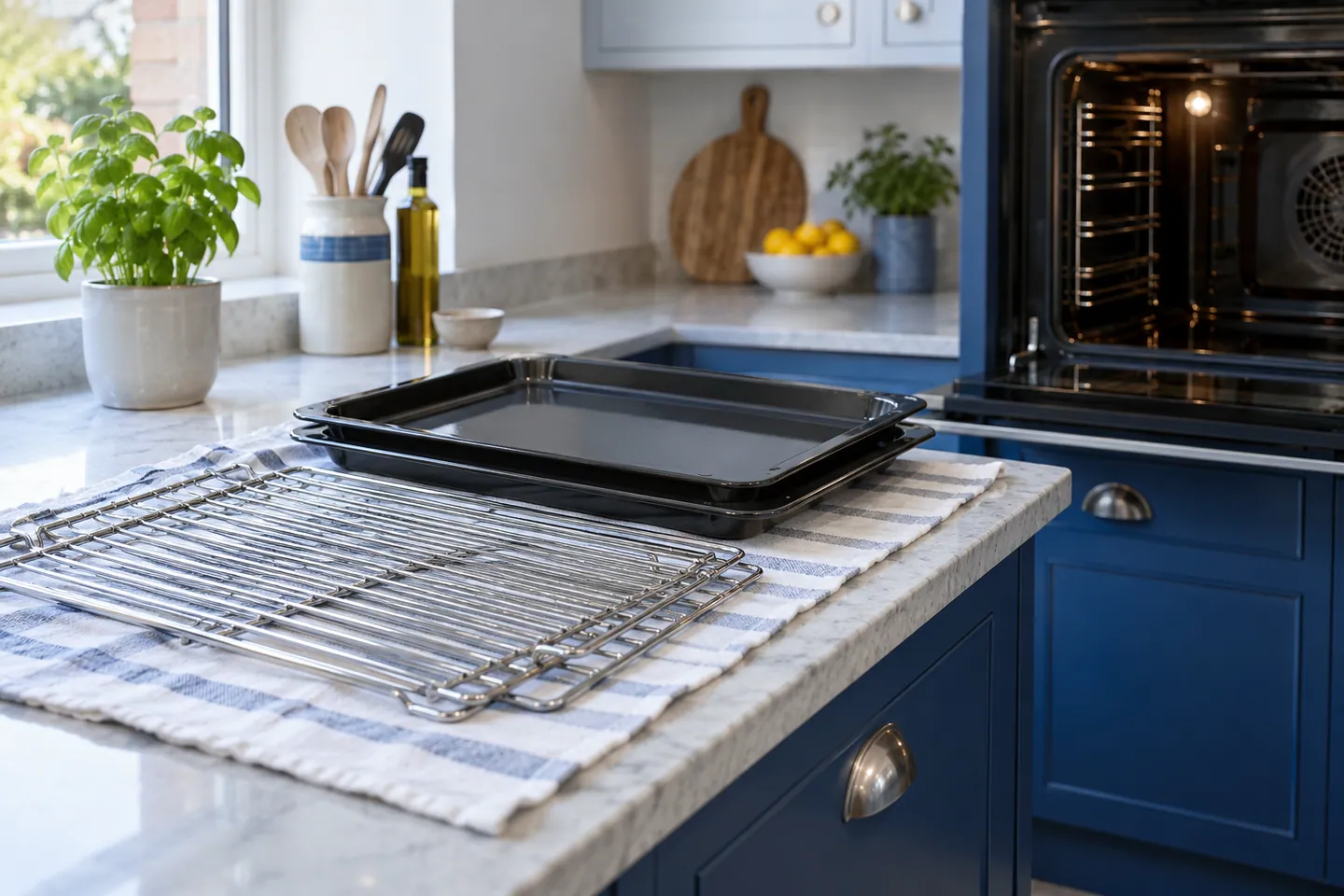
Identify the suitable removable pieces
Confirm the shelves, racks and trays requested and explain whether any are replacements or separate cookware. Components with coatings or sliding systems need their own suitability consideration. Removing an ordinary loose tray is different from opening a fixed panel or withdrawing a fitted appliance. Keep those distinctions explicit so the job follows the components agreed in the quotation.
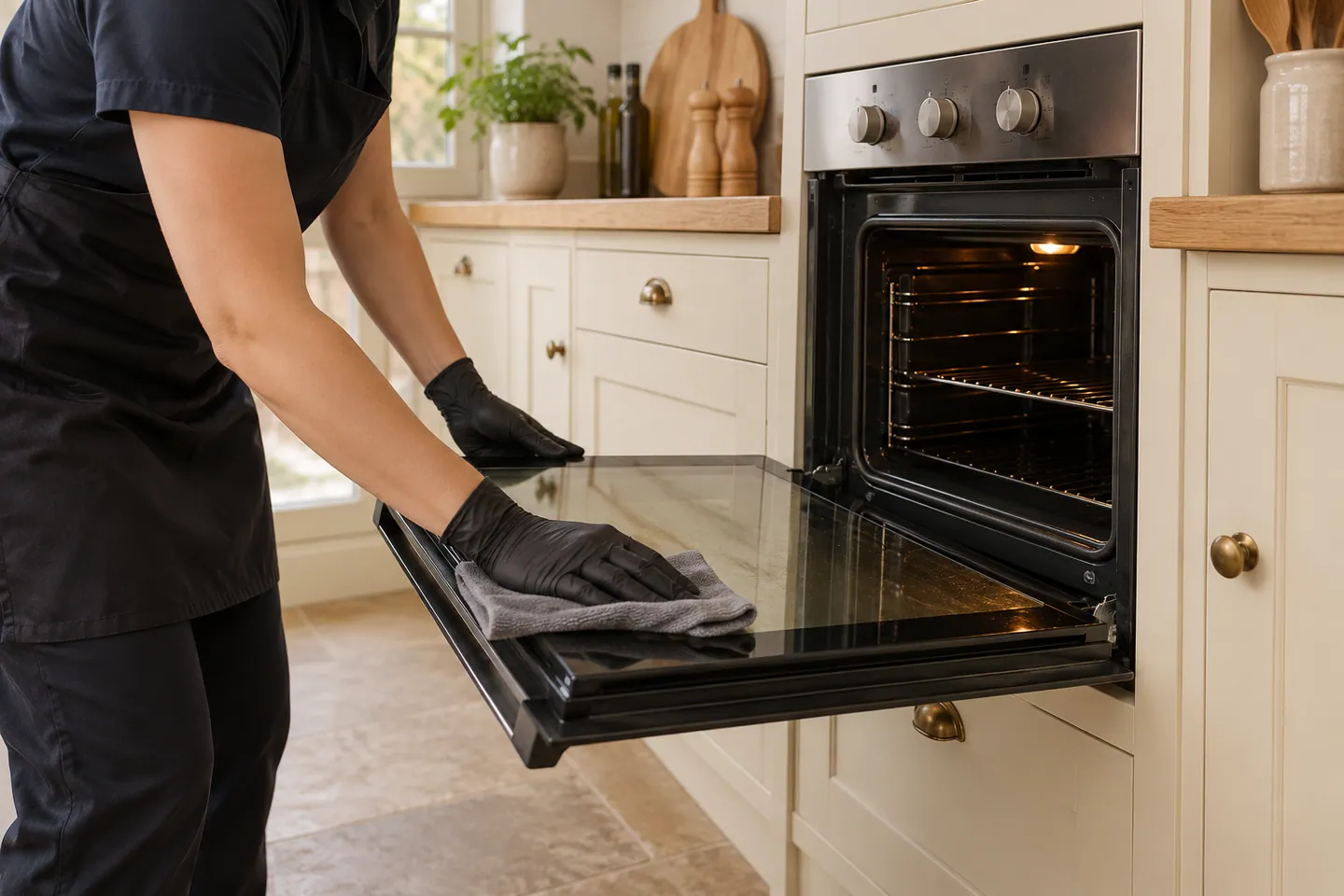
Clean according to the component
Reachable cavity and exterior areas, suitable accessories and accessible glass can then be treated within the confirmed scope. Different materials need appropriate methods. Glass access depends on the door design, and specialist surfaces should not receive an improvised approach just because a deposit is stubborn. Cleaning remains suitable residue removal rather than a promise to restore a worn finish.
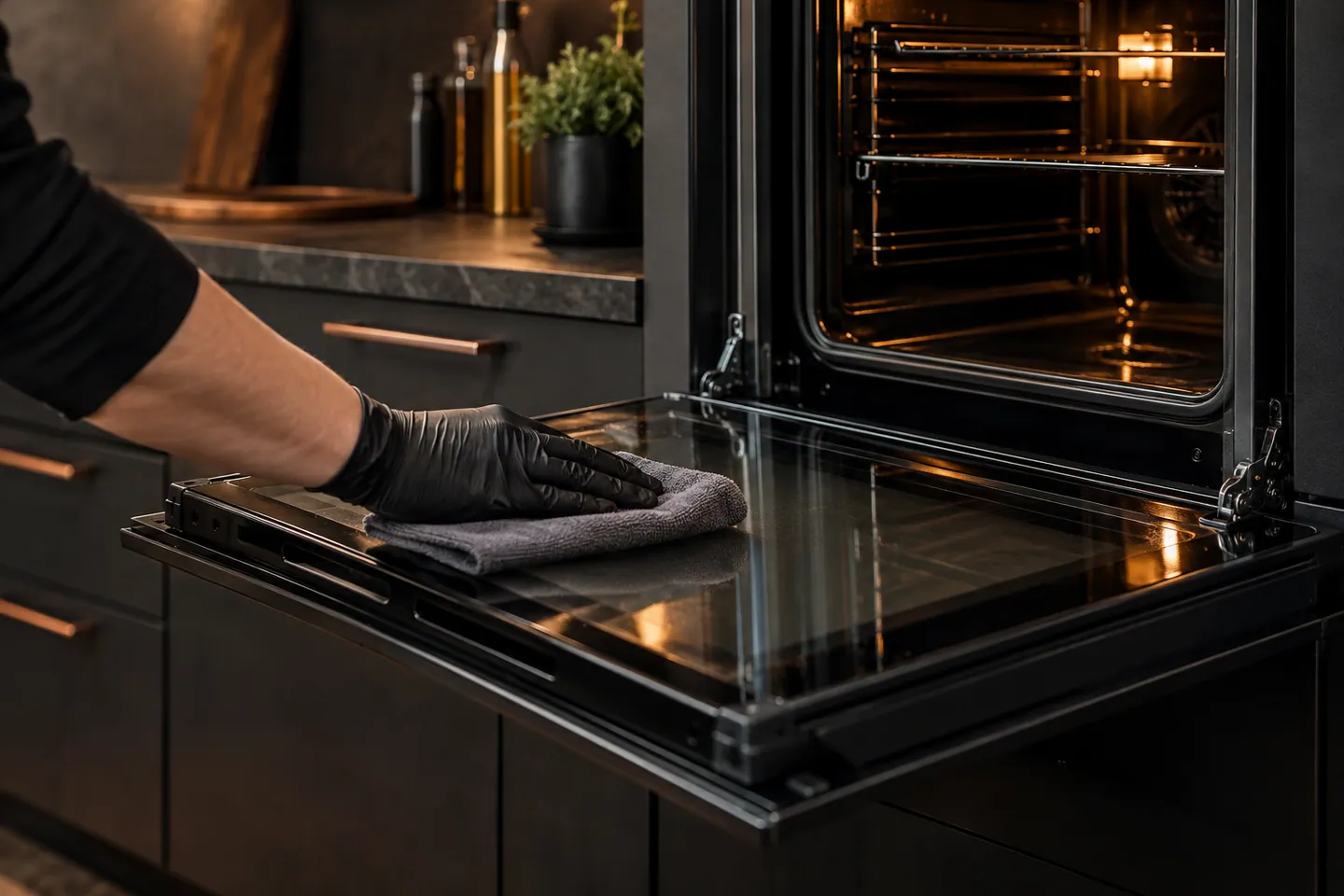
Review surfaces with realistic expectations
Look at the agreed areas afterwards and ask about any marks that remain. A clearer component can reveal existing wear beneath grease. Check the requested fittings are accounted for and confirm guidance for next use. The review ties the result to the materials and condition discussed at the start, without implying repairs or a change in the appliance’s performance.
Describe layout as well as finish
The appliance category gives scale to the material discussion. Identify each heated cooking compartment and a separate grill, then name the suitable accessories requested in those spaces.
Single oven
Describe the main cavity, internal grill function if present and shelves or tray. The front finish alone does not identify the liners or fittings inside.
Double oven
Explain both cooking spaces. Their surfaces and use can differ, so the upper compartment should not be described solely by reference to the larger oven below.
Range cooker
List the ovens and independent grill. Identify the hob as another requested cleaning item rather than assuming every surface across the cooker has one scope.
Leave the materials visible and the oven cold
Remove food, unrelated cookware and stored belongings, keeping the agreed accessories available. Let the appliance cool fully and clear room at the open door. Do not strip fittings or remove glass in anticipation of cleaning. Tell the booking team about restrictions that affect access to a particular component.
Confirm entry and who will be contactable. Some oven cleans take around one to two hours, while size, deposits, access and extras alter timing. Wider kitchen deep cleaning needs its own material description and task list if you want surrounding surfaces included.
Keep material care inside an agreed job
Components that may be covered
- Appropriate accessible cavity and exterior areas
- Suitable listed racks and trays
- Reachable door glass for this construction
Different expectations to exclude
- Rebuilding lost coatings or missing enamel
- Opening every fixed component automatically
- Repairing glass, controls or heating faults
The quotation should identify what is included and any access limits. Cleaning cannot remove every scratch, reverse corrosion or repair damaged parts. Describe important marks before booking so the proposed work is useful even where the underlying finish will retain signs of age or damage.
Ask for a component-based total
Published guides list single ovens at £50–£75, doubles at £75–£100 and ranges at £100–£130. Confirm your amount after the model, condition and fittings are described. Check VAT treatment and any applicable access or parking costs for the Knightsbridge address.
Add hob cleaning explicitly, specifying the surface. Extractors have a separate £25–£40 published guide. The combined quotation should identify each appliance so a material discussion about one oven does not accidentally become an assumed package covering the whole cooking area.
Carry the material distinctions into everyday care
Once cooled, deal with suitable fresh spills according to the appliance instructions. Do not use a tray-cleaning method on a specialist liner simply because both have cooking residue. Avoid foil over the cavity base unless permitted, and keep ventilation openings unobstructed.
Choose future professional cleaning by the deposits that remain after appropriate routine care. General ideas in the surface-care and kitchen-grease article can support habits, while the model and accessory instructions govern special materials. A damaged component needs an appropriate response beyond repeating the clean.
Questions about mixed oven materials
Must I know every material name?
No. Give the model, any instructions you have and a clear description. Say where you are uncertain rather than guessing a coating; photographs can show position and condition without proving material composition.
Can all metal-looking parts be treated alike?
Appearance does not establish identical finishes or care requirements. Describe coated pieces and replacement accessories separately, and let suitability follow the component information rather than a single treatment for every part.
What if enamel is chipped?
Point it out before work. Cleaning can address suitable deposits but cannot replace missing enamel or restore the exposed area. Existing damage remains distinct from grease on the surrounding surface.
Are neighbouring cabinet finishes included?
Request broader kitchen work separately and identify its surfaces. An oven clean concerns the agreed appliance components; adjacency does not make a cabinet or worktop part of that scope.
What helps arrange the Knightsbridge visit?
Send the full postcode, address, appliance layout and known material details. Add requested fittings and entry arrangements, then agree the quotation and timing for the specific work.
Area information for your enquiry
Explore the service areas directory, or choose a relevant nearby area below. When calling, give the full postcode so the address and appointment options can be confirmed.
Arrange your Knightsbridge oven clean
Discuss the appliance, address and work you want included before agreeing the quote and visit.