
Hither Green / The service guide
Oven Cleaning Hither Green
An oven already in a furnished property may come with unfamiliar fittings and little information about previous use. For cleaning in Hither Green, start with the appliance’s current condition. Identify the cooking spaces, accessories and marks you want addressed, then agree the cleaning request and practical arrangements for the visit.
- Describe the oven’s condition as it is today
- Identify the accessories left with the appliance
- Build your own care routine from the model information
Begin with what is present, not an assumed history
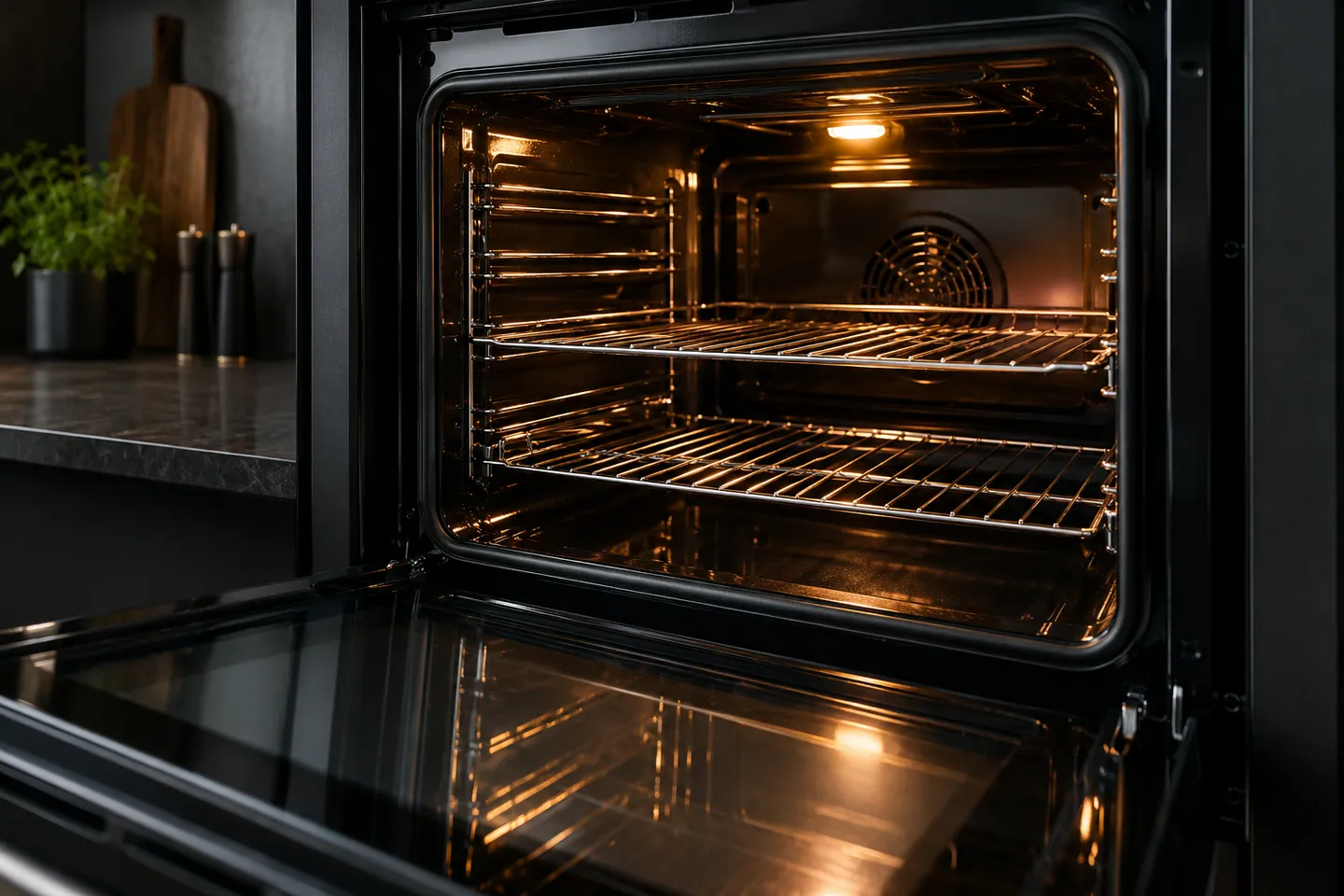
Look at the oven when cold and note the compartments, shelves and trays that are actually there. You may not know how the appliance was used before, but you can still describe the visible residue and any damage. That provides a useful starting point for oven cleaning in Hither Green.
We serve Hither Green within our London coverage. Give us the full address, appliance details and work requested when arranging a visit. If someone else is responsible for authorising the cleaning, settle that arrangement and the entry details before accepting the appointment so everyone knows the work being requested.
Identify the oven and the items left with it
Look for the manual, available paperwork or an accessible model label. If the exact model remains unknown, explain the layout in ordinary terms rather than moving the appliance to investigate. Matching fronts can belong to different units, so distinguish a cooking cavity from a storage drawer, warming unit or separate microwave.
Count the racks and trays you want considered and mention anything unfamiliar. A pan left in the kitchen may be separate cookware, not an original fitting. Describe its material and condition where known, including damaged coatings or unusual parts, and ask about inclusion instead of treating everything left behind as part of the oven service.
Point out existing marks without assigning a cause you cannot know. If you keep condition notes for the property, maintain those separately from the cleaning request. The cleaner needs to understand the present surfaces and your priorities; there is no need to establish who created a deposit or explain an uncertain history before arranging useful work.
Describe the cooking spaces you now have
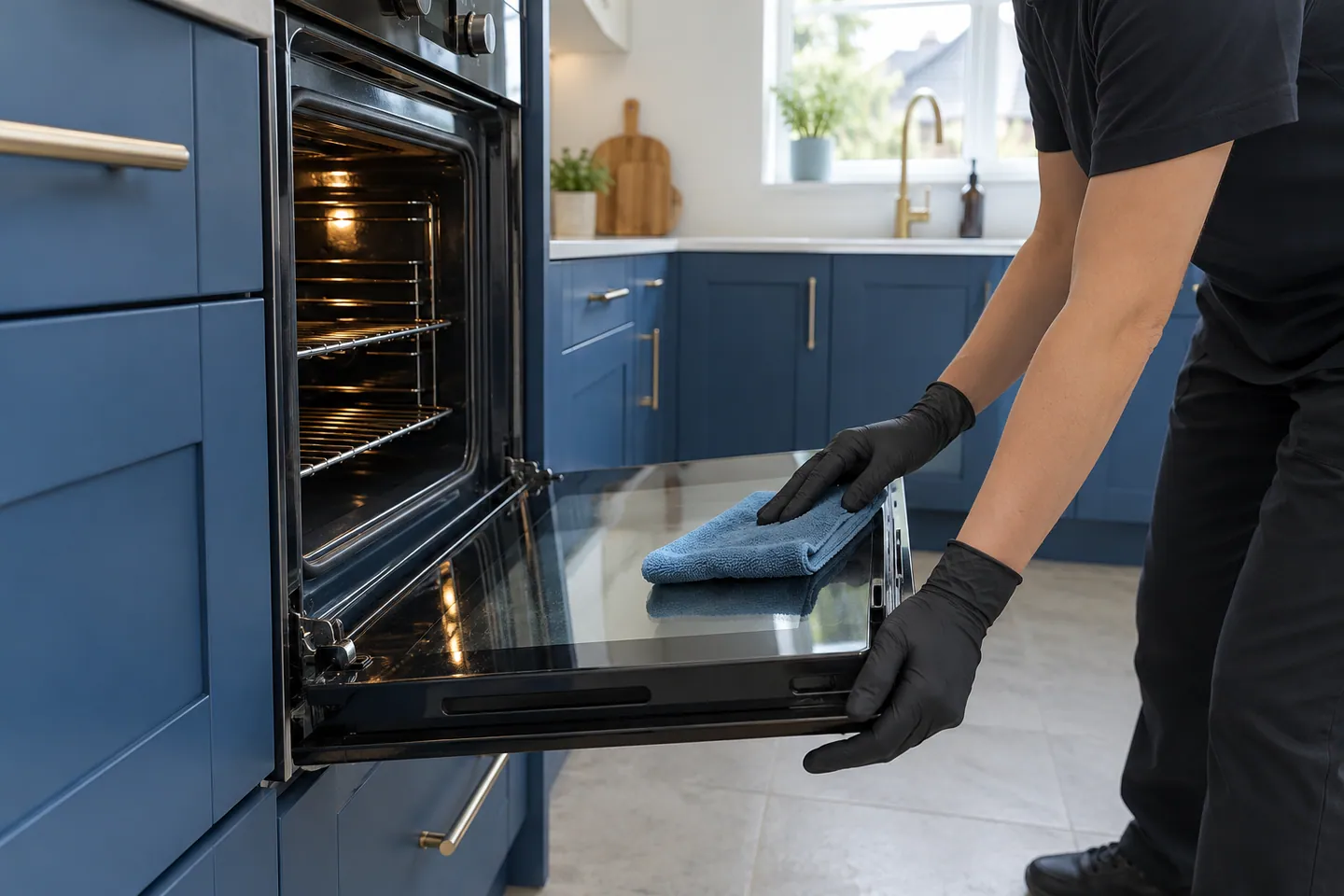
Use the actual layout to choose a category, then add the accessories and condition. A familiar-looking front should not replace a description of what lies behind each door.
| Configuration | What to distinguish | Useful detail for a quote |
|---|---|---|
| Single oven | One cavity can include a grill setting and several shelves | Identify the fittings present and the deposits you want addressed. |
| Double oven | Upper and lower compartments may have different accessories | List both spaces requested and the trays or racks remaining with each. |
| Range cooker | Several doors may include ovens, a grill and storage | Name the cooking compartments required and separate them from non-cooking sections. |
If the hob also needs attention, request hob cleaning with its own type and condition. The fact that appliances were left together in the property does not make them one cleaning item.
Agree a useful clean for the present condition
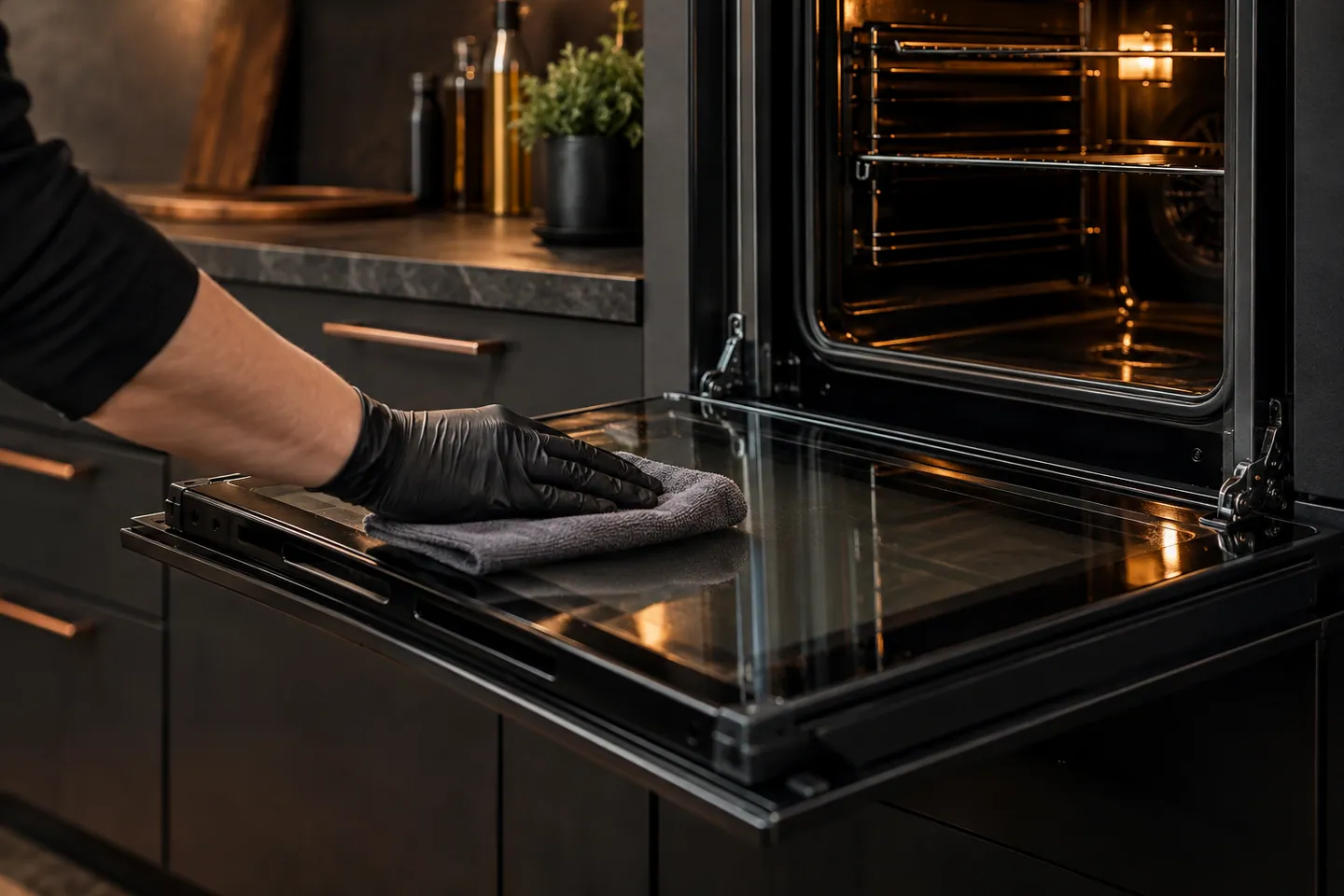
We clean the oven interior, exterior and removable fittings listed in your quotation. Tell us about specialist liners, self-cleaning features and glass marks between panes so access can be checked for the model. Identify separate cookware before booking and confirm which items are included rather than relying on their presence in the cavity.
A cleaning visit does not certify an unfamiliar oven’s operation. Report faults, damaged parts and loose fittings beforehand. Repairs and technical checks need their own arrangements, while scratches, worn finishes and permanent stains may remain after cooking deposits are removed. Ask about the marks that matter most before accepting the work.
Make the appliance and requested fittings available
Let the oven cool completely, remove food and loose items outside the cleaning request, and clear the working space. Keep the included shelves and trays identifiable, even if they were stored elsewhere when you arrived. Leave room around the door and a practical route to the kitchen.
Do not detach glass, remove liners or pull a fitted oven forwards to find hidden information. Have any model guidance available and explain recent products used. If another person provides entry, share the accessory list and known condition so the visit concerns the same appliance and priorities discussed during booking.
Budget from the identified appliance and fittings
Published guides are £50–75 for a single oven, £75–100 for a double and £100–130 for a range. Request the actual figure after describing the model, cooking compartments, condition and accessories. Unknown history does not establish how much work is needed; the current appliance and requested parts give the quote its basis.
Typical oven cleaning may take around one to two hours depending on the job. Discuss the allowance and any property deadline before planning around the finish. If other surfaces also need attention, ask about kitchen deep cleaning separately and identify the extra work instead of expecting a whole-room clean within the oven appointment.
Existing oven interiors and the fittings present

Start a routine suited to your own use
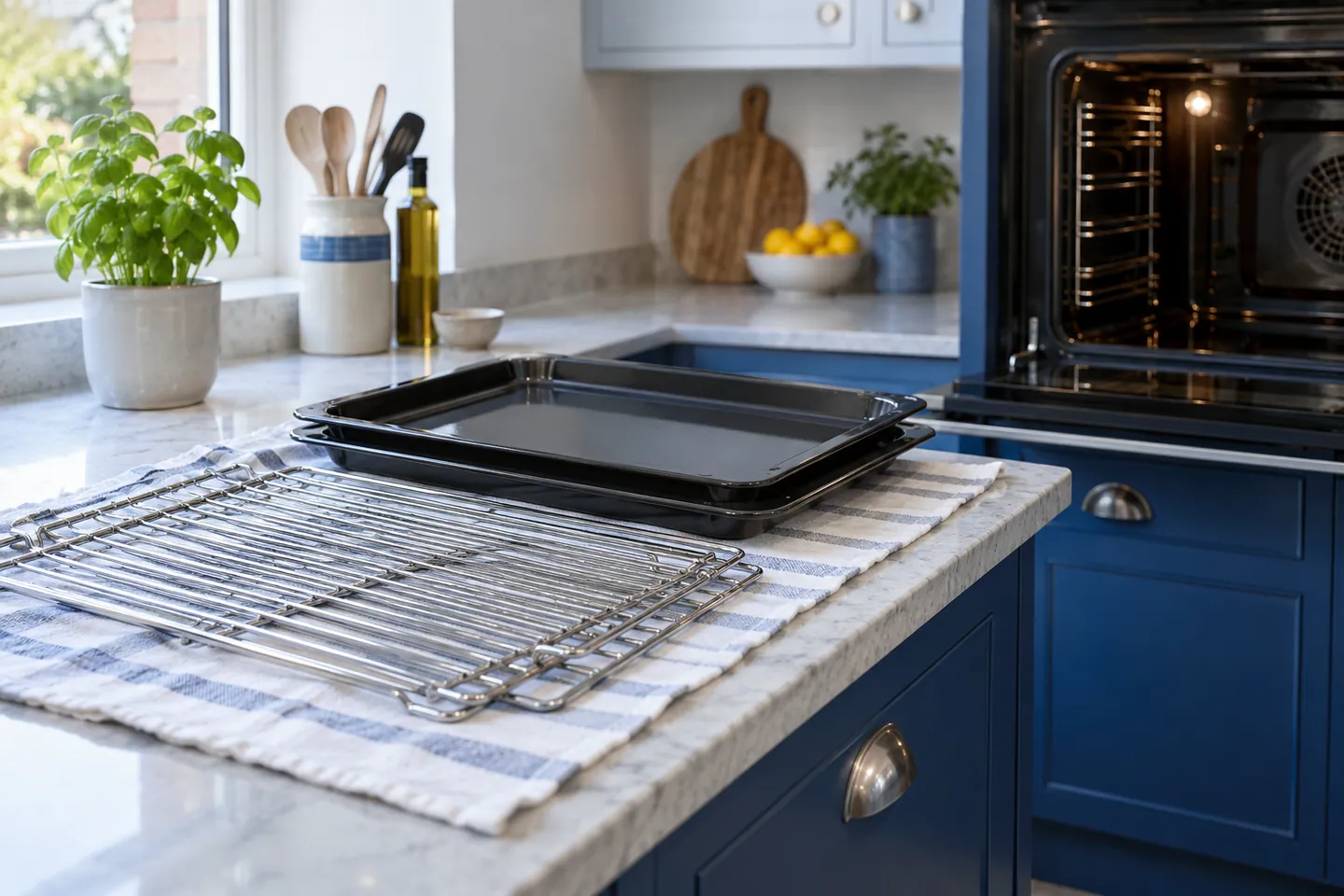
Keep the manual or model details for future care. Follow the instructions for specialist liners, self-cleaning functions and accessories, letting the appliance become cold and safe before ordinary cleaning. A tray can need attention sooner than the cavity, so check the pieces you use rather than waiting for the whole oven to look equally marked.
Let your cooking habits and the deposits that develop guide another professional clean. Recognise any permanent marks explained after the visit and distinguish them from fresh residue. Keep the accessory list current as you replace or add cookware, so the next enquiry reflects the oven you now use rather than the collection first left in the property.
Getting to know an oven left in the property
Do I need to know who last used the oven?
No. Describe the current deposits, fittings and known damage. Useful cleaning decisions can be made from the appliance present today without assigning responsibility for marks or reconstructing its previous routine.
What if no manual was left behind?
Use accessible model information or available paperwork where possible. Otherwise give a careful layout description and state the uncertainty without moving the appliance or taking panels apart to search for a label.
Are loose baking tins included because they were left there?
Identify them separately and ask about suitability and inclusion. Being present in the kitchen does not make a tin an original oven fitting or establish its cleaning requirements.
Can a clean confirm that the oven works?
Do not treat cleaning as technical assessment. Report operating concerns and arrange appropriate advice separately; removing cooking deposits does not establish the condition of controls, heating parts or hidden components.
Should I record existing marks before the visit?
If you maintain property condition notes, keep them separate from the cleaning request. Point out important marks so the expected work and any material limits can be discussed clearly.
How do I decide what care is needed afterwards?
Use the model instructions and your own cooking pattern. Monitor new residue on the accessories and cavity, recognising permanent marks explained after the clean rather than repeatedly trying to remove unchanged wear.
Nearby area guides
Find the right locality in our service areas directory, or explore these nearby guides for another address.
Discuss an oven clean in Hither Green
Call with the address, appliance details and work you want included to arrange a suitable appointment.