
Gants Hill / The service guide
Oven Cleaning Gants Hill
A mark visible through several panes of oven glass may not sit on the face you can touch. For cleaning in Gants Hill, describe where the residue appears and provide the model where possible. Agree the glass areas and the rest of the oven work before confirming the appointment and price.
- Locate visible residue in relation to the glass faces
- Ask about pane access for the actual model
- Review glass expectations alongside the cavity and fittings
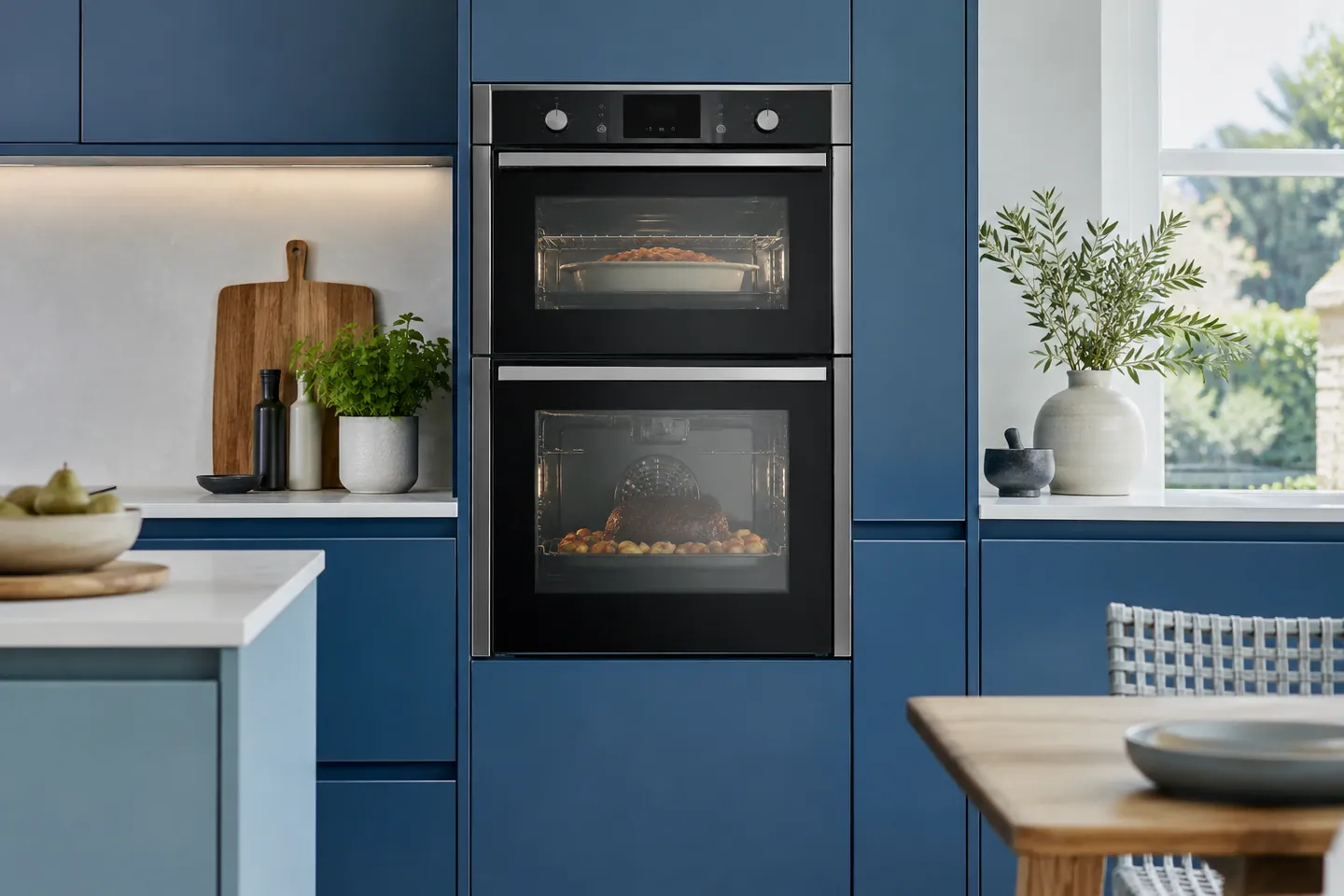
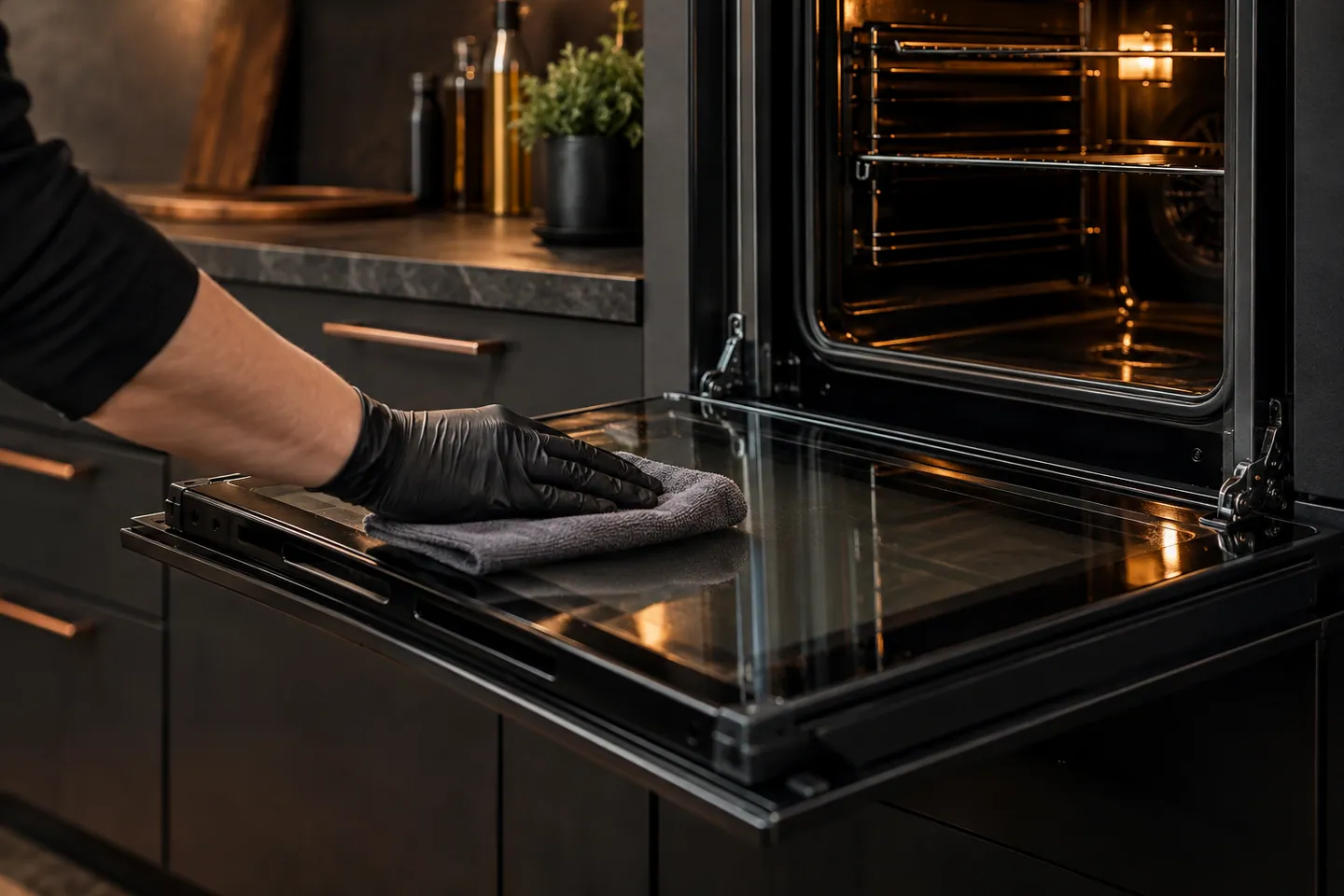
Describe the mark before describing the solution
A door can look like one sheet of glass while containing several layers. Grease on the cooking-side face and a mark between panes are different access questions. When enquiring about oven cleaning in Gants Hill, explain what you can see without assuming the door needs to come apart in a particular way.
We serve Gants Hill within our London area. Give us the full address, model details and compartments required when booking. Include the cavity and removable fittings as well as the glass concern, so we can quote for the complete oven work you want rather than leaving those parts unclear.
Separate visible glass from reachable glass
Note whether the residue is on the outer face, inside the cooking chamber or apparently between layers. You do not need to reach into a gap or remove trim to prove the location. A description and the model provide a useful starting point for asking which faces can be cleaned during the proposed work.
Mention printed borders, scratches, chips, loose trim or a damaged handle. These are part of the door’s existing condition and may matter to the cleaning discussion. Keep the manual available where possible, particularly if it describes glass care or the construction of the door. Similar-looking appliances can have different arrangements.
If you are unsure which layer is marked, say so. The important booking question is what access is possible for your model and what the quote includes. Visibility through the door does not guarantee access between every pane. Settling that expectation early makes the eventual review more useful and avoids treating an unseen surface as an automatic inclusion.
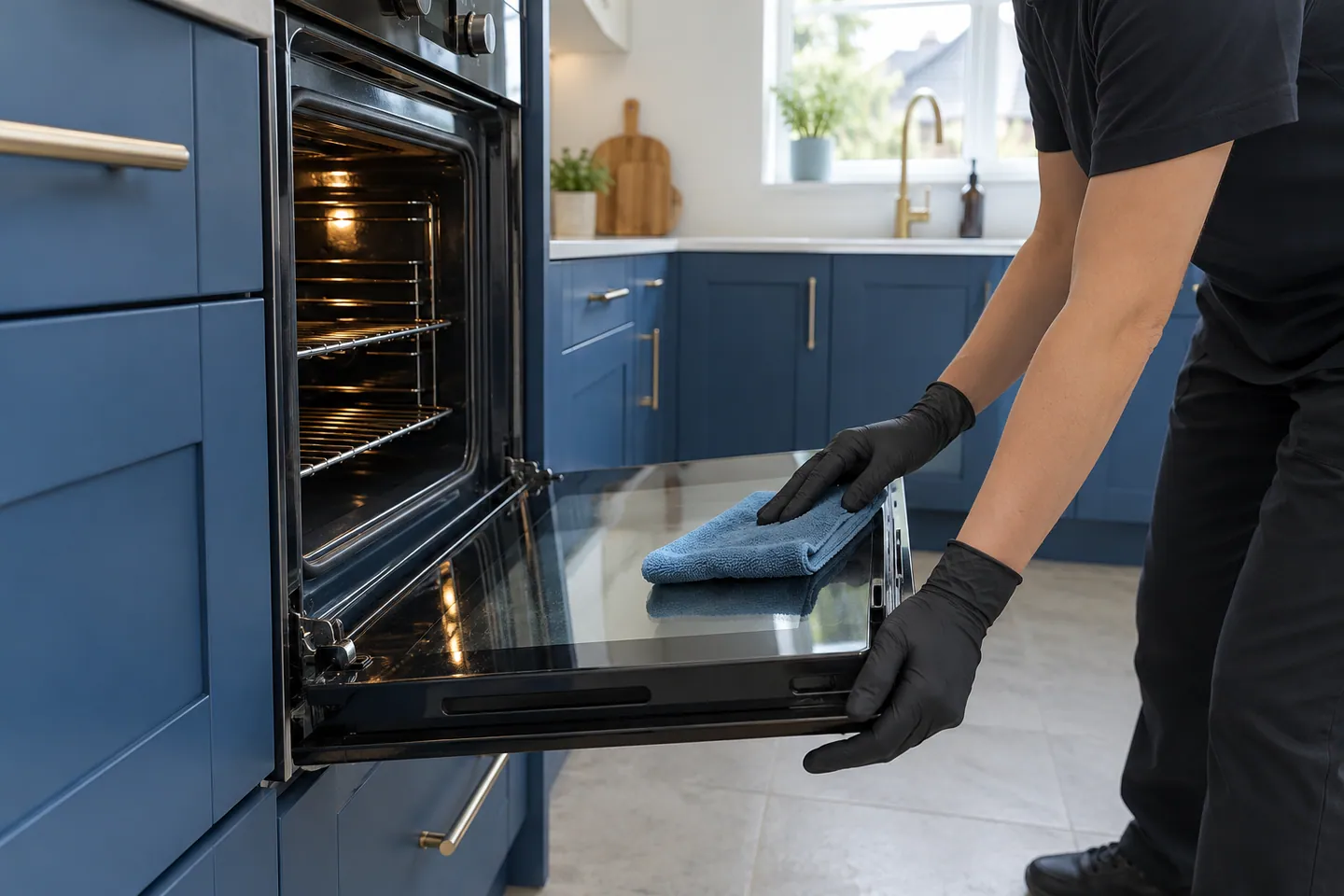
Allow for each door in the appliance
The number of cooking compartments helps explain how many doors and glass concerns need describing. Give the details for each rather than assuming one door represents them all.
| Configuration | What to distinguish | Useful detail for a quote |
|---|---|---|
| Single oven | One door can still contain several panes | State the model and where the mark appears within that assembly. |
| Double oven | The two doors may differ in residue and construction | Identify glass concerns for the upper and lower compartments separately. |
| Range cooker | Different cavities may have different door finishes | List the requested ovens and the glass attention needed on each door. |
Nearby surfaces need their own description. Ask about hob cleaning for the cooking surface, or tile and grout cleaning for surrounding tiles, rather than treating every marked surface as part of the door-glass work.
Agree the glass and the rest of the oven together
We clean the cavity, exterior and removable shelves or trays listed in your quotation, with the glass faces checked for the model. Tell us about catalytic liners and self-cleaning functions too. Identify additional cookware separately and ask whether it can be included. This keeps attention on the marked glass while making the rest of the oven work equally clear.
Cleaning is not glass repair or appliance servicing. Report damaged panes, difficult hinges and operating faults before booking; scratches, worn printing and permanent marks may remain. Door dismantling depends on the design and condition, and should never be inferred solely from a promise to clean the glass.
Leave the door assembled and provide clear access
Let the oven cool fully and remove food and loose cookware outside the brief. Clear the space around the open door and the route to the kitchen. Keep the included racks and trays identifiable and have the model reference or manual available for the glass discussion.
Do not detach panes, prise off trim or remove seals to prepare. Explain any treatment recently used on the door and report damage in advance. If someone else will admit the cleaner, pass on the location of the marks and the access expectations discussed during booking so they can ask the right questions.
Check the included glass before accepting the figure
Guide ranges are £50–75 for a single oven, £75–100 for a double and £100–130 for a range. Confirm the actual quote for your model, cavities, accessories and condition, including the glass work discussed. An appliance category is not a guarantee that every layer of every door can be reached.
Some oven cleans typically take around one to two hours, depending on the work and deposits. Ask about the allowance for the booking rather than assuming that more panes establish a fixed extra time. Raise any deadline during the enquiry and keep the final review in mind when organising the day.
Door glass, cooking spaces and removable shelves

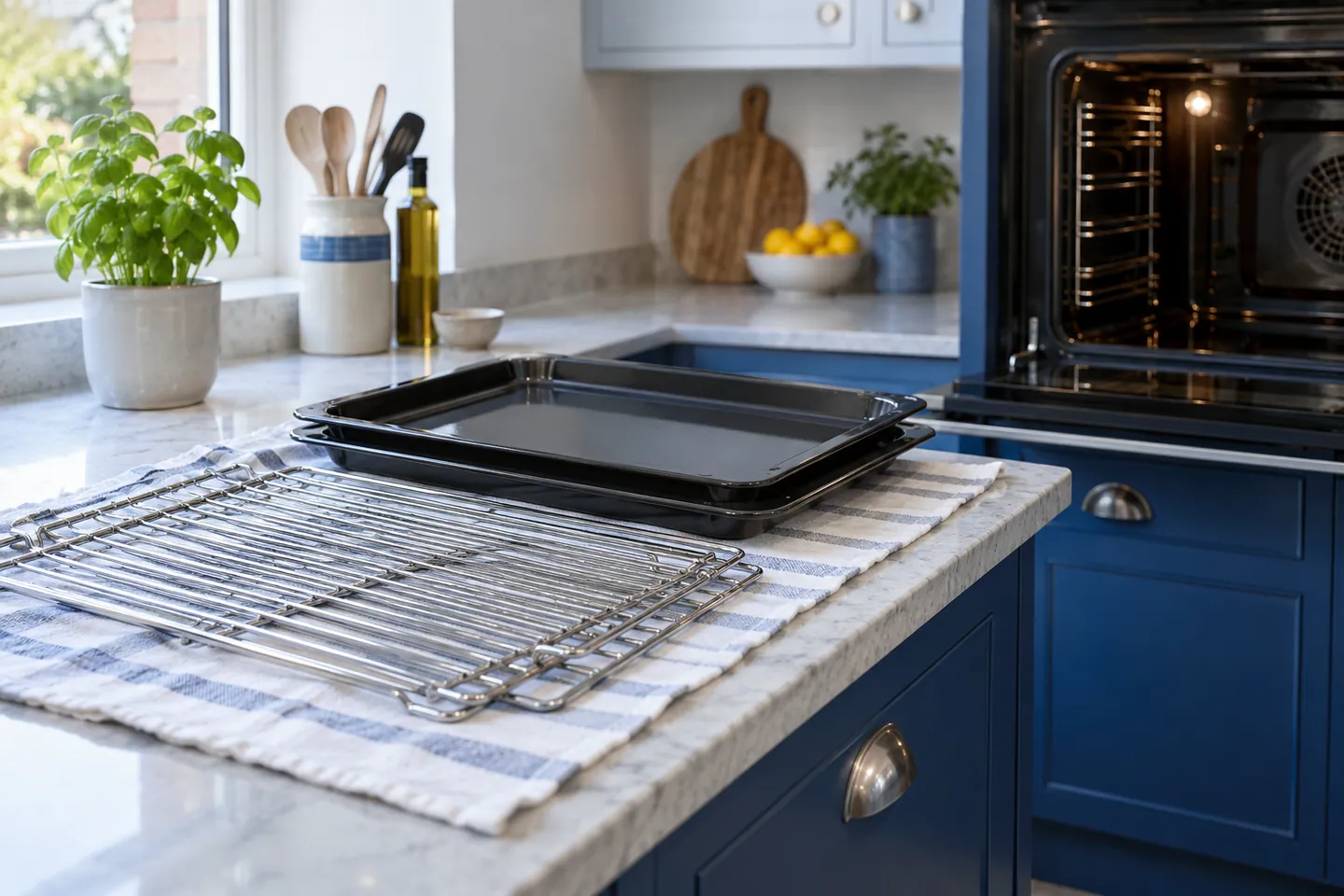
Look after each finish according to the manual
Use the manufacturer’s instructions for ordinary glass care, printed borders and trim. Once the oven is cold and safe, address suitable fresh splashes on the faces you can clean routinely. Do not push an improvised tool between panes to reach an unfamiliar mark or use a method intended for a different finish.
Review the cavity and accessories as well as the door when considering future professional attention. A clearer window does not show the condition of every tray. Base the next enquiry on actual deposits and keep track of any permanent marks or access limits already discussed, so fresh residue is distinguished from an unchanged feature. Keep the model reference with the relevant glass-care instructions for later use.
Understanding a multi-pane oven door
How can I tell which pane is marked?
Describe whether the mark appears on an exposed face or between layers, and state any uncertainty. Do not dismantle the door to investigate; the model helps frame the access discussion.
Does cleaning glass mean taking the door apart?
Not automatically. Access depends on construction and condition, so ask which faces are included for your oven rather than reading glass cleaning as unrestricted dismantling.
What if both doors on a double oven look different?
Describe each one separately. Different residue, finishes or access may need consideration, even when both doors belong to the same appliance and look similar from a distance.
Should I remove a loose piece of trim?
Leave the door assembled and report the issue before booking. Cleaning should not be assumed to repair or reassemble damaged components as part of an ordinary surface-cleaning request.
Can scratches be cleaned out of a pane?
Scratches are damage rather than cooking deposits. Mention them in advance and keep expectations focused on the removable residue and glass areas included in the quotation.
What should I ask when the work is finished?
Review the included glass faces and ask about marks that remain. Clarify whether they relate to wear, staining or access, then ask about care and next use for the model.
Nearby area guides
Find the right locality in our service areas directory, or explore these nearby guides for another address.
Discuss an oven clean in Gants Hill
Call with the address, appliance details and work you want included to arrange a suitable appointment.