
Canning Town / The service guide
Oven Cleaning Canning Town
Door glass and racks may catch your eye first, but the oven floor deserves a look too. For Canning Town, check the cold appliance from top to bottom and tell us where deposits remain. We will quote for the requested components, with any glass-access question considered for your particular model.
- Look past the most visible marks
- Include the floor beneath removable trays
- Tell us which components matter most

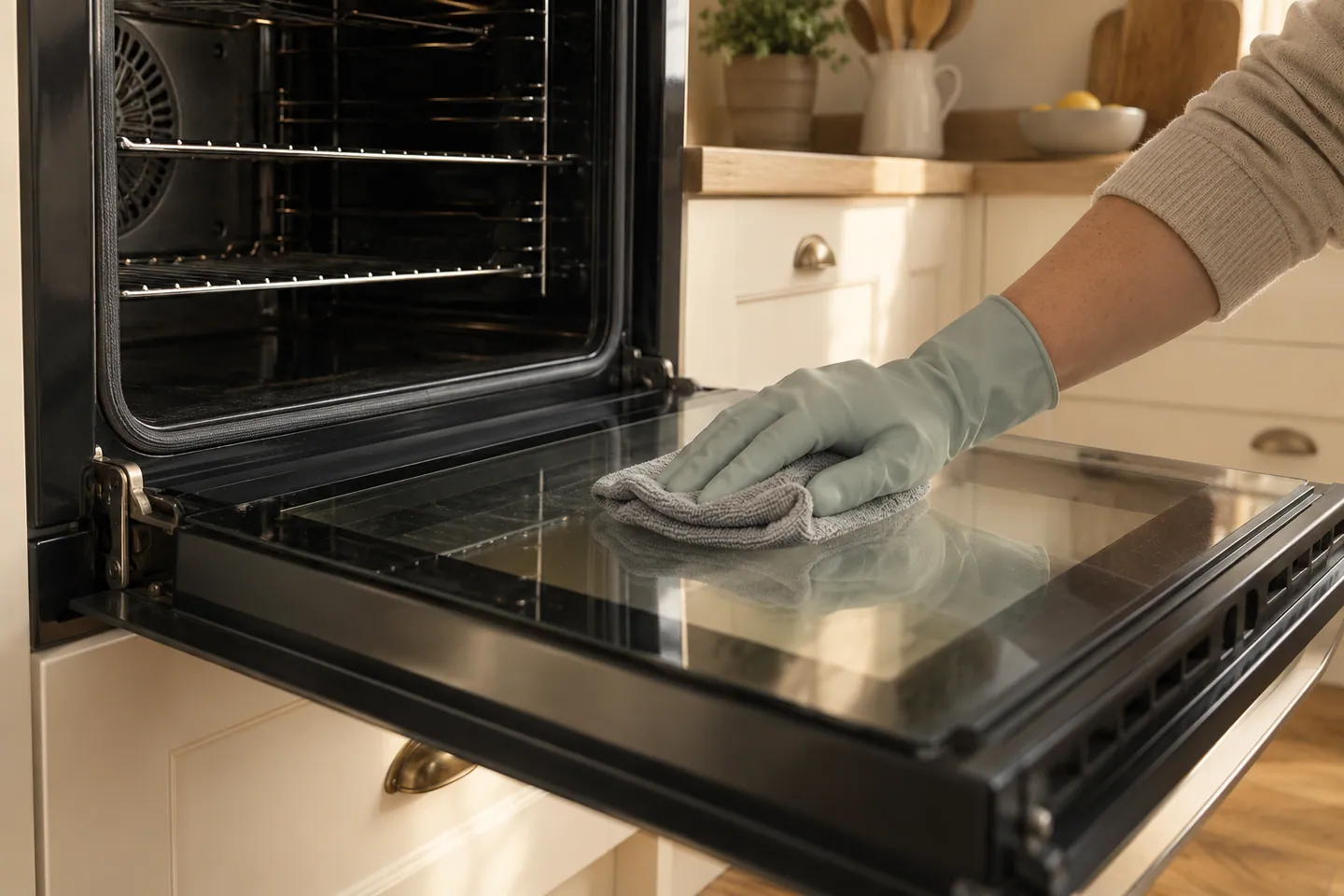
The first thing you notice is a starting point
A door covered in splashes is easy to recognise as a cleaning job. The rack carrying the most-used tray may be just as obvious. Other deposits sit lower down or behind ordinary loose equipment, where a quick glance through the glass misses them. Looking around the cold cavity helps you request the work you need, rather than judging the whole oven from its front.
We clean ovens in Canning Town and across London. Contact us about oven cleaning with your full postcode, appliance layout and the marks that prompted the enquiry. You can tell us your priorities while also listing the other surfaces and fittings you want included.
Make a simple top-to-bottom check
Look at the glass and say where the marks appear: an exposed face and a mark between panels need different access. Then check shelves and removable trays, including pieces kept elsewhere. Finally, look at the floor and the surfaces around the ordinary loose items. Leave fixed panels and anything difficult to move in place rather than forcing it to investigate.
Describe the condition rather than deciding how hard it needs treating. A dark patch can be residue, staining or worn material, and coated fittings may have their own care instructions. A clearer door does not describe the whole cavity. Including the less obvious areas now gives us a fuller picture and lets you compare the finished work with your original request.
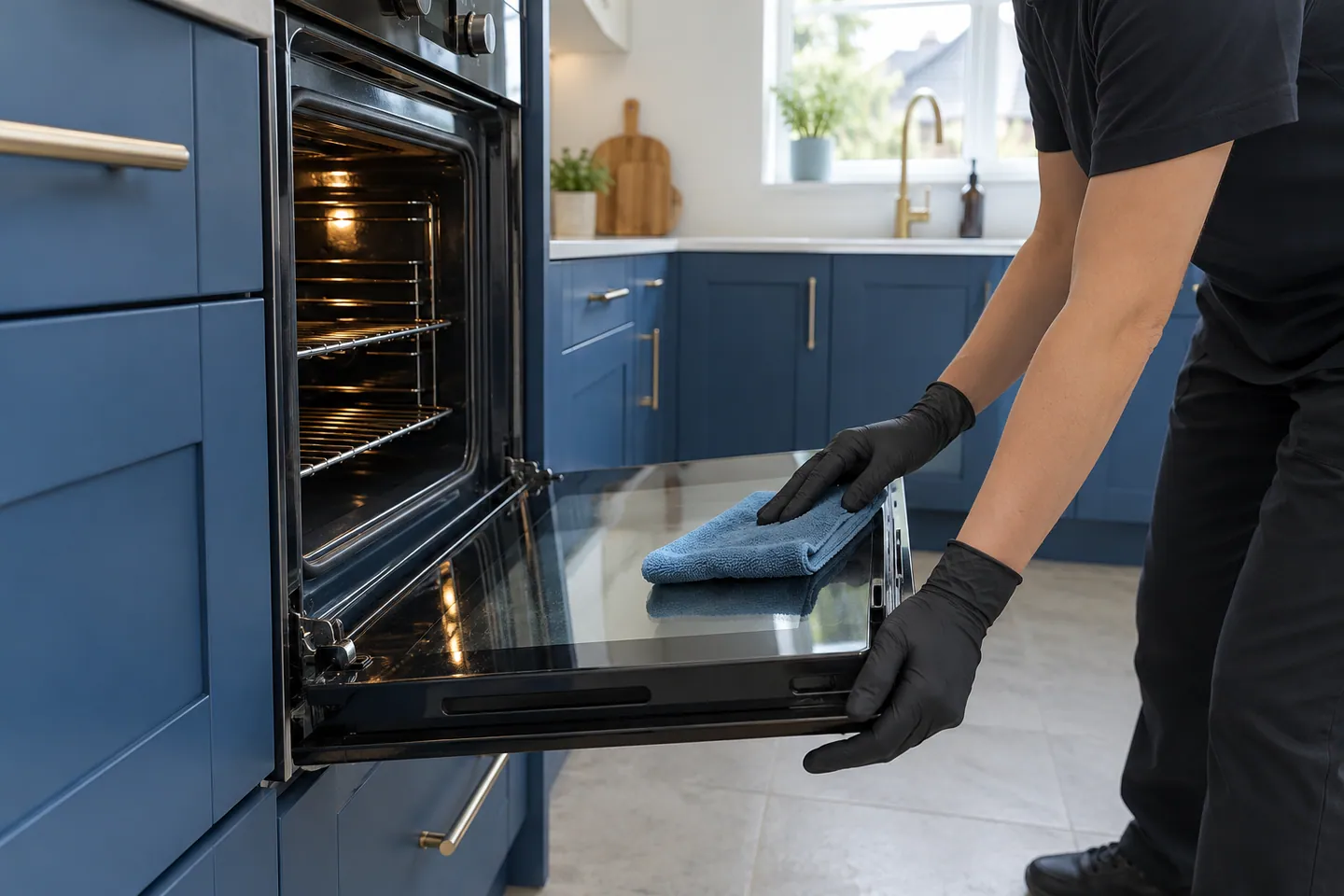
Follow the deposits through the actual cooking spaces
Count each cooking chamber and a separate grill, then locate the concerns within that layout. If one compartment is used less, check it rather than assuming its condition. The physical spaces and their fittings give the quotation a firmer basis than the oven’s width or number of settings.
| Configuration | What to distinguish | Useful detail for a quote |
|---|---|---|
| Single oven | One cavity can hold several racks above a marked floor. | List the glass, fittings and lower surfaces requested together. |
| Double oven | The smaller cavity may show a different pattern of deposits. | State whether both spaces and their accessories are included. |
| Range cooker | Several floors, doors and sets of fittings may need attention. | Identify each oven and grill requested; separate storage from cooking. |
For cooking-surface marks, add hob cleaning as a distinct request. Tell us the hob type so the combined quote identifies the different tasks. One meal can leave residue across several appliances without making their cleaning one undefined job.
What we clean in the oven visit
We address reachable cavity and exterior surfaces, racks and trays that can be treated, and door glass where the construction permits access. Mention self-cleaning features, specialist liners and accessories with unusual coatings. We use that information to account for the surfaces present rather than treating the floor, glass and every fitting identically.
Cleaning cannot renew missing enamel, remove scratches or repair faulty parts. Tell us about existing damage before the visit, especially under a dark deposit. Internal glass and fixed panels also have access limits that vary by model. Afterwards, look at the requested areas with us and ask about anything left behind or advice before the next use.
Leave the route and the open-door area clear
Allow the oven to become fully cold and remove food, unrelated pans and stored belongings. Keep the requested shelves and trays available; you do not need to scrub the floor first. Leave glass assemblies and fixed panels intact and explain any fitting that already feels loose or difficult.
Arrange who will provide entry and mention practical restrictions. If nearby worktops or cupboards need work as well, ask about kitchen deep cleaning with those surfaces named. The oven request gives us its components, while a room clean needs a separate description of what you want done around it.
Check the figure against all the parts requested
Published oven guides are £50–£75 for singles, £75–£100 for doubles and £100–£130 for ranges. Confirm the Canning Town amount once you have described the chambers, condition and fittings. Ask what is included, how VAT is handled and whether relevant parking or access costs apply.
Extractor cleaning has its own £25–£40 guide. Some oven visits take around one to two hours, while size, deposits and added tasks affect the allowance. Tell us about fixed timing when booking and leave flexibility before another commitment. Next-use guidance should come from the actual appliance and work rather than an assumed universal waiting time.
Seeing beyond the glass to the cooking cavity

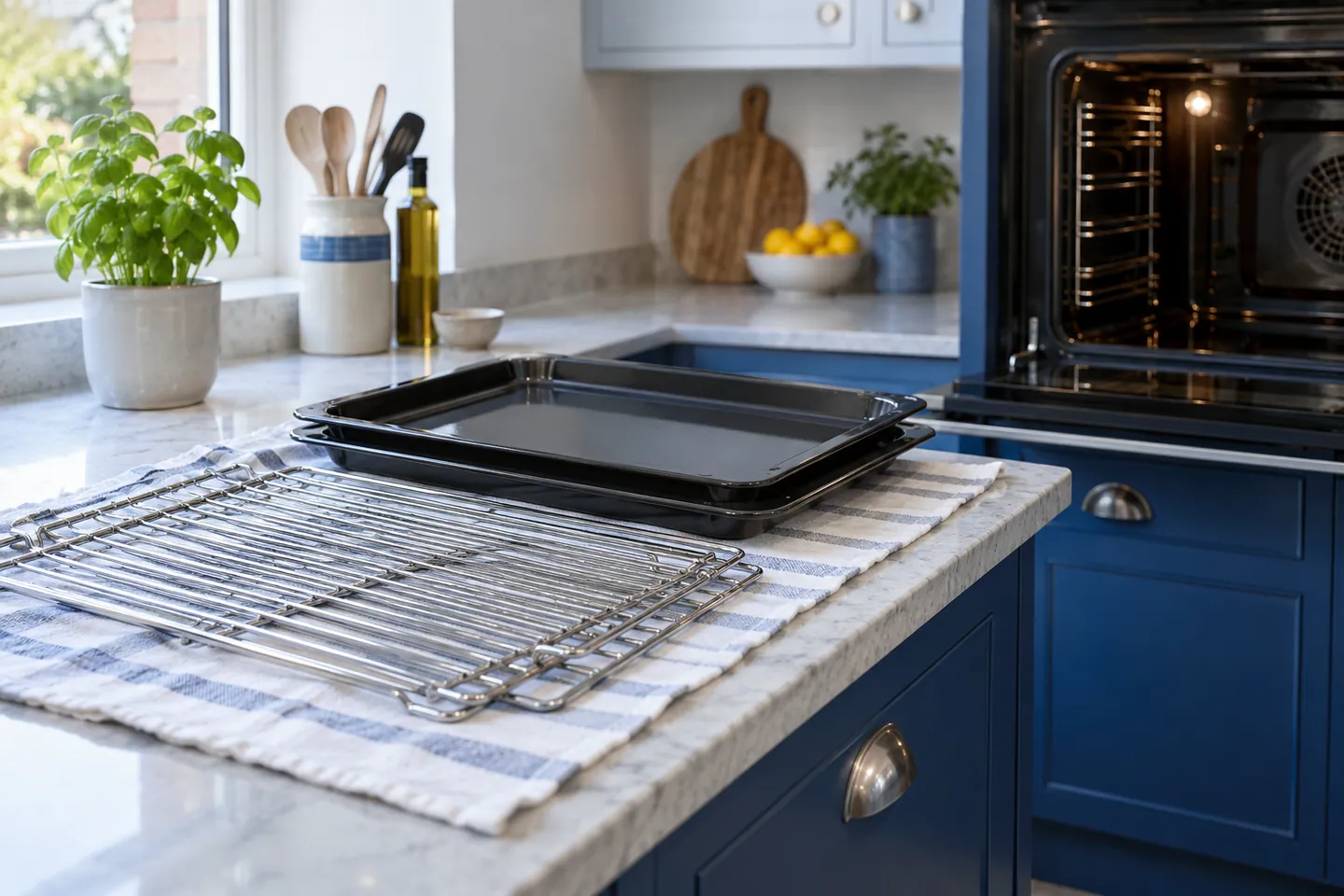
Use the same quick check for ordinary care
After cooking and cooling, look at the tray and the surface beneath it as well as the door. Use the methods permitted by the manual and care for coated accessories according to their instructions. Keep vents clear, and do not put foil over the floor unless the manufacturer allows that arrangement.
Notice which areas collect new residue as you cook. That helps decide when another professional visit would be useful without repeatedly targeting a permanent cosmetic mark. The daily oven-care article offers general habits alongside your model guidance, with trays and cavity surfaces checked independently.
Questions about visible and less obvious deposits
Can I tell you glass is my main priority?
Yes. Explain that concern and identify the other parts you want included. The position of the glass mark matters, while the rest of the component list makes the quotation complete.
Should I remove a fixed floor panel to look underneath?
Leave fixed or uncertain parts intact. Tell us the model and what you can see so we can discuss the requested area without turning preparation into dismantling.
What if the racks look clean but the floor does not?
Describe both conditions. Different parts collect residue at different rates, and your request can reflect that without assuming the whole cavity is equally dirty or needs identical handling.
Are trays stored in a cupboard easy to overlook?
They can be, so list the ones you want considered and keep them available. Mention separate cookware or coatings rather than assuming every tray is an original fitting.
How should I review the finished oven?
Use the requested components as your guide, including the lower surfaces that were easy to miss initially. Ask about remaining marks and the advice for cooking again before the visit ends.
Nearby area guides
Find the right locality in our service areas directory, or explore these nearby guides for another address.
Discuss an oven clean in Canning Town
Call with the address, appliance details and work you want included to arrange a suitable appointment.