
Shoreditch / Oven care
Oven Cleaning Shoreditch
One high-temperature cooking session can leave a tray or door needing more attention than the rest of the oven. For a Shoreditch cleaning enquiry, describe the deposits and the surfaces involved rather than judging by cooking frequency alone. Agree the suitable work, preparation and quote for your particular appliance.
- Describe the condition after the cooking session
- Keep temperature history separate from fault diagnosis
- Plan routine care around the model and residue
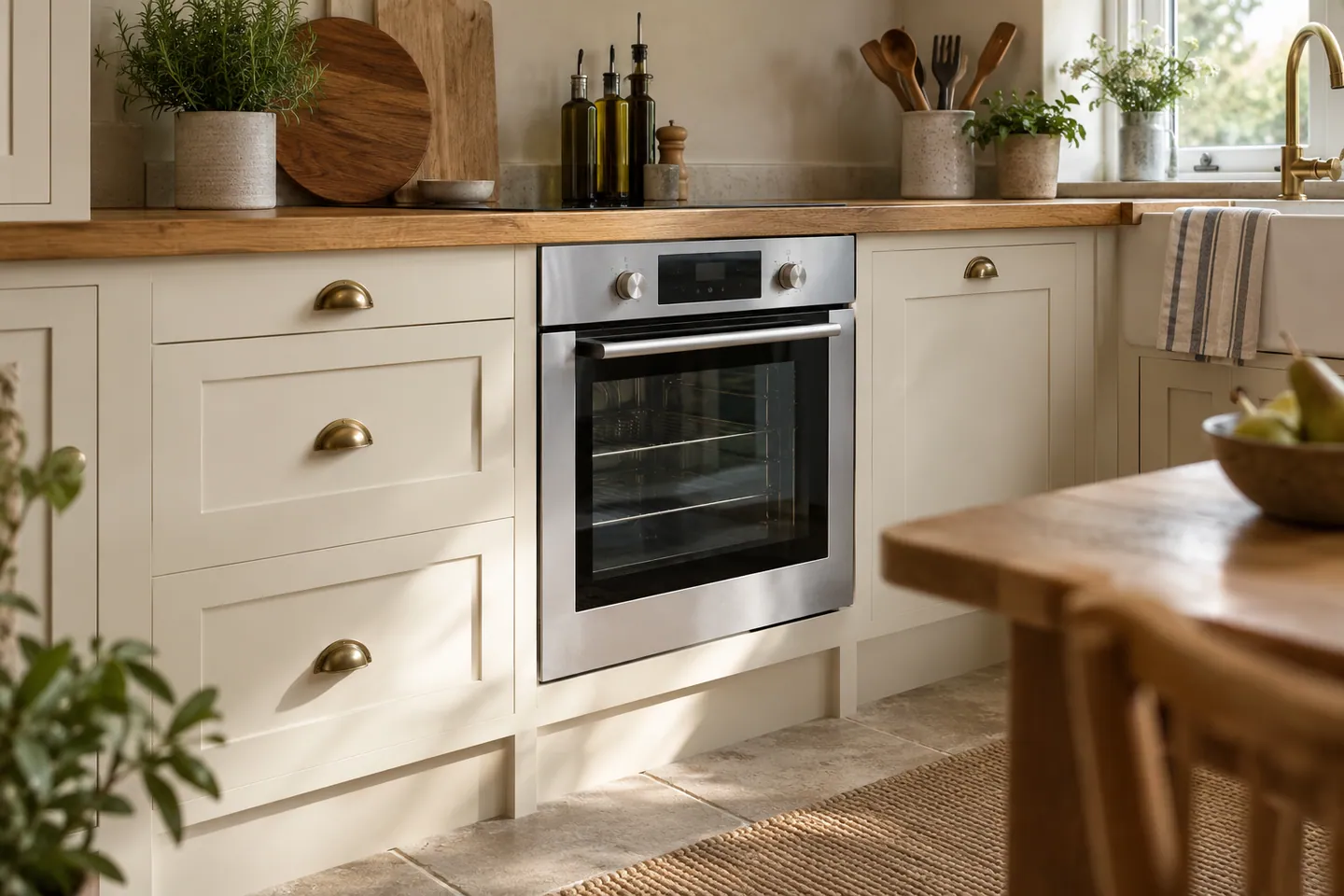
A single cooking session can change the brief
An oven used occasionally can still develop concentrated deposits after roasting or other high-temperature cooking. That does not establish the same condition in every part of the appliance. When asking about oven cleaning in Shoreditch, explain where residue appears and which tray or shelf was involved.
Mention how the oven has been used since and any cleaning attempts. Temperature history is context for the condition, not a technical diagnosis. If the oven has developed unusual operation or a suspected fault, explain that separately instead of assuming the cooking deposits are the cause.
Tell us which cooking session left the deposits and where you can see them on the cold oven. Model, finishes, accessories and accessible surfaces make the conversation useful. If a specialist lining or self-cleaning feature is present, identify it before assuming the interior needs the same approach as an ordinary tray.
Assess the oven after high-temperature cooking
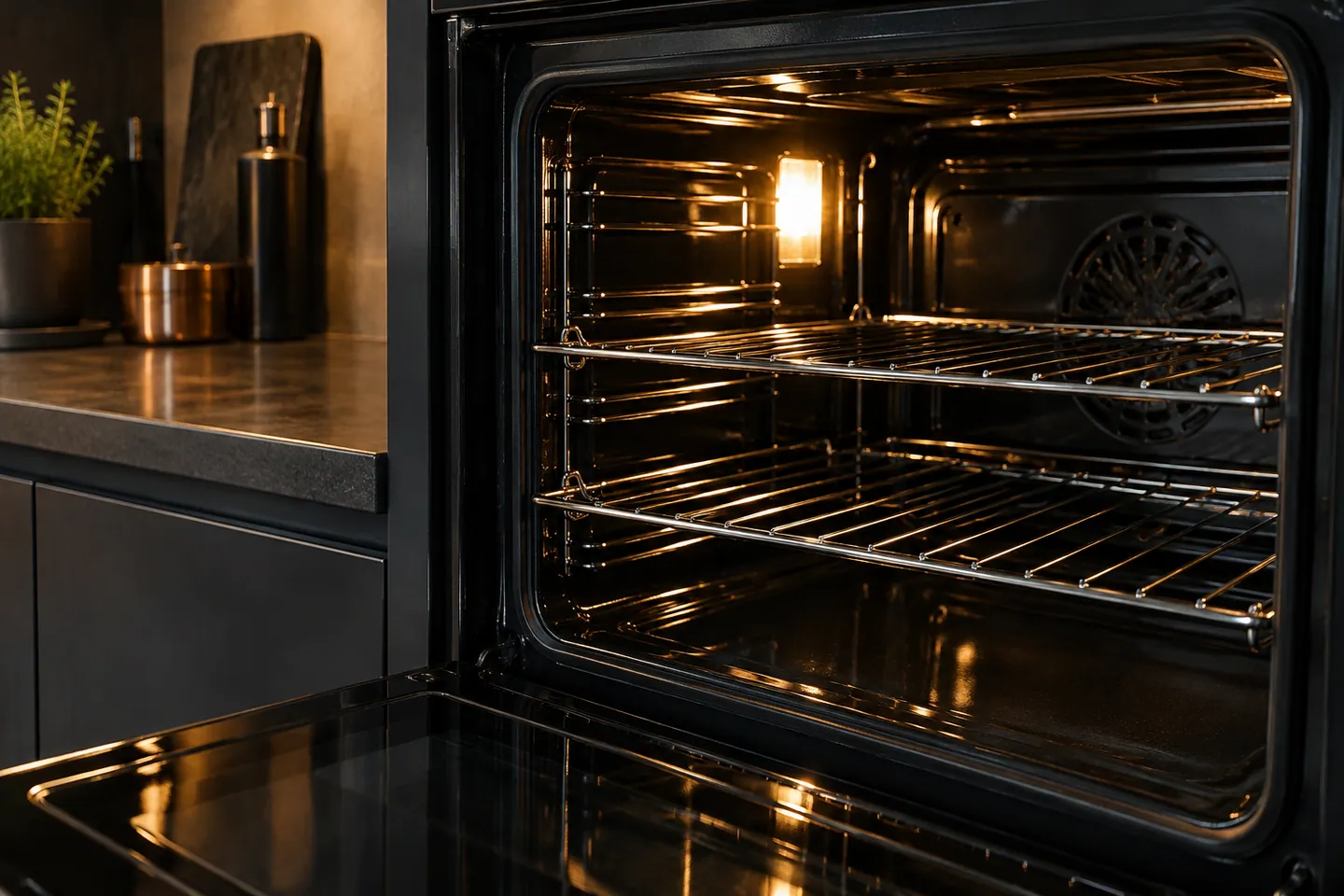
Review the cooled oven and priority deposits
Once the appliance is cold, point out the areas affected by the cooking session and any existing wear or damage. Confirm the wider cleaning brief, including other shelves or compartments that need attention. Keep the manufacturer guidance available for specialist surfaces. The initial discussion should separate suitable deposits from permanent colour changes and establish what can be reached without assuming the oven needs dismantling.
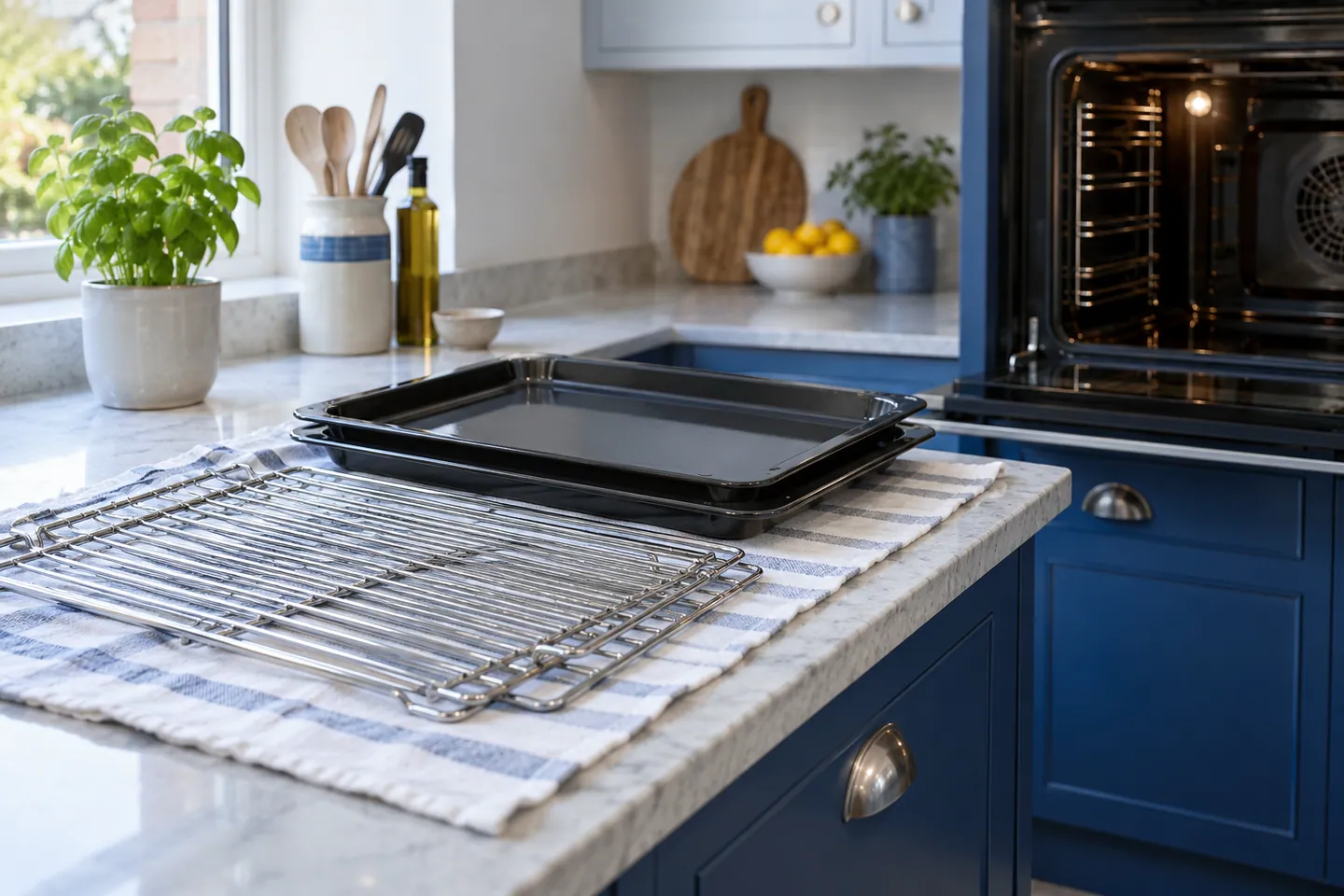
Work through the appropriate included areas
The agreed clean can address suitable accessible interior and exterior surfaces, along with identified removable racks and trays. Different materials and coatings need separate consideration. Door glass access is model dependent, particularly between panes. High-temperature use does not remove those limits or make every dark patch removable. Any additional accessory or nearby appliance should be discussed rather than silently added to the original work.
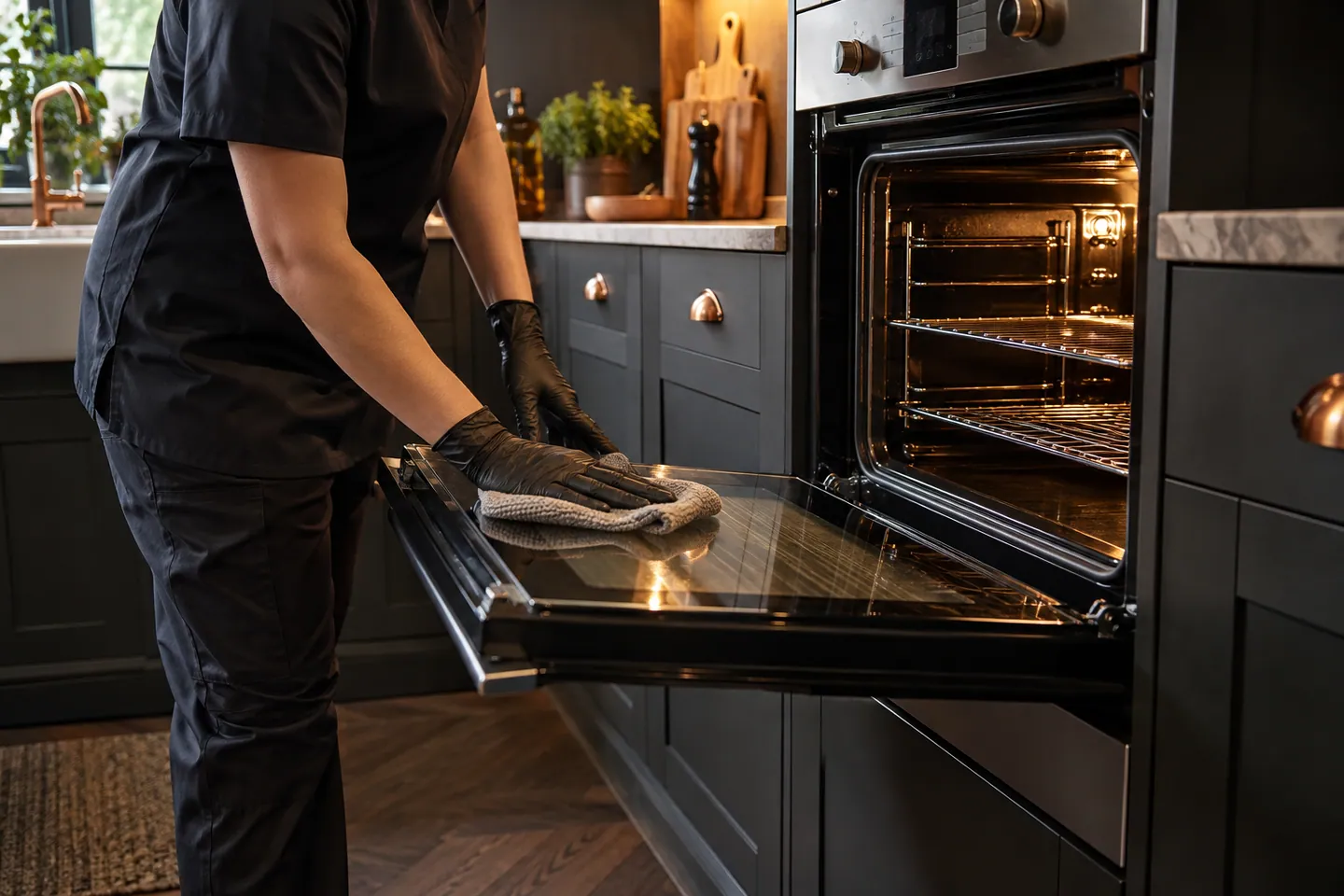
Review remaining marks and the next-use guidance
Look at the priority areas and the other included surfaces after cleaning. Ask about marks that remain and whether they represent staining or wear rather than deposits. Check agreed removable fittings are in place and confirm guidance for using this model again. This gives you a realistic reference for care after the next cooking session without assuming a universal waiting time or a repaired appliance.
Explain the cooking spaces involved
A hot cooking session might affect one cavity and several accessories. State the oven category, model and the actual compartments you want included.
Single oven
Describe the cavity, glass, shelves and tray and say whether a grill shares the space. Include its fitted or freestanding position and any specialist lining.
Double oven
Identify the affected compartment and describe the other one too. Clarify whether both are required, including their separate doors and accessories, rather than leaving the quieter cavity undefined.
Range cooker
List the cooking cavities in the requested clean and their fittings. A wide cooker can have different sections, and the hob is a separate cleaning item despite sharing the body.
Prepare with cooling and access, not another heat cycle
Have the oven completely cold, remove food and loose pans, and clear nearby belongings. Keep the included accessories identifiable and leave a practical route to the appliance. Do not run an extra cleaning programme simply to prepare without reference to the manual and the booking discussion.
Leave glass, seals, liners and fitted installation in place. Report damaged components or known operating concerns before the visit. Provide the complete Shoreditch address and entry arrangements when booking and confirm the appointment, especially if your timing depends on another planned cooking session.
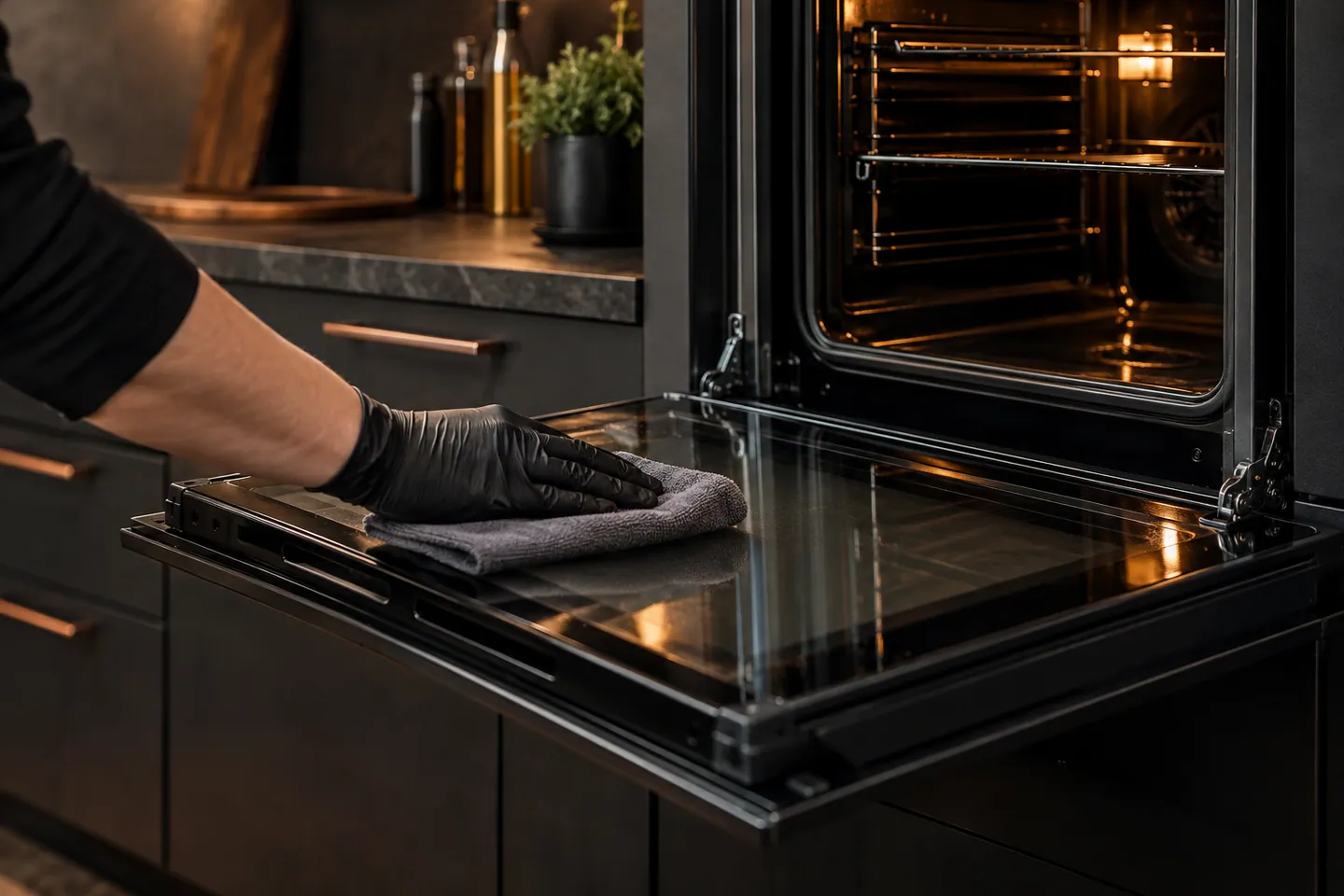
Keep cleaning goals realistic after heat exposure
Cleaning work to identify
- Suitable accessible cavity and exterior oven surfaces
- The removable trays and racks expressly included
- Model-dependent glass areas agreed for attention
Separate from the clean
- Diagnosis of temperature, control or heating faults
- Restoring worn coatings, scratches or permanent staining
- Unplanned dismantling or removal of fitted appliances
Cooking temperature alone does not establish what a mark is. Describe location, material and condition rather than promising a result from its appearance. Cleaning addresses suitable residue; it does not certify operation or renew damaged components.
Quote the present condition, not just the use pattern
Published oven ranges are £50–75 for a single, £75–100 for a double and £100–130 for a range. The confirmed price should reflect the model, cavities, accessories and condition. Occasional use does not by itself mean a smaller job or establish the amount of deposit.
If the cooking also marked the hob, ask about hob cleaning. For wider surfaces, discuss kitchen deep cleaning separately. A typical oven clean may take around one to two hours depending on scope and residue; request a realistic allowance for the actual work.
Respond to deposits after the next meal
Follow manufacturer instructions for routine care and special liners. Once the oven is cold and safe, deal with suitable fresh spills before repeated heating adds build-up. Check the tray used for a particular dish, not just the door, because residue can concentrate on removable accessories.
Use condition and cooking habits to decide when professional attention is useful again. Avoid improvised coverings or accessories not permitted by the manual. If a remaining permanent mark is familiar, distinguish it from new residue rather than repeatedly trying to remove wear through more intensive cleaning.
Heat, residue and ongoing oven care
Can one meal make an occasional-use oven need cleaning?
It can leave concentrated deposits. Describe the actual condition and surfaces rather than assuming low cooking frequency means there is little work to consider.
Should I run a hot cycle before the appointment?
Do not add a heat treatment simply as preparation. Follow the model instructions and discuss any self-cleaning function and recent use when arranging the work.
Does a dark mark prove the oven overheated?
No such diagnosis should be inferred from appearance. Describe concerns and known symptoms separately; cleaning is not a technical assessment of temperature or appliance operation.
What if the tray is the main problem?
Identify it and confirm whether it is an included oven fitting or separate cookware. The accessory list should be agreed before the quote is accepted.
Can all residue from hot cooking be removed?
Suitable deposits may be addressed, but material, access and existing condition matter. Permanent stains, scratches or damaged finishes may remain after cleaning.
How should I plan meals around the visit?
Confirm the appointment allowance and ask about next-use guidance for your model. A typical duration is conditional and does not establish an exact finishing time.
Area information for your enquiry
Explore the service areas directory, or choose a relevant nearby area below. When calling, give the full postcode so the address and appointment options can be confirmed.
Arrange your Shoreditch oven clean
Discuss the appliance, address and work you want included before agreeing the quote and visit.