
Romford / Oven care
Oven Cleaning Romford
Where a drip lands matters as much as how dark it looks. For oven cleaning in Romford, explain whether residue is on a removable tray, glass, ordinary cavity surface or specialist lining. Agree suitable accessible work around those materials, with the rest of the appliance and any extras clearly identified.
- Locate drip residue before requesting the quote
- Identify the material beneath the deposit
- Discuss the cavity and removable accessories together
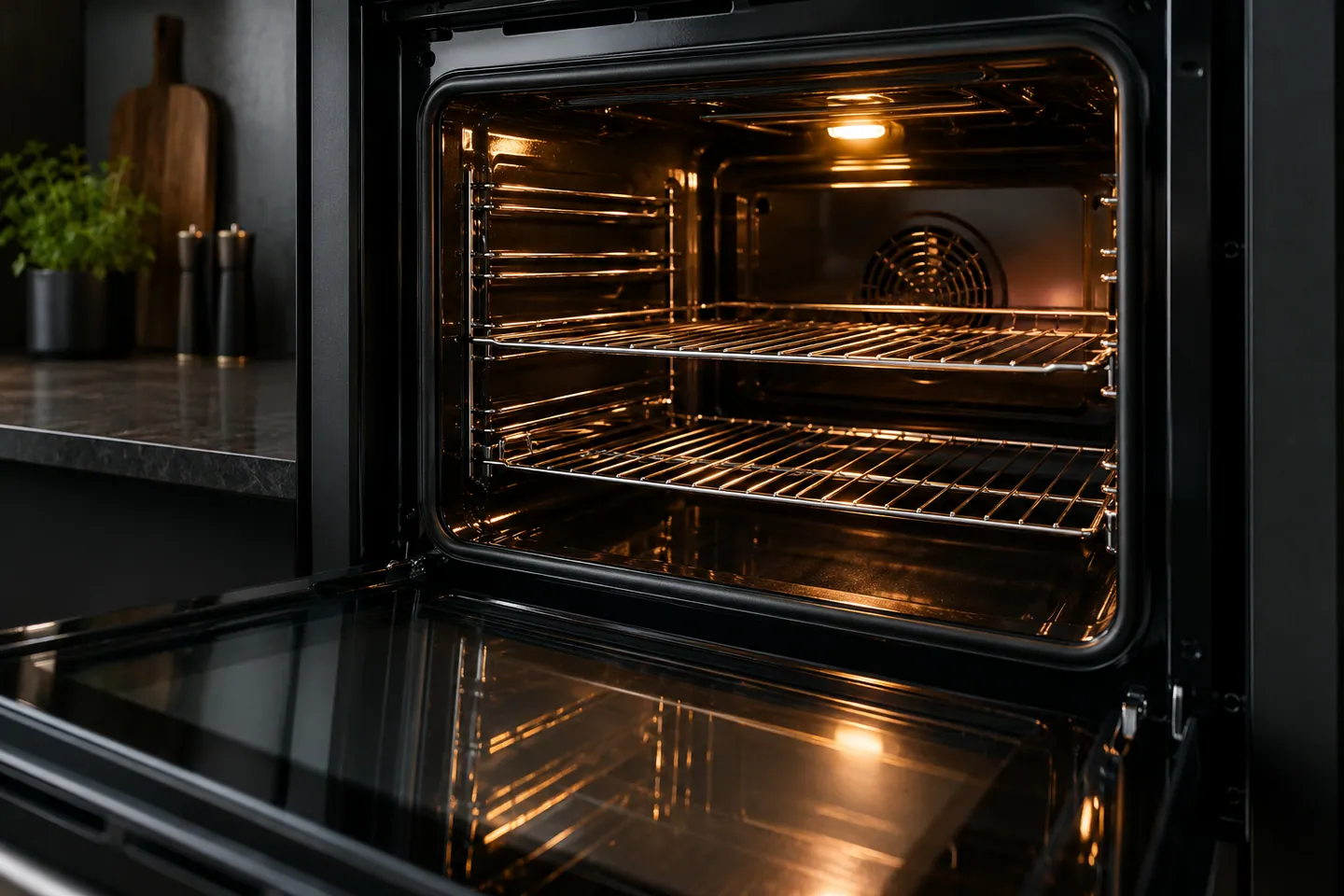
Describe the route of the residue
Drips can collect beneath cookware, along a tray edge or on the lower cavity surface. A mark near a join or fitting may have different access from one on a loose accessory. When enquiring about oven cleaning in Romford, give the location rather than simply describing the oven as dirty.
Say which material appears affected where you know it, and provide the model for specialist surfaces. Avoid guessing that every dark panel is ordinary enamel. A useful brief also includes the shelves, glass and other areas you want cleaned so attention to a drip does not obscure the overall job.
If you have already tried to remove the deposit, explain the method or product. Do not make another aggressive attempt just to see what lies beneath. Existing scratches, staining or damaged coatings should be mentioned separately from the removable food residue you hope to address.
Trace the deposit before choosing the work
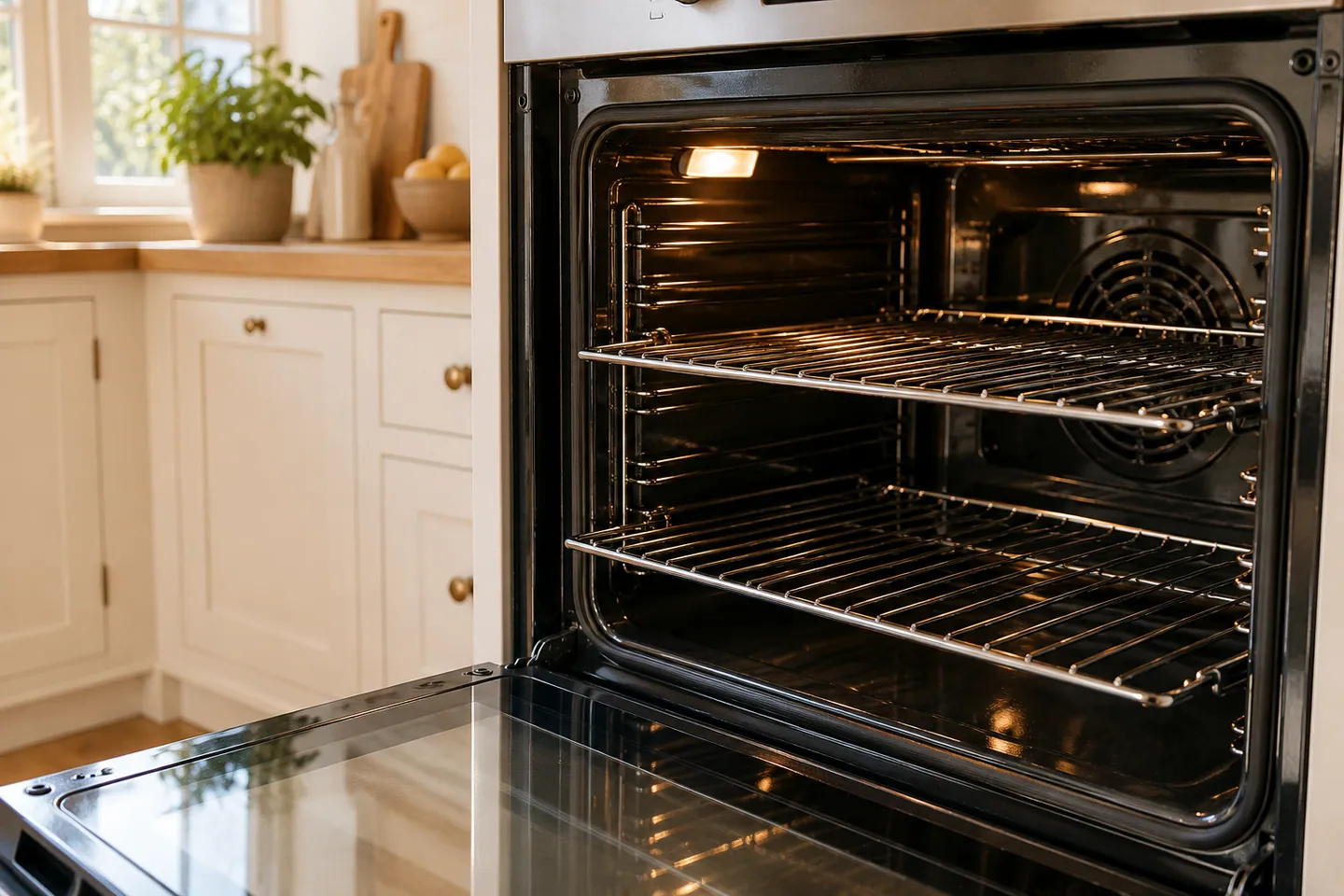
Locate the deposit before discussing treatment
With the appliance cold, identify the affected area and nearby fittings. Point out known damage and confirm the cavities and accessories included in the quotation. Specialist liners, self-cleaning features and uncertain materials need to be part of this first conversation. The intention is to establish suitable work on accessible surfaces, not to investigate a drip by stripping down the oven or forcing a coated panel out.
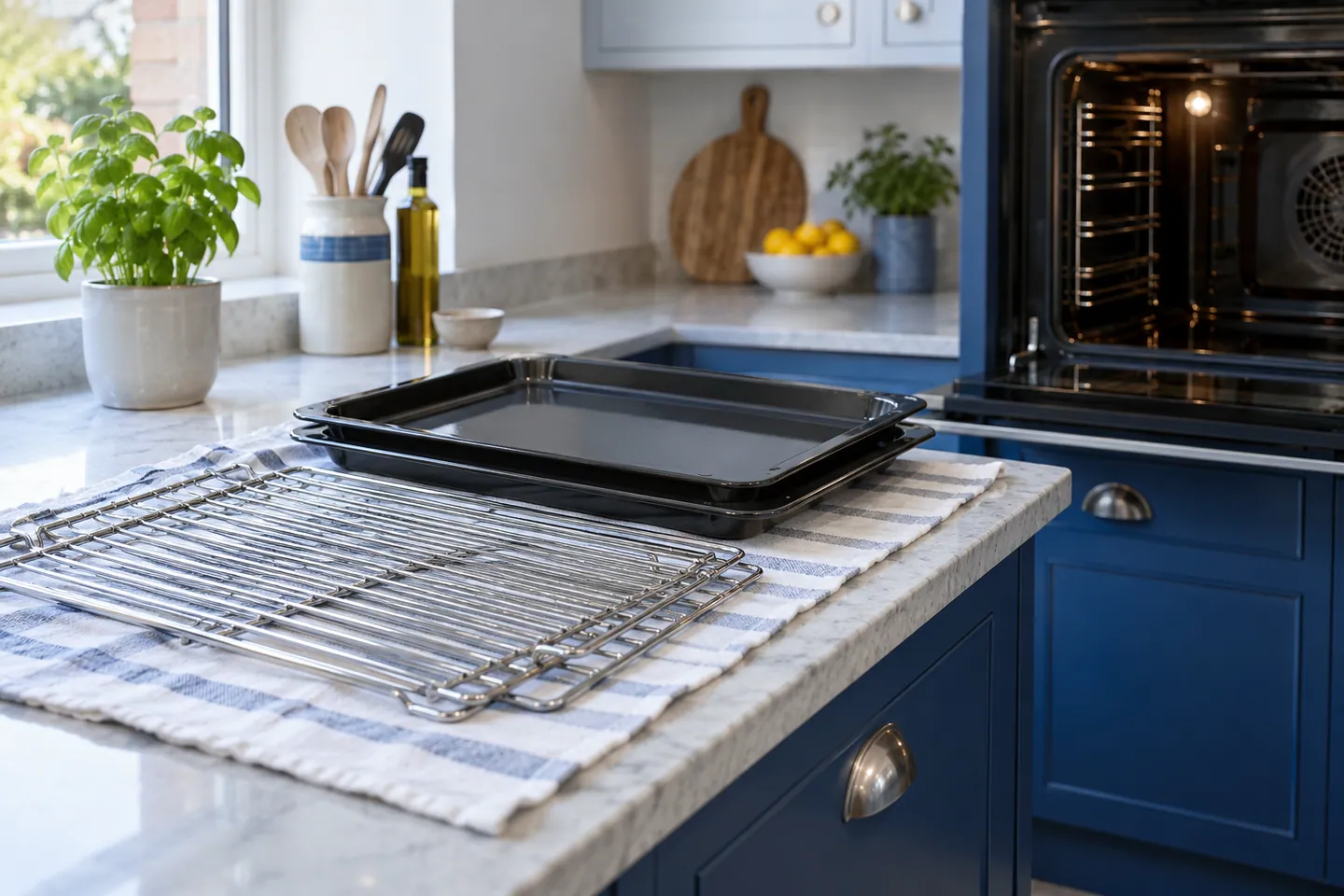
Work through the agreed cavity and accessories
Suitable removable racks and trays can be considered alongside the accessible oven interior and exterior. The approach should respect the surface beneath the residue. Glass access is model dependent, particularly between panels, and hidden areas are not automatically included because a mark appears to continue towards them. Keep any additional cookware or surface request explicit rather than expanding the job while the oven is open.
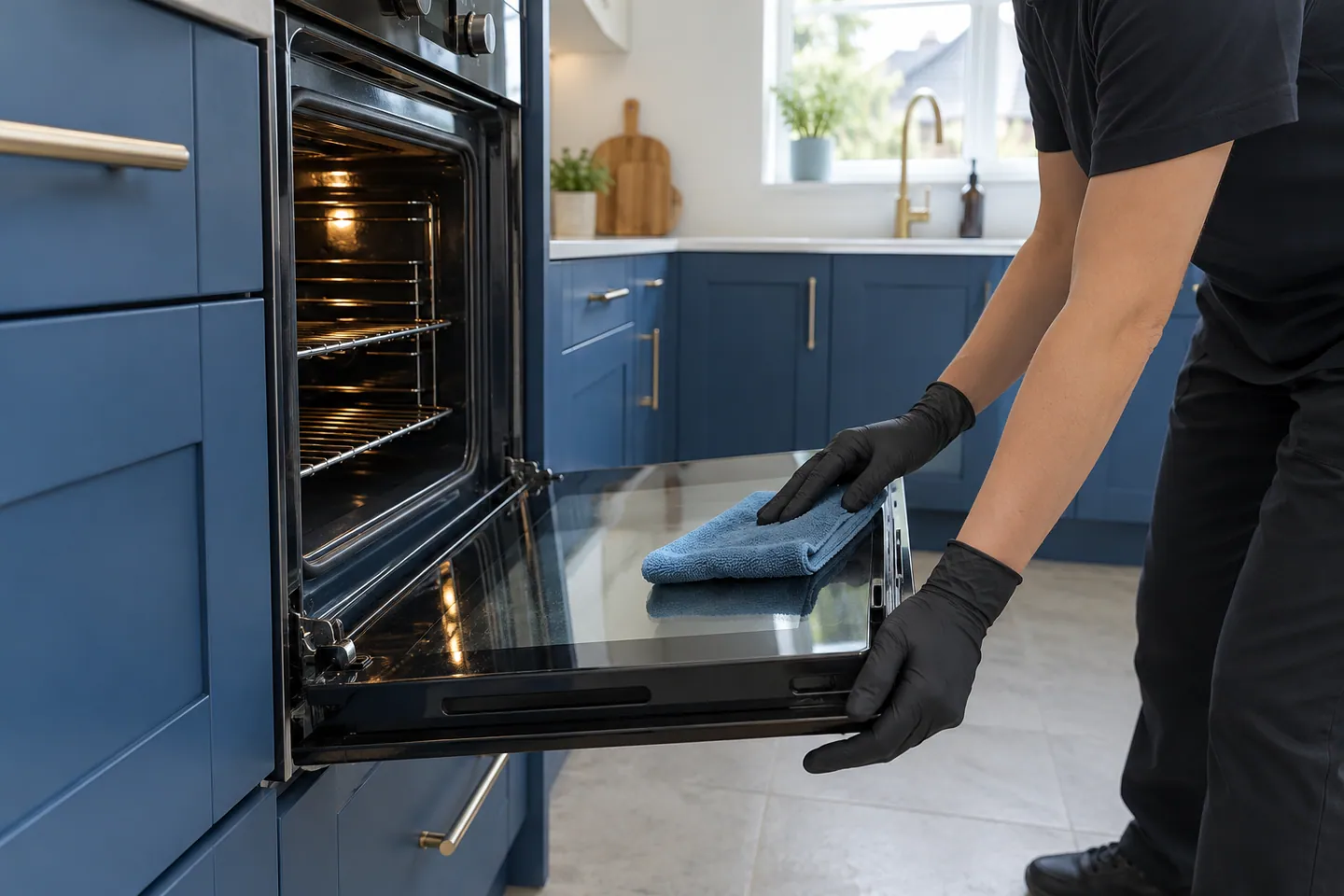
Compare the result with the original concern
Review the drip area and the other included surfaces after cleaning. Ask about remaining colour or texture and whether it reflects permanent staining or wear rather than removable deposits. Check agreed accessories are back in place and clarify next-use guidance for your oven. This gives you a useful reference for later maintenance without assuming that the cleaned appliance must look uniformly new.
Describe all the cooking compartments
The location of the main drip is useful, but the oven category and accessory count still determine the wider cleaning brief. Include model details where available.
Single oven
Explain the one cavity, tray and rack arrangement and whether it is built in or freestanding. Say if drips sit on a removable accessory or the cavity itself.
Double oven
Describe deposits in each compartment, including a smaller grill oven if present. Confirm which doors, shelves and trays belong to the requested clean rather than leaving the second cavity unmentioned.
Range cooker
List the cooking cavities and fittings to be included. Residue on the hob is a separate request even when drips and splashes appear across the same cooker.
Prepare access without probing the residue
Let the oven become fully cold, remove food and loose pans, and clear nearby personal belongings. Keep included trays identifiable and leave a practical route to the kitchen. Have the manual available if possible, particularly where a special lining is involved.
Do not scrape beneath panels, detach glass or remove seals and liners to follow a drip. Leave fitted appliances in place and report loose parts or operating faults beforehand. Give the full Romford address and entry arrangements when booking and confirm the appointment details by phone.
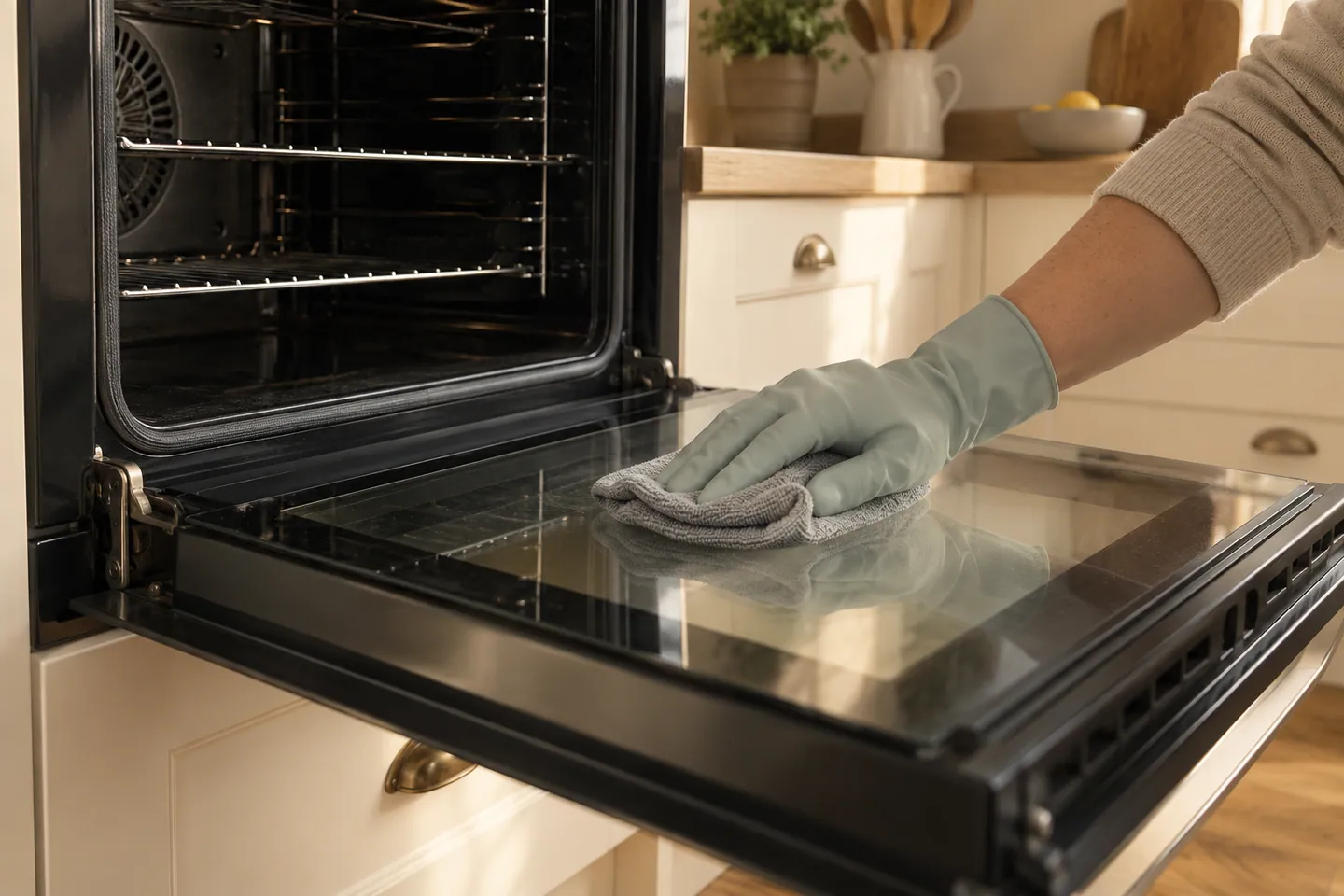
Agree a material-aware cleaning boundary
Work to discuss
- Suitable accessible cavity and exterior oven surfaces
- The removable racks and trays specified for the clean
- Model-appropriate glass areas included in the brief
Different tasks or limits
- Repairing damaged coatings, hinges or technical components
- Automatic access behind panels or fitted appliances
- Guaranteeing removal of staining, corrosion or scratches
A deposit’s location does not guarantee access beneath it. Ask about uncertain areas before accepting the quote. If the concern involves a fault rather than food residue, explain it separately because cleaning is not appliance diagnosis or repair.
Put the whole oven into the price discussion
Published guides show £50–75 for a single oven, £75–100 for a double and £100–130 for a range. Request the actual quote for the described model, condition, compartments and accessories. The size of one drip does not establish the full amount of work.
Discuss hob cleaning or kitchen deep cleaning separately if residue extends outside the oven brief. Some oven visits typically take around one to two hours depending on the appliance and scope; ask about your allowance before planning an exact finishing time.
Watch where new deposits develop
Follow manufacturer guidance for routine cleaning and specialist liners. Once the oven is cold and safe, address suitable fresh spills rather than repeatedly heating them. Monitor removable trays and the surfaces beneath cookware as well as the visible door. Different parts can collect residue at different rates.
Use actual condition and cooking habits to decide when professional help is useful again. If a permanent mark remains, recognise it as part of the baseline rather than chasing it as new dirt. Do not improvise foil coverings or accessories that the appliance instructions do not allow.
Drips, materials and accessible areas
Does the location of a drip affect the enquiry?
Yes. Identify the affected material and whether the area is accessible. A removable tray, specialist liner and space behind a panel are different cleaning questions.
Should I scrape the cavity floor first?
Do not investigate with aggressive scraping. Follow the manual and describe the deposit, previous attempts and any known damage before suitable work is agreed.
Will a dark patch always be grease?
No. It can include staining or wear as well as residue. Cleaning may address suitable deposits while permanent changes to the surface remain visible.
Is residue behind a panel automatically reached?
No automatic access should be assumed. Explain the concern and model; the proposed scope must respect construction and accessible surfaces rather than imply unrestricted dismantling.
Can I add the tray carrying most of the drips?
Identify it in the enquiry and confirm inclusion. Extra cookware should not silently become part of the oven accessories covered by the quote.
Does cleaning identify the cause of an oven fault?
No technical diagnosis is implied. Report unusual operation separately and seek appropriate appliance advice rather than assuming a drip or deposit explains the problem.
Area information for your enquiry
Explore the service areas directory, or choose a relevant nearby area below. When calling, give the full postcode so the address and appointment options can be confirmed.
Arrange your Romford oven clean
Discuss the appliance, address and work you want included before agreeing the quote and visit.