
Limehouse / The service guide
Oven Cleaning Limehouse
If dark deposits make the oven difficult to see through, tell us which glass surface appears affected. We provide oven cleaning in Limehouse and explain the glass access available for your model. Include the cavity and accessories you want cleaned, then confirm the quotation, preparation and appointment with us.
- Describe the glass face carrying the visible deposits
- Check model-specific access before expecting internal panes
- Include the cavity and removable components in the enquiry

Describe what obscures the view through the door
A darkened viewing area can have a film on its exposed face, concentrated splashes or marks that seem to lie between glass layers. Tell us what you can see without taking the door apart. For a Limehouse booking, the model and location of the deposit give us a useful starting point for explaining which glass surfaces can be reached.
Our oven cleaning service includes the other appliance areas you request as well as the glass discussion. We clean the cavity and exterior surfaces within the work specified and handle racks and trays separately. Let us know whether the view through the door is your main priority, while still identifying the cooking spaces and accessories you want included.
Look at location before choosing an explanation
With the appliance cold, describe whether the mark is on a face you normally wipe or appears within the assembly. You can explain a cloudy film, a drip line or scattered spots in ordinary language. Give the model reference if available and mention scratches, chips or any product already tried, rather than applying another treatment just to test the mark.
A clear view is a reasonable concern to raise, but glass access depends on the door design. Ask us about the particular faces involved. The number of visible glass edges does not establish what is removable, and a close-up without the oven model may not reveal where the residue sits within a layered construction.
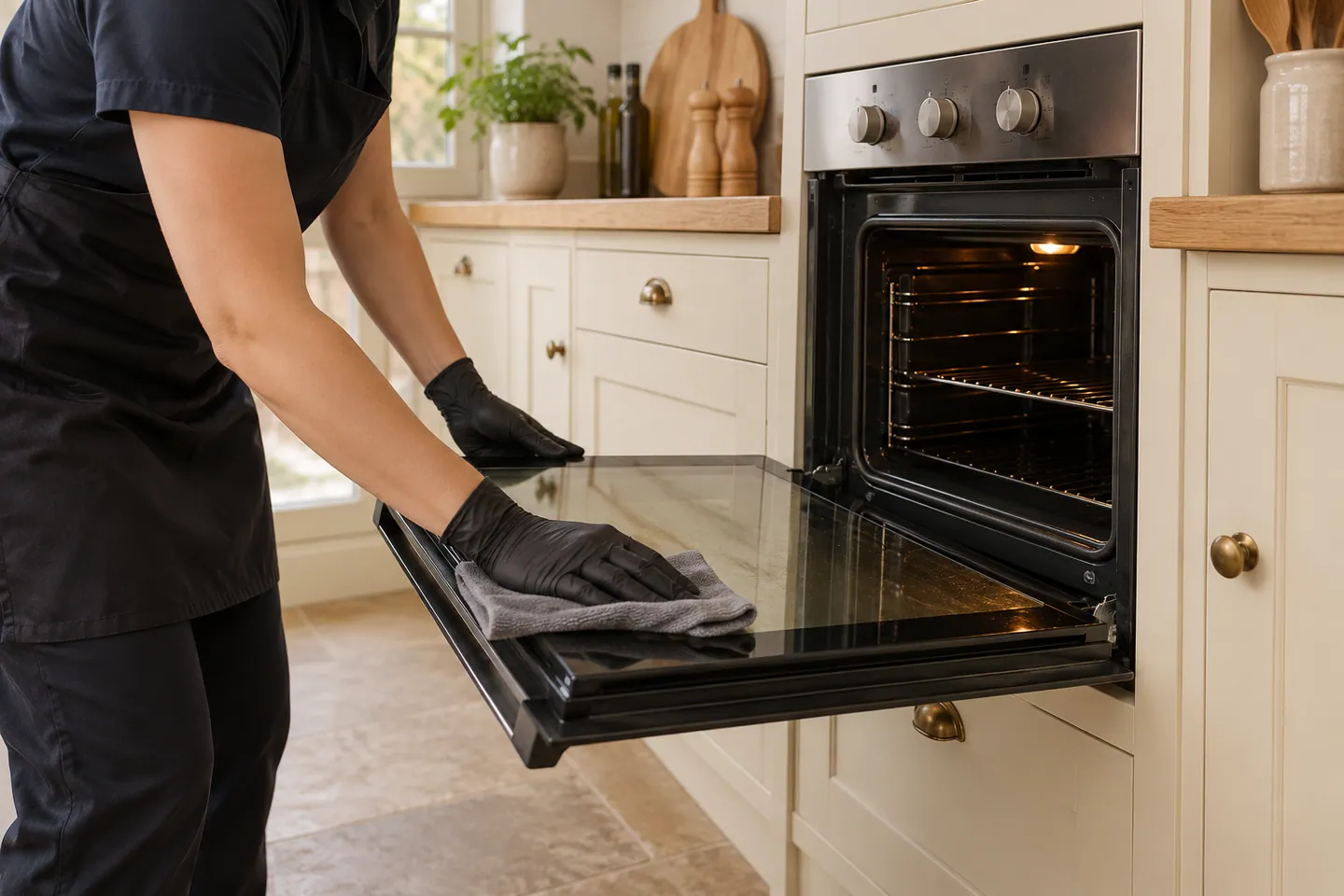
Place the glass concern within the full appliance request
The door problem may be the reason you call, but the configuration establishes the rest of the cleaning work. Identify the cooking compartments, accessories and model alongside the glass description, using this comparison to keep the enquiry complete rather than centred on one pane.
| Configuration | What to distinguish | Useful detail for a quote |
|---|---|---|
| Single oven | One viewing door may cover both oven and grill functions | List the interior pieces and explain the glass face that concerns you. |
| Double oven | Separate doors can have different sizes and deposits | Specify which glass and cooking spaces need attention. |
| Range cooker | Several door assemblies may differ across one appliance | Identify each requested cavity, model and glass concern individually. |
If grease also affects the cooking surface above, ask us about hob cleaning and describe its material. An oven-door enquiry does not by itself identify that additional appliance. Naming both tasks helps you understand the total and which surfaces to prepare before the appointment.
Agree the glass faces and the rest of the oven together
Tell us about deposits on the cavity floor and walls, the outside of the oven and the racks or trays to include. Mention specialist lining and coated accessories so we have their material details. The quotation should identify the requested components, including the reachable glass areas, giving you something concrete to review when the work is finished.
We cannot promise access to every internal pane or remove scratches and permanent damage through cleaning. Door dismantling is conditional on the model, and appliance repair is separate. Let us know about cracks, loose parts or operating faults before the visit, then ask what result is realistic for the glass and other surfaces that concern you.
Make room at the door and leave its assembly intact
Let the oven and separate grill become fully cold, clear the floor in front and free the neighbouring working area. Remove cookware outside the request and identify the included shelves and trays. Leave door panels, seals and fitted supports in place; there is no need to disassemble the glass to make a useful enquiry about it.
Give us the complete Limehouse address and postcode with entry details and any time constraint. Explain previous treatment, including the product used, and share the requested work with anyone meeting the cleaner. If the surrounding kitchen surfaces need attention, describe a kitchen deep clean separately instead of relying on the area visible around the door to define that extra work.
Ask for a total covering the appliance you describe
The published oven guides are £50–£75 for singles, £75–£100 for doubles and £100–£130 for ranges. Use them for initial budgeting, then ask us for the quotation reflecting your compartments, condition and accessories. A glass concern is part of that description, but it does not establish the whole workload or a universal price for door dismantling.
Confirm VAT treatment and any applicable parking or access cost within the total. One to two hours is the typical published oven duration, with the estimate depending on the appliance and extra tasks. Tell us if you have a fixed commitment before choosing the slot, and leave room to review the glass and other included components afterwards.
Door glass and cooking surfaces to identify

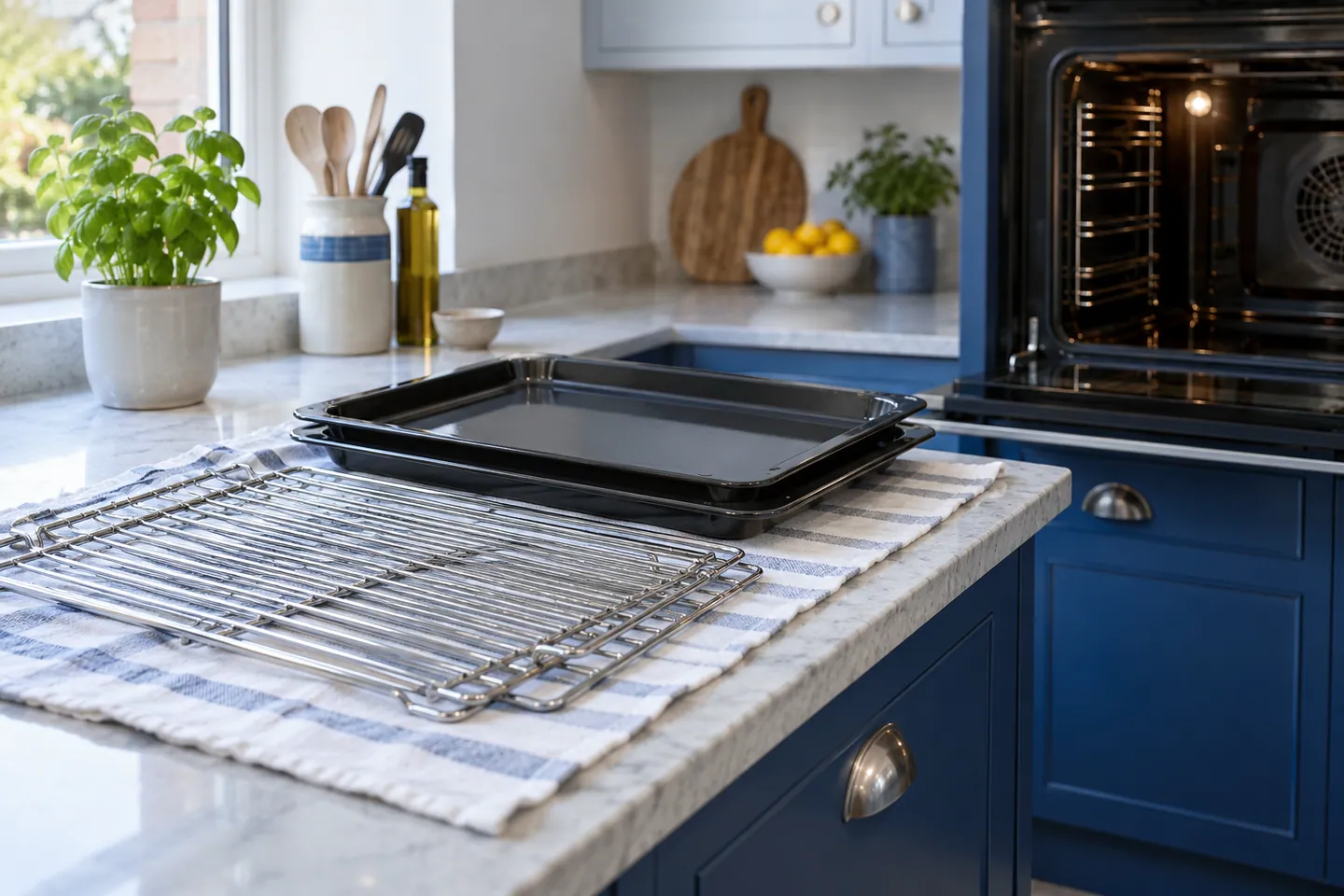
Care for the glass without forcing the construction
At the end, ask about any marks that remain and the relevant guidance before cooking again, taking account of your model and the products used. Follow the manual for routine care once cold. Deal with permitted fresh splashes on reachable faces rather than loosening fitted panels to pursue a mark within the door assembly.
Keep ventilation openings clear, use liners only as allowed and give trays attention independently of the viewing area. The oven care between visits guide offers further reading alongside the instructions. Note where new deposits develop so future enquiries distinguish fresh residue from a stable mark explained during this visit.
Questions about obscured views and internal panes
Can I request a Limehouse clean mainly because of dark glass?
Tell us that priority and describe the affected face. Also identify the oven layout, shelves and trays so we can define the complete work and quotation rather than infer them from the door concern.
How do I know whether a mark is between layers?
Describe what you observe and give the model. You do not need to diagnose its position by dismantling the assembly; ask which faces can be reached and considered for the work.
Will every pane be removed?
Removal depends on the particular door construction and proposed work. Confirm access with us rather than expecting all ovens or all doors on one cooker to follow an identical procedure.
Does a visible scratch count as removable dirt?
Scratches and damage are different from cooking deposits. Mention them before booking so the expected appearance is realistic and a persistent mark is not mistaken for residue that cleaning must remove.
Should I apply glass cleaner immediately beforehand?
Explain what has already been used and follow the preparation advice given. Keep the appliance cold and fitted parts intact instead of adding a new product simply to test the surface.
What can I ask when checking the finished glass?
Ask which faces were included and why a particular mark remains. Receive relevant next-use and material-care advice, keeping a visual cleaning review separate from any technical appliance assessment.
Nearby area guides
Find the right locality in our service areas directory, or explore these nearby guides for another address.
Discuss an oven clean in Limehouse
Call with the address, appliance details and work you want included to arrange a suitable appointment.