
Homerton / The service guide
Oven Cleaning Homerton
A photograph can help explain a stubborn oven mark when it shows more than the patch alone. For oven cleaning in Homerton, describe the material, position and appliance alongside the image. John’s can discuss the work you need, identify the components to include and agree preparation and a quotation.
- Show the affected surface within the oven layout
- Pair close-up details with useful model information
- Keep a single troublesome mark within a complete request
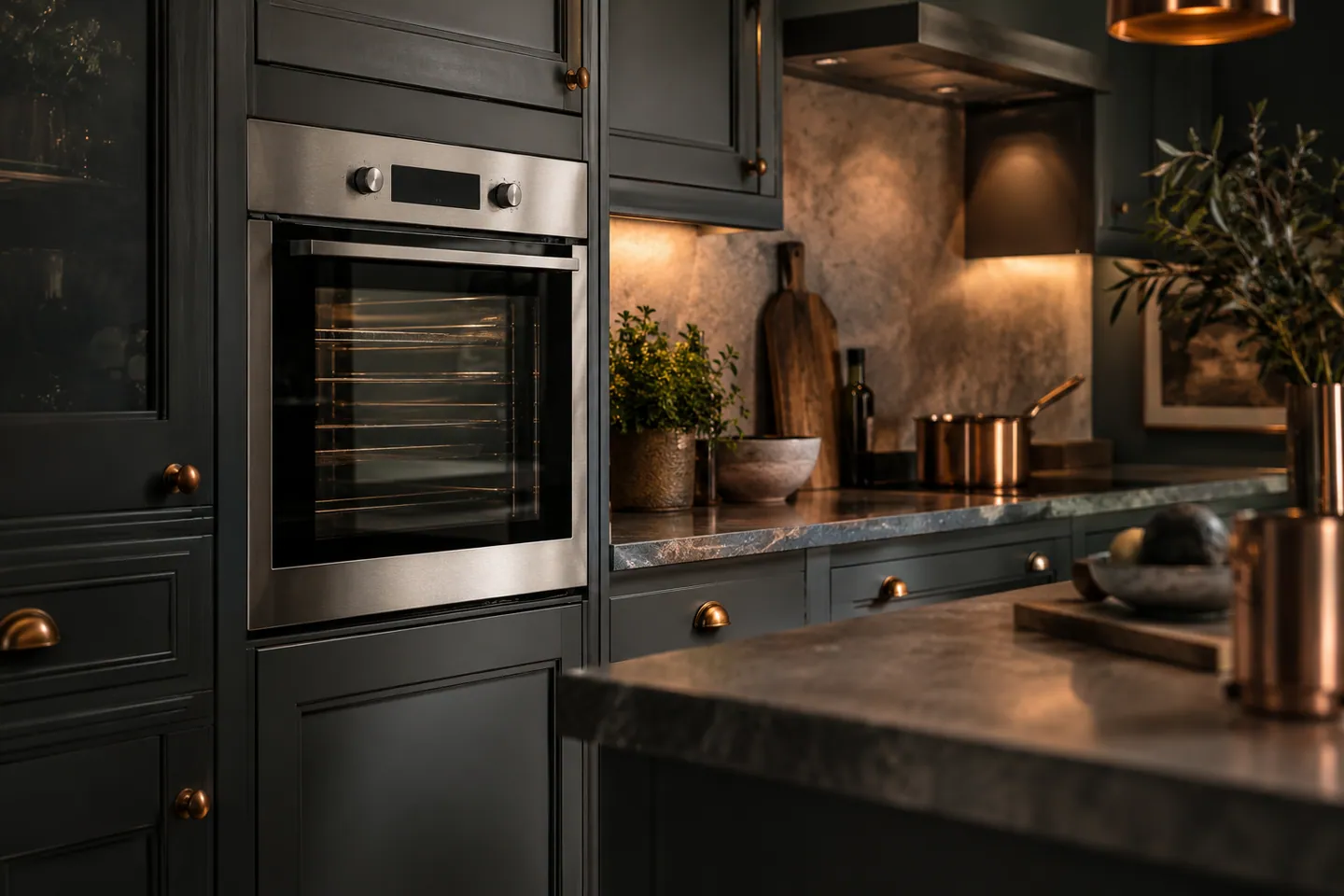

Give the photograph a useful job to do
A tightly cropped picture of a brown patch may show its colour without revealing whether it is on glass, enamel or a tray. A wider view adds that context. When enquiring about oven cleaning in Homerton, explain what the picture shows and where the area sits, then ask whether photographs can be provided through the enquiry route you are using.
John’s serves Homerton through its oven cleaning service. Images support a conversation about the appliance; they do not replace the model, compartment count or accessory list. Start with the problem you want addressed, then describe the rest of the oven so the quotation covers an understood cleaning request rather than an isolated patch with no context.
Combine a close view with a wider explanation
With the appliance cold, identify the affected part without moving fitted panels. A view of the open cavity can establish location, while a closer image may show the surface condition. Include the model reference if available and say whether the mark changes after normal permitted cleaning. Avoid touching a damaged part simply to obtain a better picture.
Describe observations rather than a diagnosis: a rough-looking edge, a greasy film or a mark within the door. Note scratches, chips and products already used. Location and material matter as much as appearance, because a deposit on an exposed face raises a different cleaning question from one behind glass or on a worn coating.
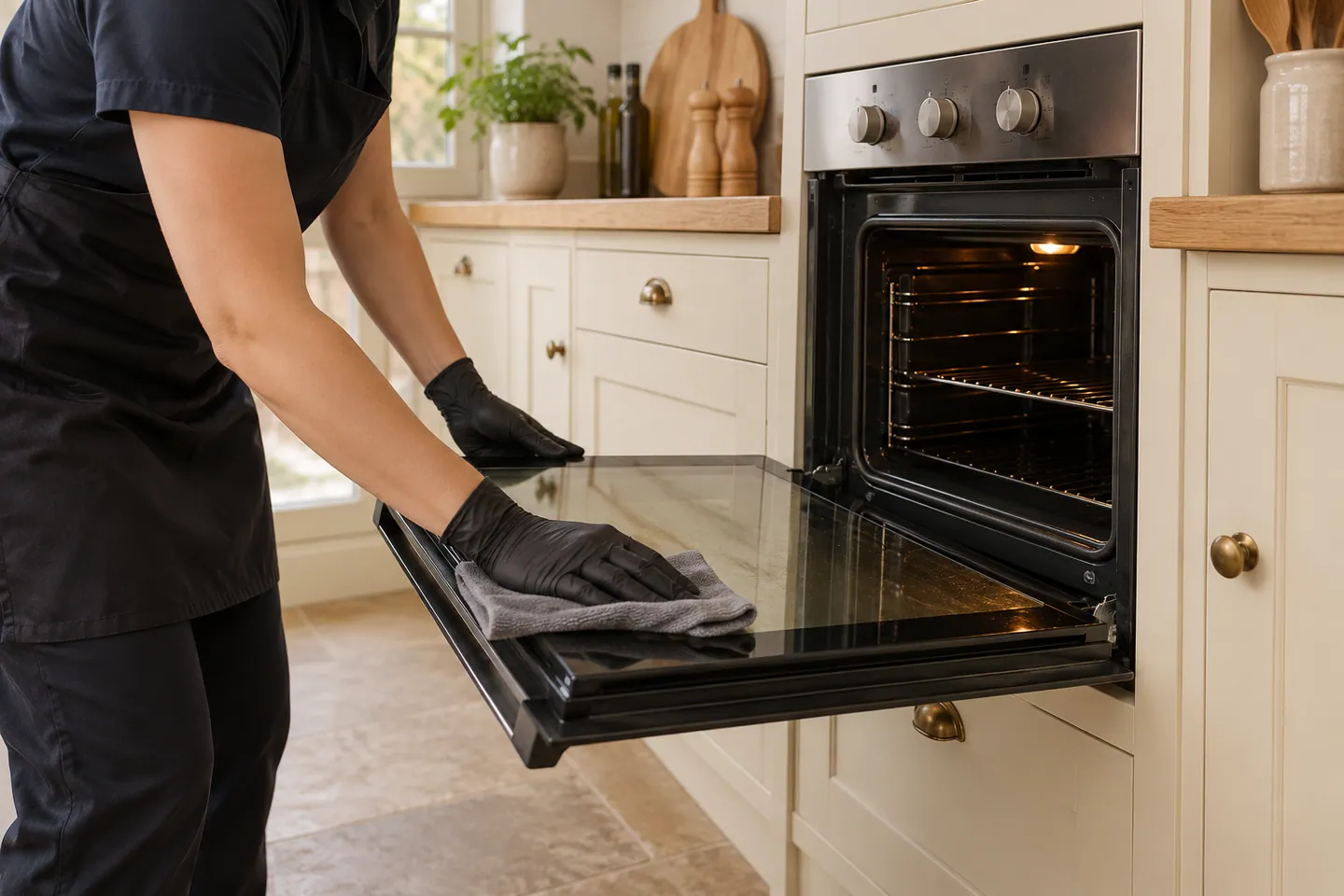
Put the photographed area inside the cooking arrangement
The same close-up could belong to several kinds of oven. Add the configuration and identify which compartments are requested, using the distinctions below to make the image useful for quotation rather than leaving the appliance size implied.
| Configuration | What to distinguish | Useful detail for a quote |
|---|---|---|
| Single oven | A mark may be in the shared oven-and-grill cavity | Count shelves and trays as well as describing the photographed surface. |
| Double oven | A close-up needs its upper or lower compartment identified | State whether both spaces are included and which carries the mark. |
| Range cooker | Several similar-looking doors can hide different functions | Name the cooking cavity shown and provide width and accessory quantities. |
If the photograph also shows a greasy cooking surface above the oven, identify that as a separate request for hob cleaning. A wider image helps explain the kitchen arrangement, but it should not silently add every visible appliance or surrounding surface to the oven quotation.
Turn the visual concern into a clear cleaning request
The oven clean can cover the cavity and outer surfaces within reach, along with racks and trays identified for the job. Removable pieces are cleaned separately. Mention specialist liners or replacement accessories, because a photograph may not establish their material. Confirm which door-glass faces can be reached on the model, especially when the concern appears between layers.
An image cannot establish that every mark is removable, and cleaning does not repair chips, worn finishes or operating faults. Glass disassembly depends on the design. If the main concern is a particular patch, ask what can reasonably be expected before booking and raise technical symptoms separately with an appliance professional.
Prepare access rather than staging a perfect picture
There is no need to scrub the area first or dismantle the oven for a photograph. Let the oven and separate grill become completely cold, clear the floor at the door and free the neighbouring work area. Remove unrelated stored cookware, while keeping the shelves and trays included in your request easy to identify on the day.
Give the complete Homerton address and postcode with entry arrangements and any fixed timing commitment. If someone else provides access, share the images or explanation that prompted the enquiry as well as the agreed work. For surrounding surfaces, describe a kitchen deep cleaning request independently so its contents do not depend on what happened to appear in a photograph.
Use photographs to inform the quote, not replace it
Published price references are £50–£75 for a single oven, £75–£100 for a double and £100–£130 for a range. Request a confirmed figure for the model, deposits and components discussed. A photograph can support those details, but a close-up alone does not show the full workload or establish the final amount for your appliance.
Check the total, VAT treatment and applicable access or parking costs. Around one to two hours is the typical published cleaning guide; your allowance reflects size, condition and extras. Tell us about a deadline before accepting the slot, and allow time to look at the included surfaces afterwards and ask about the particular mark you originally described.
See the surfaces discussed during an oven enquiry

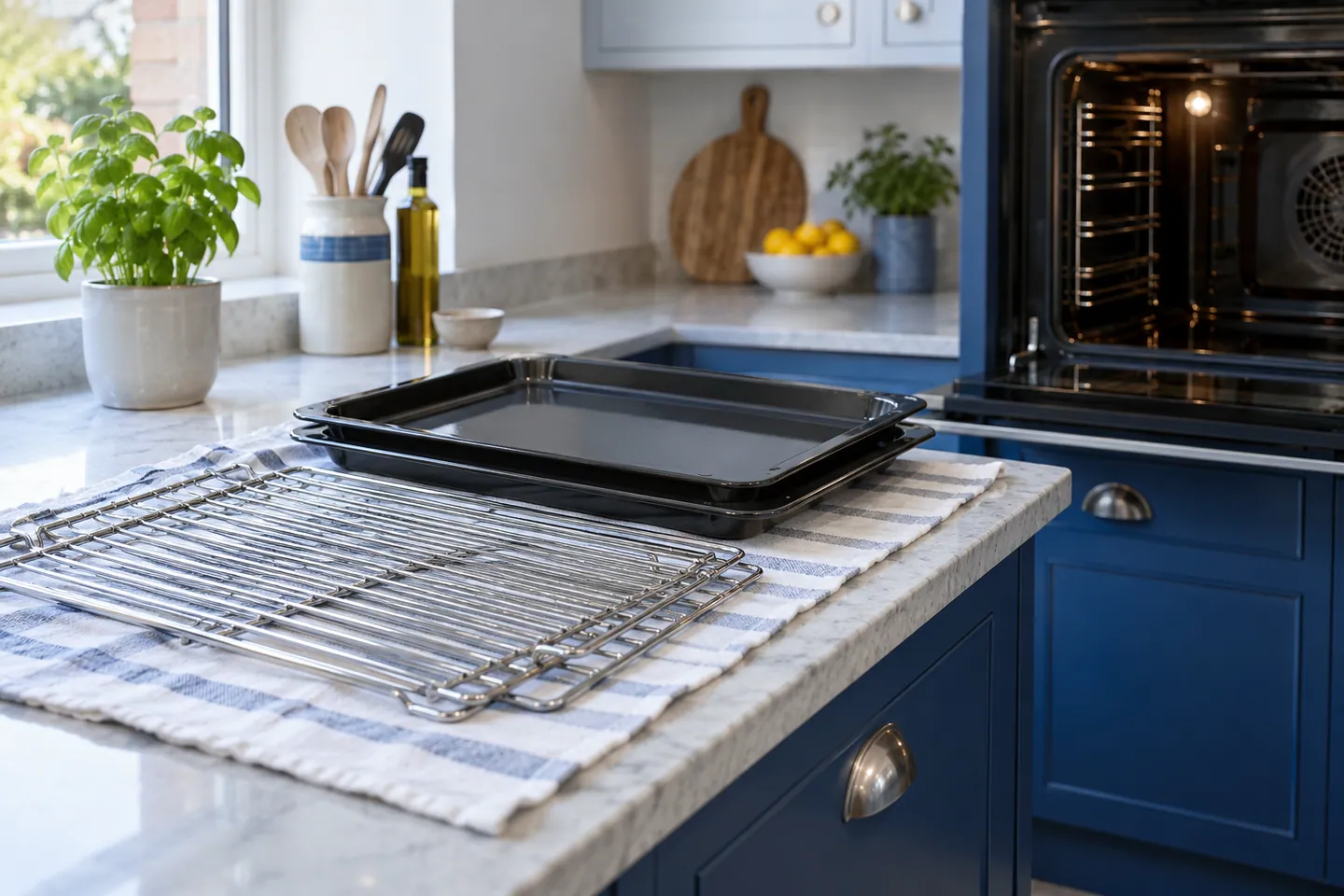
Keep a useful distinction between new residue and old marks
After cleaning, ask about the photographed area and follow advice for the model and products used before cooking. For ongoing care, use the manual’s methods once cold and attend to fresh spills where permitted. Check trays separately from cavity walls, since a clear-looking interior can still contain an accessory with recent cooking residue.
Keep vents unobstructed and avoid unapproved liners. If the same area attracts deposits again, noting when it happens provides useful information for a future enquiry. Distinguish that new build-up from a stable scratch or stain explained at the visit; repeated attempts to change an old surface mark can be less helpful than choosing the correct routine for its material.
Making photographs useful for an oven-cleaning quote
Should I send only a close-up of the patch?
Ask how images can be provided, then include context as well as detail where possible. Explain the compartment and surface shown so the picture does not leave the model or location ambiguous.
Can a picture identify the cleaning product needed?
Not reliably by itself. Material, model, previous treatments and access all need discussion. Use the picture to explain what you can see rather than selecting a treatment from colour or texture alone.
What if I cannot photograph the inside clearly?
Describe the area in ordinary language and give the model and layout. A photograph is supporting information, not a requirement to move connected appliances, remove panels or reach an awkward fitted area.
Does a visible mark mean it is included?
Confirm the work expressly. A photograph may contain cookware, a hob or surrounding surfaces that are outside the oven request, so list the actual compartments and components you want considered.
Will the photographed surface look new afterwards?
Discuss the existing finish and realistic deposit removal. Permanent discolouration, scratches and coating damage can remain; an image is not a guarantee that every change in appearance can be reversed.
What information accompanies a Homerton enquiry?
Provide the full address, postcode, model where known, cooking spaces and accessory quantities. Add the location of the mark and any products used, then agree the quotation and appointment arrangements.
Nearby area guides
Find the right locality in our service areas directory, or explore these nearby guides for another address.
Discuss an oven clean in Homerton
Call with the address, appliance details and work you want included to arrange a suitable appointment.