
Highgate / The service guide
Oven Cleaning Highgate
A specialist liner can sit beside ordinary enamel, glass and removable metal fittings inside the same oven. For cleaning in Highgate, identify the model and any special interior panels before booking. Tell us what needs attention so the cleaning request and later routine care respect the differences between those surfaces.
- Identify specialist panels through the oven manual
- Distinguish liner care from rack and tray cleaning
- Keep model instructions central to the future routine
One interior does not mean one finish
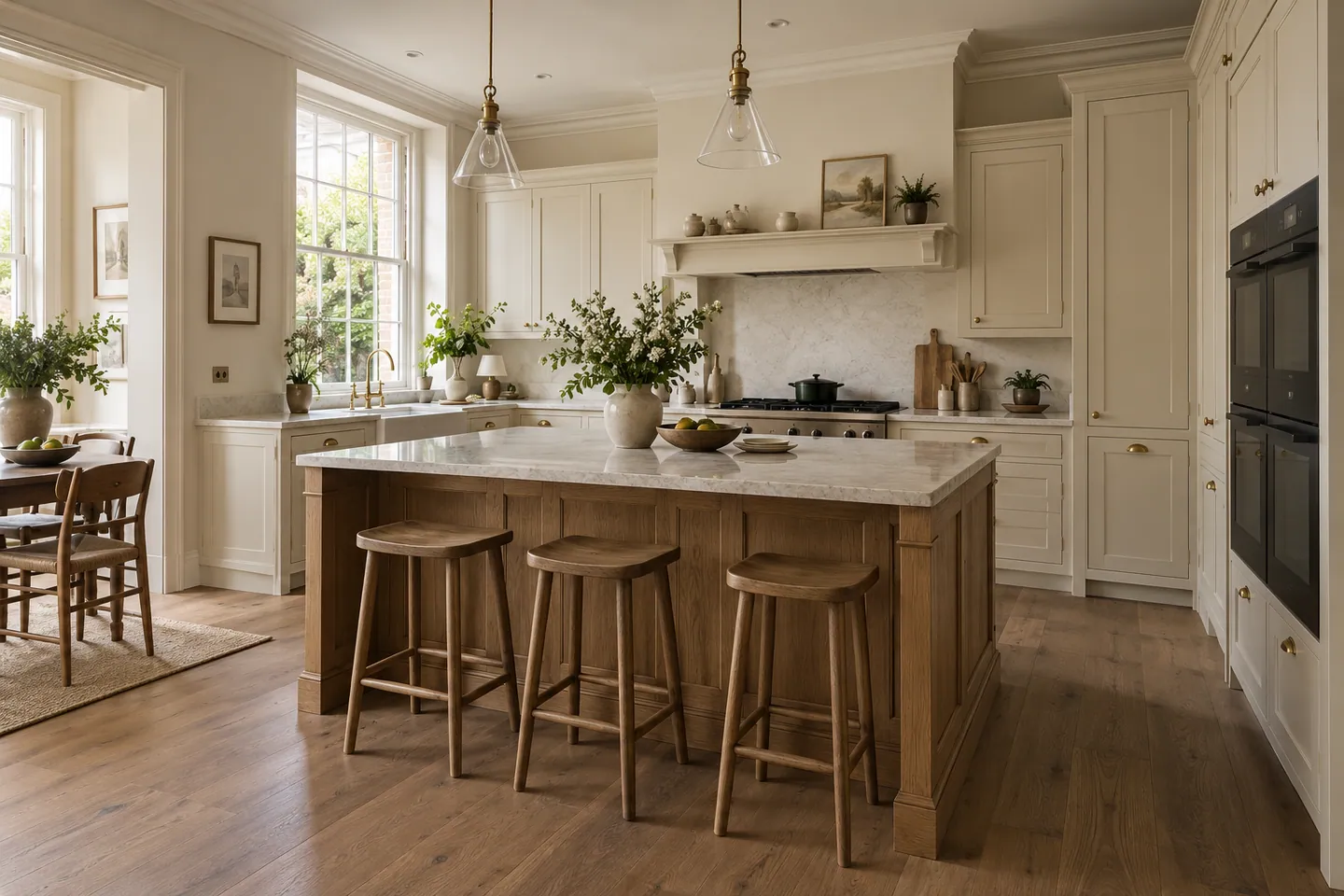
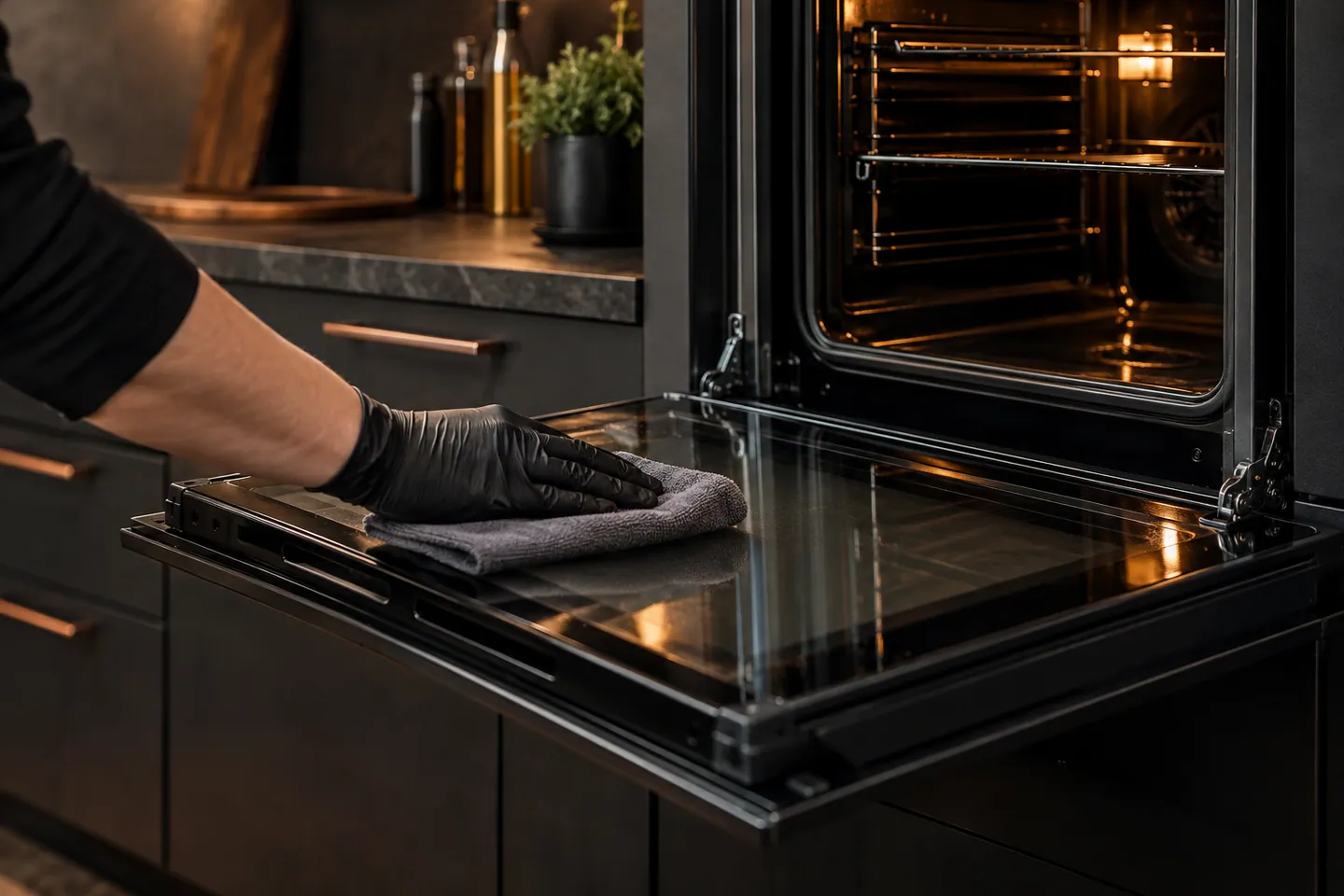
An oven can combine specialist wall panels, an ordinary cavity surface, glass and removable shelves. Their care needs can differ even when the deposits look similar. When requesting oven cleaning in Highgate, give the model and mention liners or self-cleaning features rather than treating the whole interior as one material.
We cover Highgate within our London service area. Give the complete address and the compartments and fittings you want considered when arranging the appointment. You do not have to identify an unfamiliar coating by sight; the manual and an accurate description give the enquiry a better basis.
Use the instructions to identify the liner
Check how the manual describes the interior panels and any cleaning function. Tell us about catalytic liners or other specialist surfaces where known, and keep the relevant pages available. An instruction for a removable tray should not be applied automatically to the panel beside it, even if both carry cooking residue.
Identify adjacent areas needing attention too: the glass, base, ordinary enamel sections, shelves or trays. A specialist liner does not describe every part of the oven. Separating the surfaces makes the request more useful and lets you ask specific questions about the areas where ordinary care is no longer managing the deposits.
Mention damage or previous treatment, especially if a product has already been applied to a special panel. Describe what you know without scraping the coating to investigate. If an accessory was purchased later, keep its instructions separately; the original oven manual may not explain the finish on every tray currently used inside it.
Check the finish in every compartment
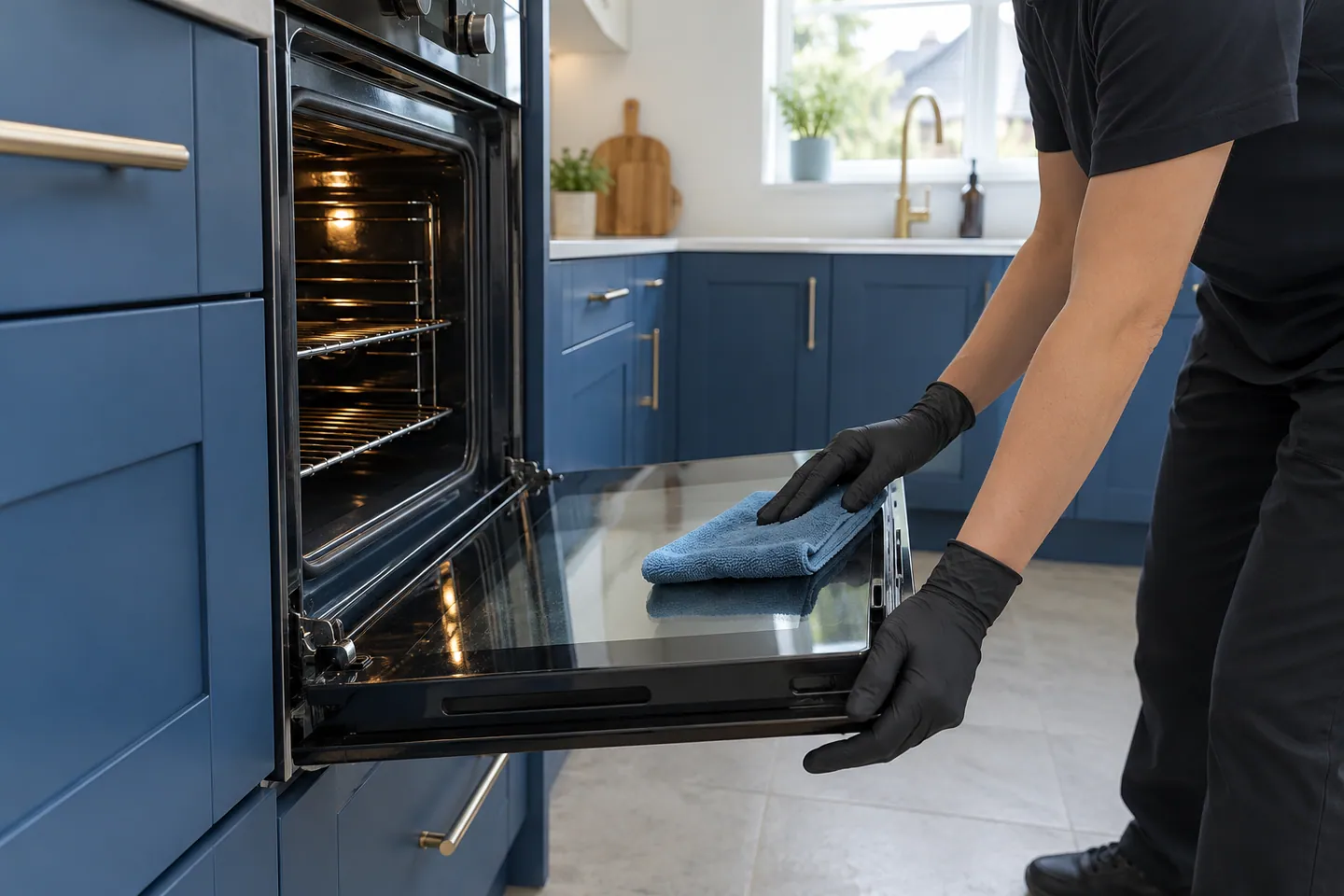
Oven size does not identify the liner system. Explain the model and the surfaces within each cooking space rather than assuming every cavity in the appliance has identical construction.
| Configuration | What to distinguish | Useful detail for a quote |
|---|---|---|
| Single cavity | Special panels can sit alongside ordinary surfaces | Identify the liner and name the adjacent glass, base and fittings requiring work. |
| Double oven | The two compartments may have different interiors | Describe liners and residue separately for both cavities requested. |
| Range cooker | Several ovens can combine different finishes and accessories | List each cooking compartment and its care information rather than one general interior description. |
The hob has its own materials and instructions. Ask about hob cleaning separately if needed, providing the type and finish instead of extending the liner discussion to every part of the cooker.
Choose the work with the finishes identified
We clean the oven areas and removable racks or trays listed in the quote, taking the model’s construction into account. Tell us where glass marks appear so the door access can be checked. Identifying a specialist lining helps keep the surrounding cavity and fitting work clear rather than leaving everything described as oven walls.
Follow the liner’s own care instructions. Cleaning cannot renew a damaged coating or repair an appliance fault. Report loose panels, cracked glass and operating concerns beforehand, and expect scratches or permanent stains to be considered separately from removable food deposits. Leave fitted panels in place rather than assuming every liner is taken out.
Have the manual ready and the oven cold
Allow the appliance to cool completely, remove food and unrelated cookware, and clear belongings around the door and approach. Keep included trays identifiable and have the model details and cleaning instructions available where possible. Preparation should make the appliance easy to describe and reach, not add another treatment.
Do not detach liners, remove glass or pull out a fitted oven. Tell us what products or programmes have recently been used. If someone else provides access, share the special-surface information and the cleaning request so the person on site does not offer unfamiliar panels as ordinary removable accessories.
Confirm the quote for this model and its fittings
Our published guides are £50–75 for a single oven, £75–100 for a double and £100–130 for a range. Ask for the actual figure after describing the model, compartments, deposits and accessories. Specialist construction is a reason to provide the right information rather than assume a particular supplement or universal method.
Some oven cleans take around one to two hours, depending on the appliance and work. Ask about the allowance before arranging cooking or another commitment around the finish. For wider surfaces, discuss kitchen deep cleaning separately with the additional areas identified, rather than treating the oven instructions as guidance for the whole room.
Different interior finishes and oven accessories

Keep adjacent surfaces on their own routines
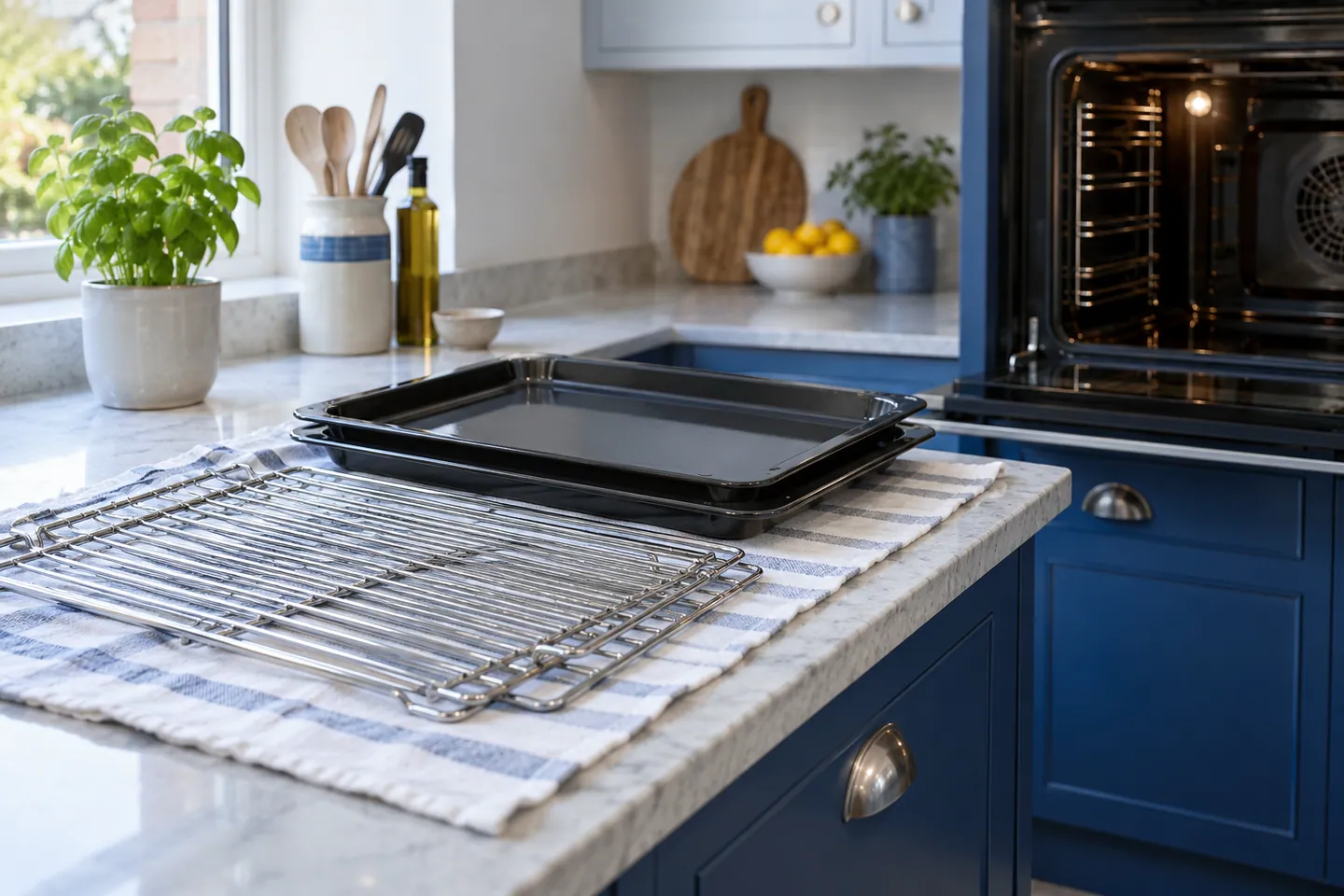
Use the manufacturer’s directions for the liner and the separate guidance for glass, ordinary cavity surfaces and fittings. Wait until the appliance is cold and safe before routine cleaning. A tray can need attention after a meal while a specialist panel requires a different approach, so avoid one automatic method for everything inside.
Review deposits according to your cooking habits and what the permitted ordinary care can manage. Plan professional attention around the areas that need help, keeping the model information available. If a panel’s condition changes or the oven operates unusually, seek the relevant advice rather than assuming a more intensive clean will repair it.
Caring for specialist oven liners
How do I know whether a panel is a specialist liner?
Check the model instructions and describe what they say. If you are uncertain, state that in the enquiry rather than identifying the finish solely by appearance or scraping it to investigate.
Can I clean a liner like an oven tray?
Do not transfer the tray’s method by assumption. Follow the panel’s specific instructions and distinguish it from the removable fittings when describing the work you want considered.
Does a self-cleaning feature cover every accessory?
Check the manual for the appliance and its fittings. Explain remaining residue and the components in the request rather than assuming a programme deals with every tray, shelf or glass area.
Should I remove special panels before arrival?
Leave them fitted and discuss the model first. Preparation should provide a cold appliance, clear working area and useful instructions rather than a set of unfamiliar panels needing reassembly.
What if only one double-oven cavity has liners?
Explain the difference and describe both compartments separately. Their finishes, accessories and deposits may vary even though the spaces belong to the same appliance.
Can a damaged liner be made new through cleaning?
Cleaning does not replace a damaged finish. Report its condition beforehand and seek appropriate component advice, while keeping the requested cleaning work focused on the deposits and areas that can be addressed.
Nearby area guides
Find the right locality in our service areas directory, or explore these nearby guides for another address.
Discuss an oven clean in Highgate
Call with the address, appliance details and work you want included to arrange a suitable appointment.