
Hanwell / The service guide
Oven Cleaning Hanwell
A spill at the base of an oven needs a description of the surface and the space around it. For cleaning in Hanwell, tell us where food has collected and identify the model where possible. We will discuss that concern alongside the trays, shelves, glass and other areas you want cleaned.
- Describe base deposits without removing covers
- Identify the surface beneath the cooking residue
- Include related trays and shelves in the request
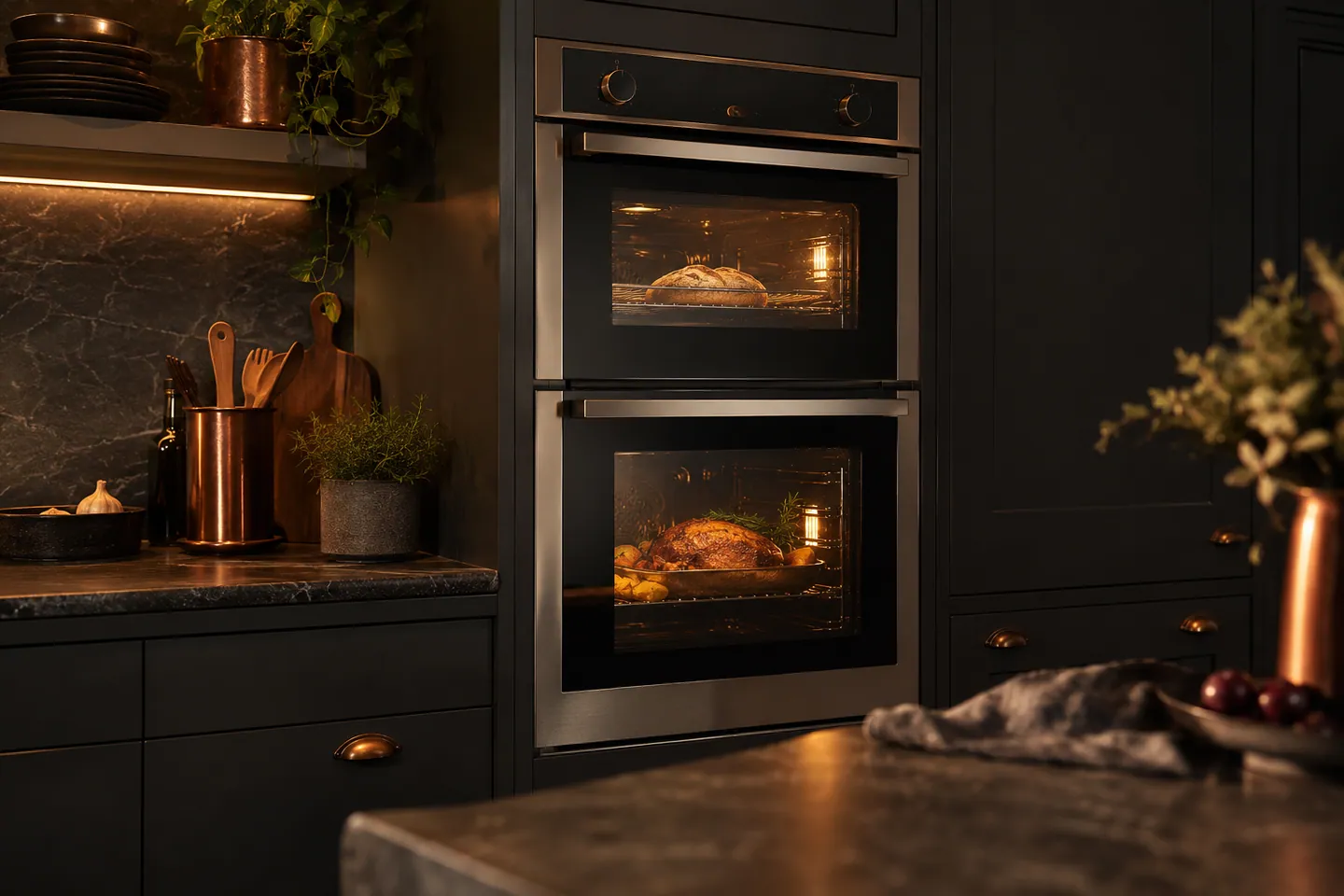
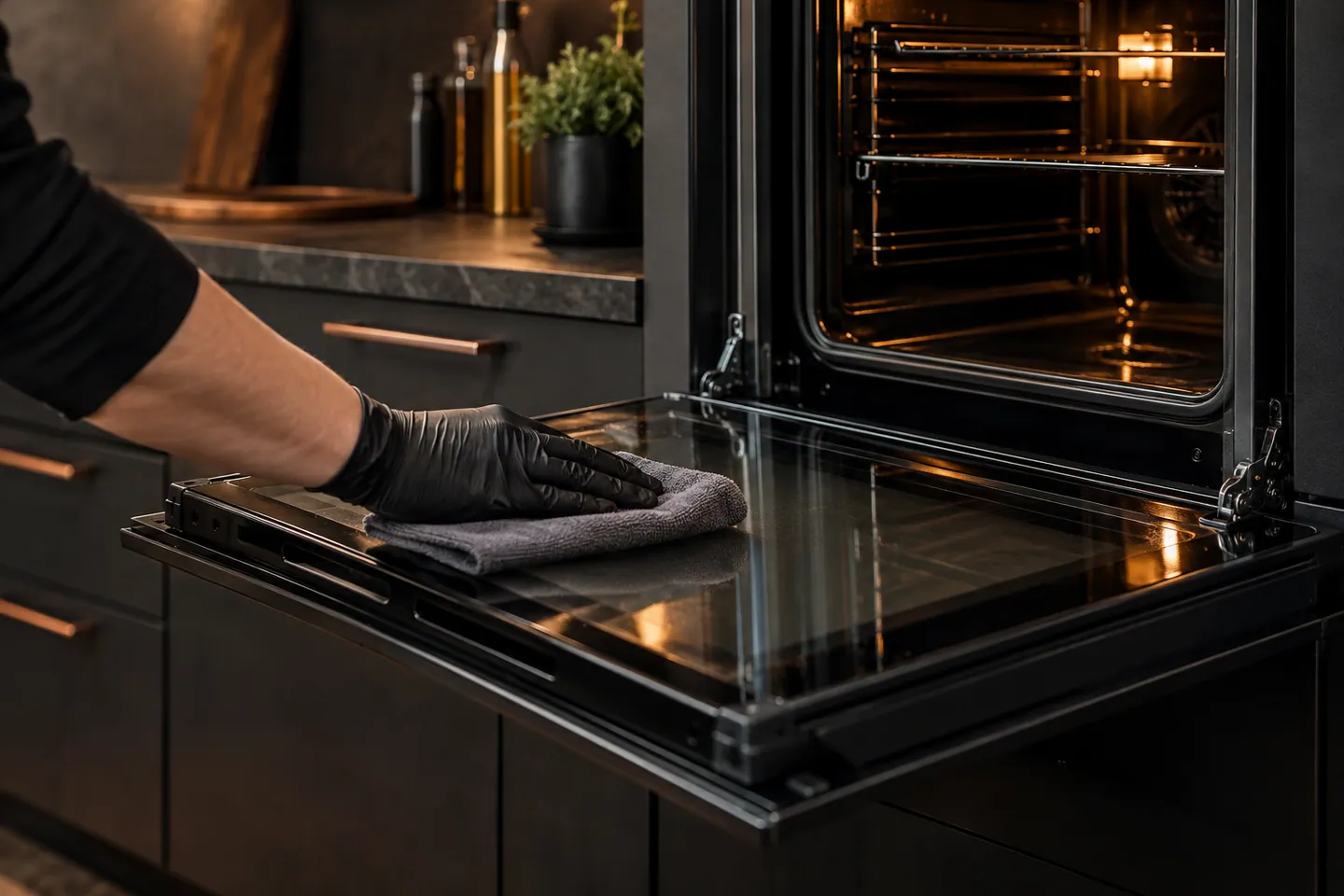
Explain where the spill has collected
Food can drip beneath a tray, collect around the edge of the cavity or leave a dark patch across the base. Tell us the location when enquiring about oven cleaning in Hanwell. A spill on the visible floor is a different access question from residue apparently beneath a panel or around a heating component.
We cover Hanwell as part of our London service. Give the full address, appliance model and compartments requested when arranging a visit. You can begin with what you see while the oven is cold; there is no need to remove covers to trace the spill further.
Look at the floor finish and oven design
Check the manual for the description of the cavity and any special lining. A patch on ordinary enamel should not be confused with a damaged coating or a specialist surface. Tell us about scratches, chips, corrosion or previous attempts to scrape the area, as well as the deposit itself.
Mention the element arrangement where you know it, without touching or loosening heating parts to investigate. The model helps explain access. If food appears to have travelled towards a join or beneath a cover, identify that location and ask what work is possible. The size or darkness of the patch alone cannot answer that question.
Include the tray that caught or missed the spill, any shelves needing attention and the door glass. If only one cavity is affected in a double oven, still describe the other space and state whether you want it included. That makes the complete request clear without treating the most visible spill as the whole job. If the oven has a removable tray covering the area, identify it separately from the cavity floor beneath.
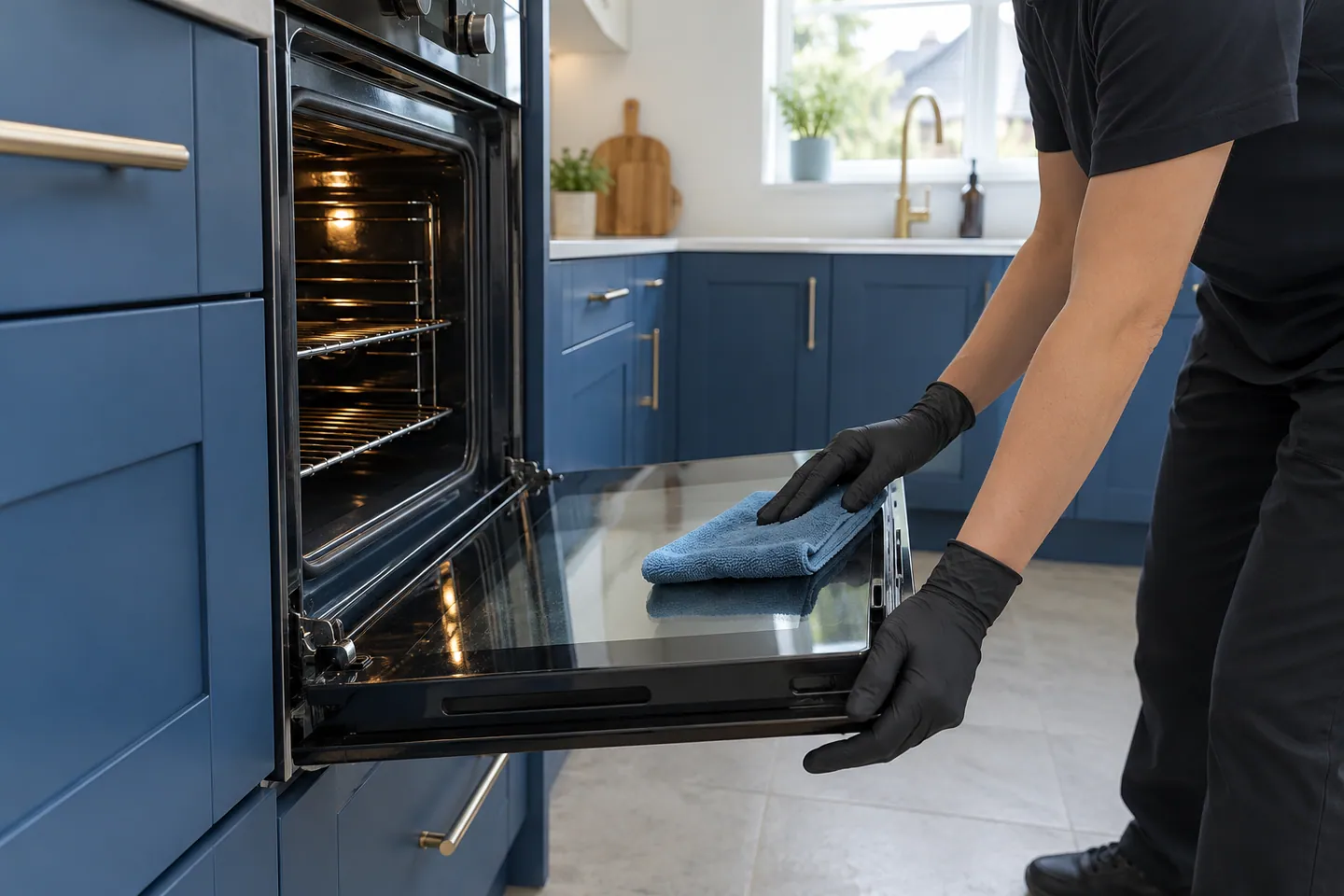
Compare the base-cleaning request by configuration
Use the cooking compartments to organise the enquiry, then explain the condition of each floor and fitting set. Similar exterior dimensions can conceal different layouts around the base.
| Configuration | What to distinguish | Useful detail for a quote |
|---|---|---|
| Single oven | One cavity floor may serve several cooking functions | Identify the spill location, model and relevant trays or shelves. |
| Double oven | The two floors can have different deposits and access | Describe each requested compartment independently, including a smaller grill space. |
| Range cooker | Several cooking cavities may use different finishes | List the ovens included and any separate spill concern in each one. |
Splashes beyond the oven belong in another request. Ask about hob cleaning for the cooking surface and describe its material, rather than assuming the base-cleaning job includes the whole cooker.
Keep cleaning and element work distinct
We clean the cavity and exterior areas, removable racks and trays listed in your quote. Tell us about specialist liners and glass residue between panes so those details can be checked for the model. Extra cookware should be named separately, particularly where its finish differs from the oven’s supplied fittings.
Do not remove covers or loosen heating components to reach a spill. Cleaning is not element servicing, fault diagnosis or repair. Report operating concerns and damaged parts before booking. Permanent stains, worn enamel and scratches may remain after deposits are removed, so explain any mark central to your expectations.
Provide a cold oven and accurate information
Allow the appliance to cool completely, remove food and loose pans outside the cleaning list, and clear the nearby work area. Keep included trays identifiable and leave room for the door to open. The manual is helpful where a base panel or specialist finish is unfamiliar.
Avoid applying a new product or scraping a patch immediately before arrival. Tell us about previous treatments and leave fitted parts in place. If someone else provides entry, share the spill location and other work requested so they can identify the concern without attempting their own dismantling or guessing what was agreed.
Quote from the appliance and the complete request
Our published guides are £50–75 for a single oven, £75–100 for a double and £100–130 for a range. Ask for the actual figure after describing the model, cavities, condition and fittings. A patch on the base does not by itself establish a fixed amount of work or a price separate from the oven.
Typical oven appointments may take around one to two hours, depending on the deposits and work included. Discuss any deadline and ask about the allowance for your visit. If surrounding surfaces also need attention, request kitchen deep cleaning separately and identify the extra areas.
Oven floors, trays and interior finishes

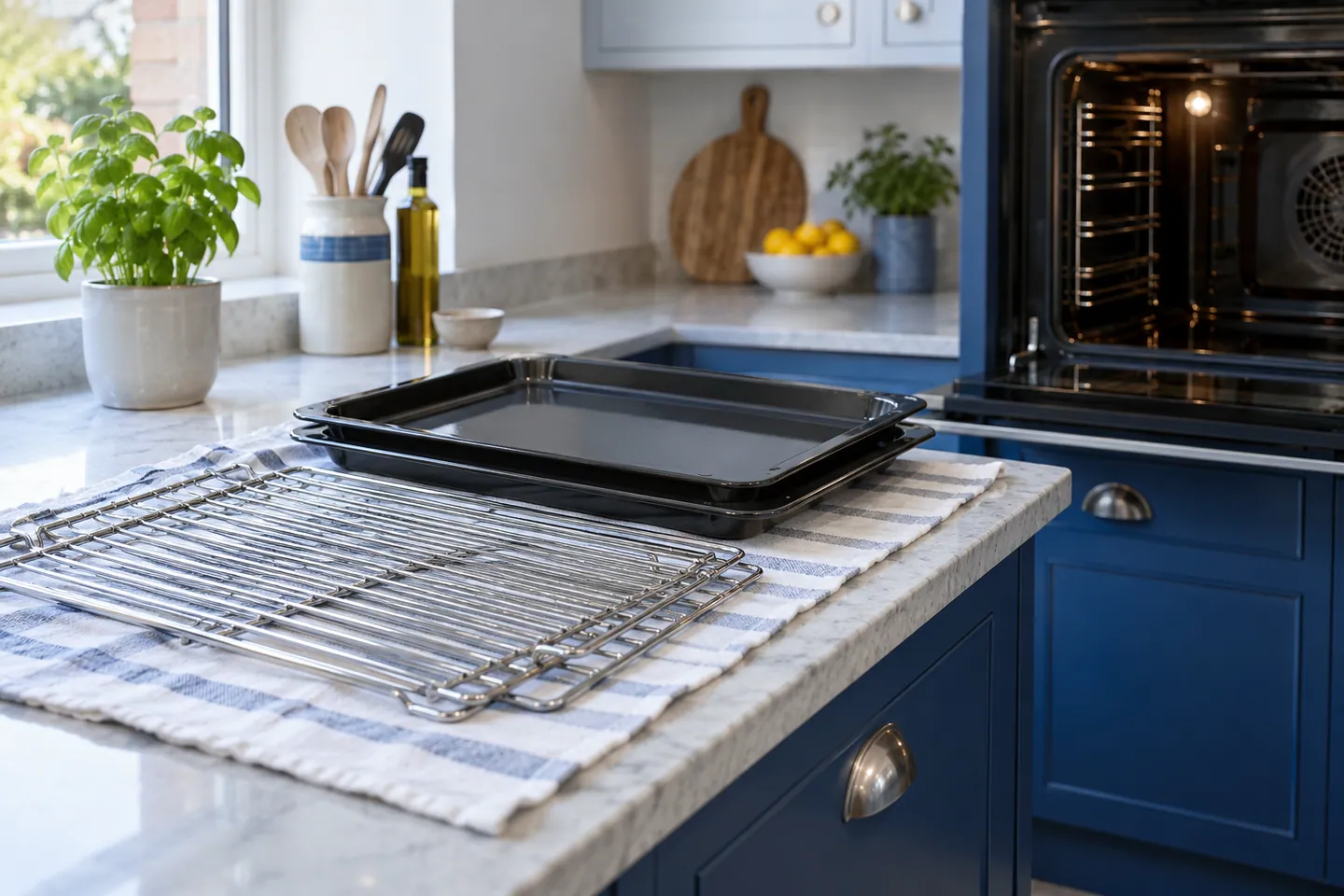
Follow up fresh spills without changing the appliance
Use manufacturer instructions for routine care of the cavity floor, special linings and accessories. Once the oven is cold and safe, address fresh food residue with a method allowed for the material. Keep trays under review as well as the base, because build-up can accumulate differently on each part.
Avoid foil coverings or liners that the manual does not permit. Review actual deposits when deciding on future professional cleaning, recognising permanent marks already explained after the visit. A new heating or control concern deserves appropriate technical advice rather than an assumption that another spill is responsible for the problem.
Questions about spills at the cavity base
Should I remove a base panel to find the spill?
Leave it fitted and describe where the residue appears. Give the model so access can be discussed without turning preparation into removal of covers or heating components.
Is a black patch always a removable deposit?
No. It may involve staining or damage to the finish as well as residue. Tell us the location and known condition rather than deciding the result from colour alone.
Can I line the base to prevent another spill?
Follow the oven manual before using foil or an additional liner. An improvised covering is not a substitute for the manufacturer’s guidance on the cavity and cooking accessories.
Does cleaning include checking a hidden element?
Technical diagnosis or servicing is separate from cleaning. Report operating concerns before booking and ask about the visible surfaces included rather than assuming hidden components will be investigated.
What if only the lower compartment is affected?
Identify both compartments and specify the work you want. The spill can be your main concern while the quotation still clearly states whether one or both cooking spaces are included.
What should I say about products already used?
Name the treatment where known and explain where and when you applied it. That information is more useful than adding another attempt just before the appointment to see whether the patch changes.
Nearby area guides
Find the right locality in our service areas directory, or explore these nearby guides for another address.
Discuss an oven clean in Hanwell
Call with the address, appliance details and work you want included to arrange a suitable appointment.