
Haggerston / The service guide
Oven Cleaning Haggerston
A professional clean can give you a clearer starting point for everyday oven care. In Haggerston, tell us where residue has built up and which parts you find difficult to maintain. We can discuss the current cleaning job and the practical questions to ask before returning to your usual cooking routine.
- Identify the deposits ordinary care is not managing
- Give frequently used trays their own attention
- Recognise new residue against the cleaned starting point
Start with what would make ordinary care easier
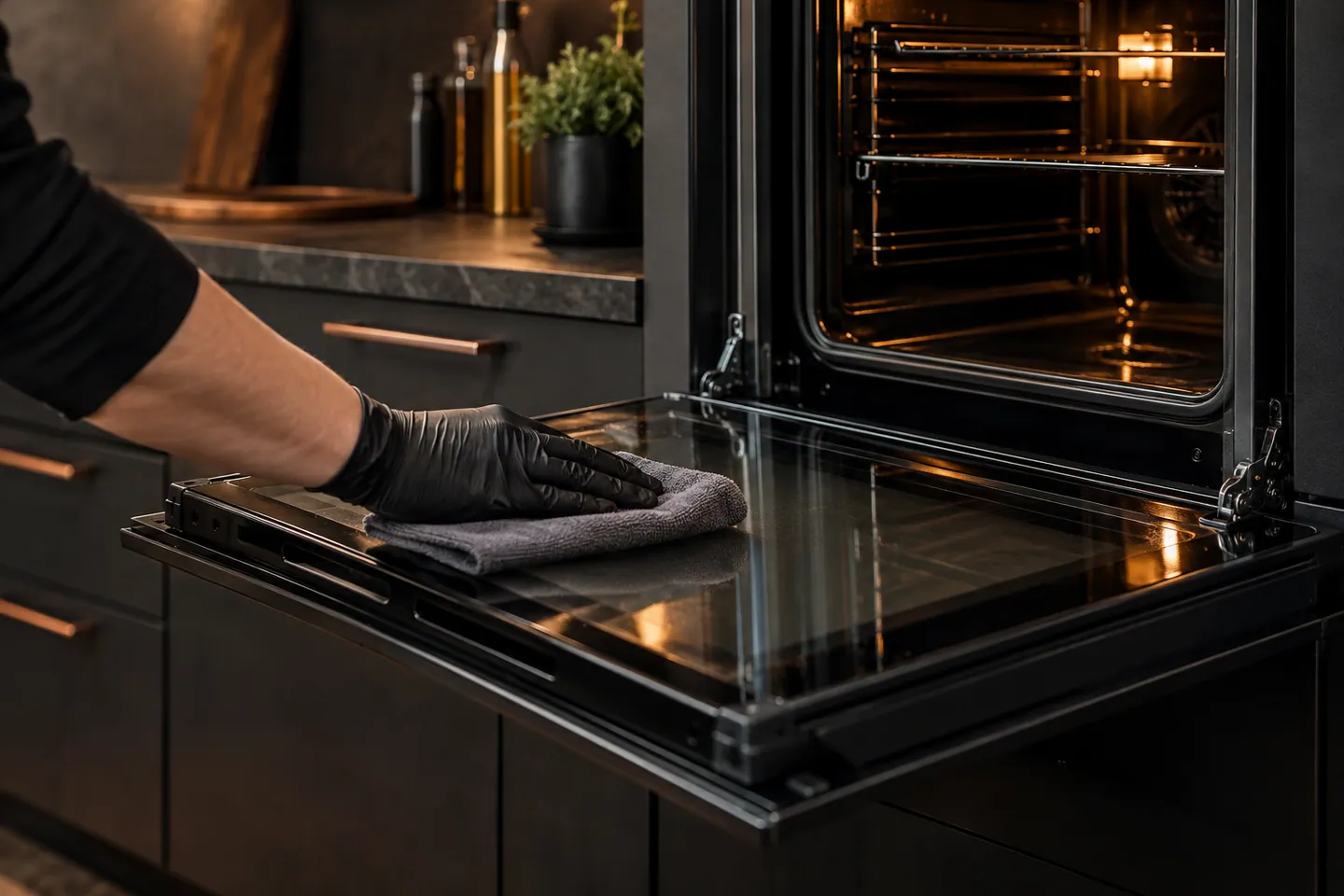
A tray that is difficult to wash, glass obscured by splashes or deposits in the cavity can each prompt a request for help. Tell us which parts matter most when arranging oven cleaning in Haggerston. You can describe the problem without choosing the cleaning method yourself.
We serve Haggerston within our London coverage. Give us the full address, oven model where available and the work you want considered. The appointment can then focus on the present build-up, with useful care questions carried into the final discussion rather than an expectation that every surface must look factory-new.
Notice where your cooking leaves residue
Think about the components you use most. A roasting tray may collect deposits regularly while the oven walls remain relatively clear. Glass can look marked before a shelf needs much attention. Describe these differences so we know whether your main concern is one accessory, several parts or the whole appliance.
Include specialist liners, self-cleaning features and any extra cookware you want considered. Their care may differ from ordinary racks or enamel. Mention previous cleaning attempts and existing wear too. This gives a practical picture of the oven as it is, instead of describing it only as overdue for a clean.
Choose a few areas to review afterwards: the usual tray, the inner glass and the cavity surface where spills tend to land, for example. They provide a useful reference when you begin cooking again. You can then recognise fresh residue without repeatedly trying to remove a permanent mark that was already explained at the visit.
Build the starting point around each cooking space
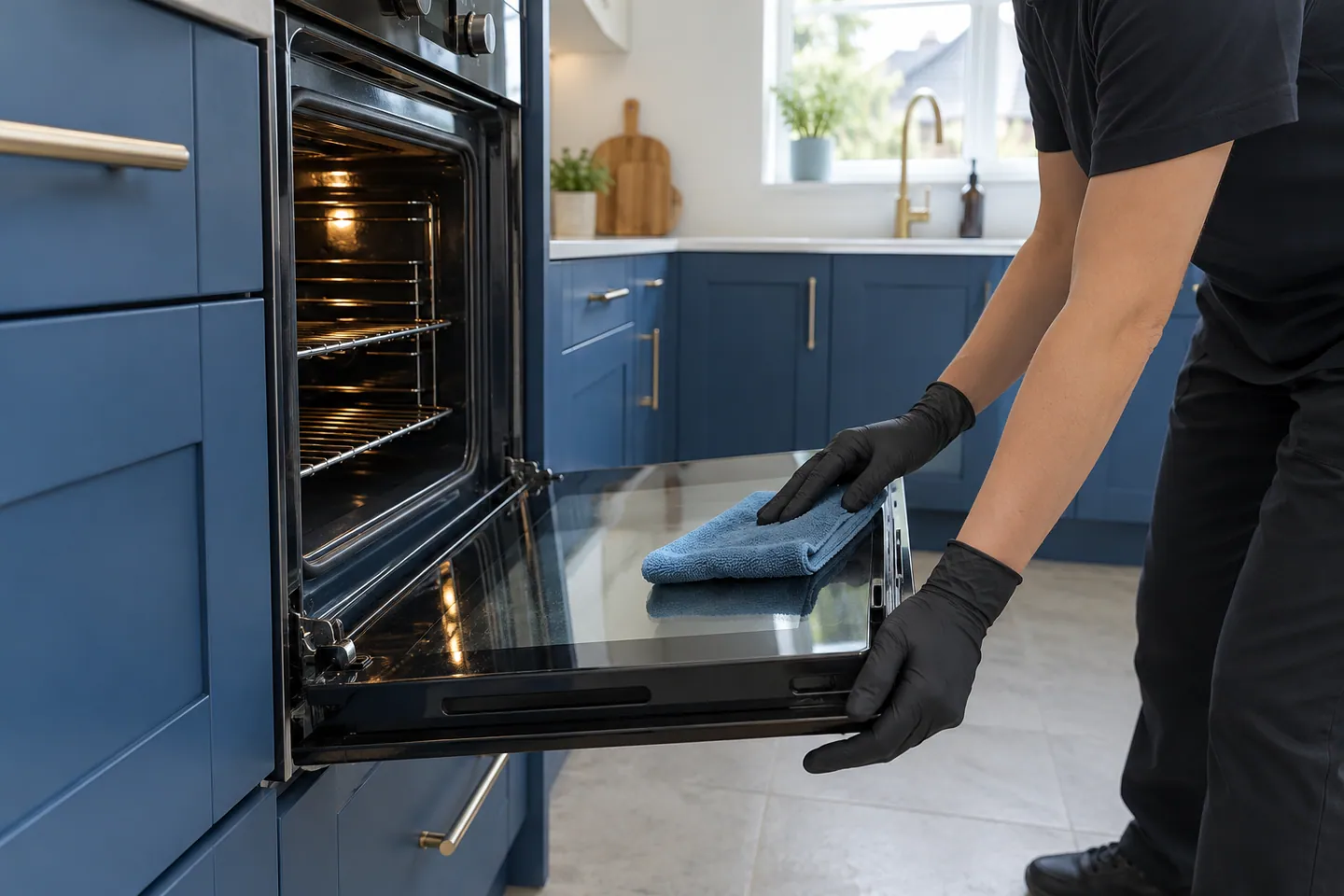
The oven configuration helps you describe the job and organise later checks. Count the cavities and fittings you use rather than judging maintenance needs from the outside size alone.
| Configuration | What to distinguish | Useful detail for a quote |
|---|---|---|
| Single oven | Several cooking functions can share one cavity | Identify the shelf, tray and surfaces that collect most of the residue. |
| Double oven | Use and build-up can differ between compartments | Describe both spaces and specify the accessories included in the clean. |
| Range cooker | Several ovens may follow different cooking routines | List each cavity requested and the fittings that need attention with it. |
Other appliances can need care at a different rate. Ask about hob cleaning if that surface also needs attention, rather than treating the oven and hob as a fixed package every time you book.
Choose a clean you can review afterwards
We clean the oven surfaces and removable racks or trays identified in your quote. Tell us about glass residue between panes so access can be checked against the model, and identify specialist liners before work begins. A clear accessory list helps us distinguish supplied fittings from separate cookware you would like considered.
Judge ongoing care by fresh deposits, not unchanged wear. Cleaning cannot renew scratched enamel, replace failed coatings or repair an operating fault. Report damage and technical concerns beforehand. At the end, ask about marks that remain so they do not become a reason for repeated abrasive treatment during routine care.
Make the visit a simple starting point
Let the oven become cold, remove food and loose cookware outside the request, and clear the space around the door. Keep included accessories identifiable, with the manual available where possible. You do not need to pre-clean stubborn patches or run an additional programme just to prepare.
Leave glass, liners and fitted parts in place. Tell us what products have already been used and point out known damage. If another person provides access, share your main concerns and ask them to receive the explanation about remaining marks and next use, so that information reaches whoever maintains the oven.
Pay for the work needed now
Our published guides are £50–75 for a single oven, £75–100 for a double and £100–130 for a range. Ask for the actual quote for your model, cavities, condition and fittings. A long gap since the previous clean does not by itself describe the deposits or establish the total.
Typical oven cleaning may take around one to two hours, depending on the appliance and work. Discuss the allowance and any deadline before booking. If the surrounding room also needs a fuller reset, describe the surfaces separately when asking about kitchen deep cleaning, with its own work and price.
A clear starting point for oven and accessory care

Use a small routine rather than chase perfection
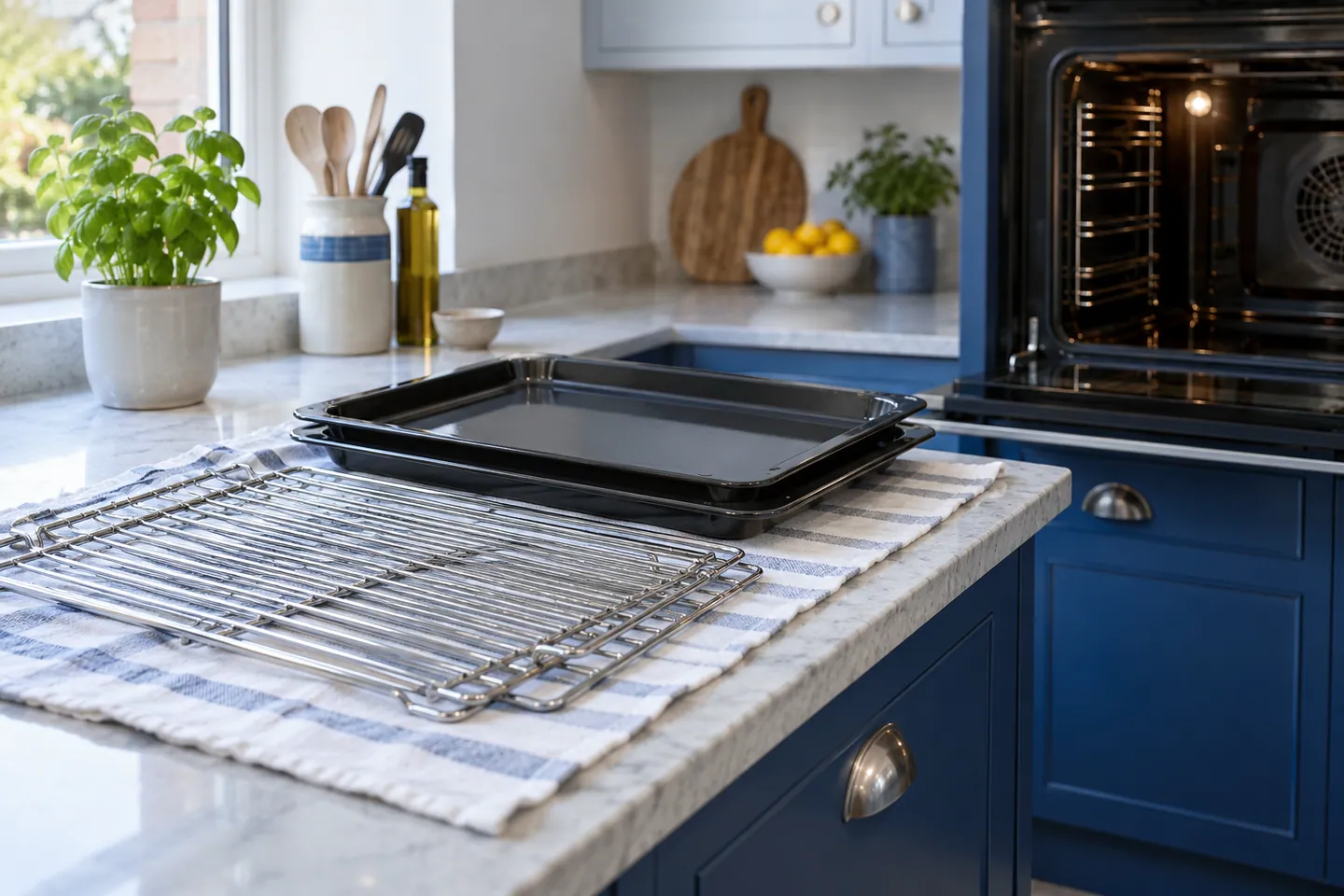
Follow the manufacturer instructions for the oven and each accessory. Once cold and safe, address fresh spills with a method allowed for the finish. Check trays regularly, since their residue can build more quickly than the cavity’s. Special liners and moving fittings need their own instructions rather than a borrowed method for plain metal.
Review how quickly deposits return with your cooking. That gives you a reasoned basis for another professional visit when ordinary care is no longer enough. Keep note of the location and component involved; a specific observation such as recurring tray residue is more helpful than assuming the whole appliance needs the same treatment again. Keep accessory care information when replacing a tray, as its finish may differ from the previous one.
Making the clean useful between visits
Is the goal to make every surface look new?
Focus on the cooking deposits and parts included in the job. Wear and permanent staining can remain, so ask about those marks and use the cleaned condition as a realistic starting point.
Which parts should I watch after cooking resumes?
Check the accessories you use most, the glass and places where spills usually land. Follow their care instructions and distinguish new residue from existing marks explained after the clean.
Must I choose a fixed cleaning interval?
No single interval fits every cooking routine. Review actual build-up and what ordinary care can manage, then arrange help when the deposits are becoming difficult to address appropriately.
Can a tray need attention before the cavity?
Yes. Their use and residue can differ, so look after the tray according to its material instead of waiting for every part of the oven to appear equally used.
What should I ask before the next use?
Ask for guidance relevant to your model and the work carried out. Keep the manual as the reference for ordinary cleaning, specialist liners and self-cleaning functions afterwards.
What if a new operating problem appears later?
Describe it separately and seek appropriate appliance advice. A change in heating, controls or door movement should not be answered simply by booking a more frequent surface clean.
Nearby area guides
Find the right locality in our service areas directory, or explore these nearby guides for another address.
Discuss an oven clean in Haggerston
Call with the address, appliance details and work you want included to arrange a suitable appointment.