
Deptford / The service guide
Oven Cleaning Deptford
Dark marks after roasting can appear on a tray, the cavity floor or the glass, with different surfaces underneath. For oven cleaning in Deptford, describe those locations and the appliance model. The work can then be discussed around the actual deposits, fittings and condition rather than one assumed treatment for everything.
- Locate roasting deposits on the correct surface
- Describe trays separately from cavity finishes
- Include the tray that caught the roasting spills

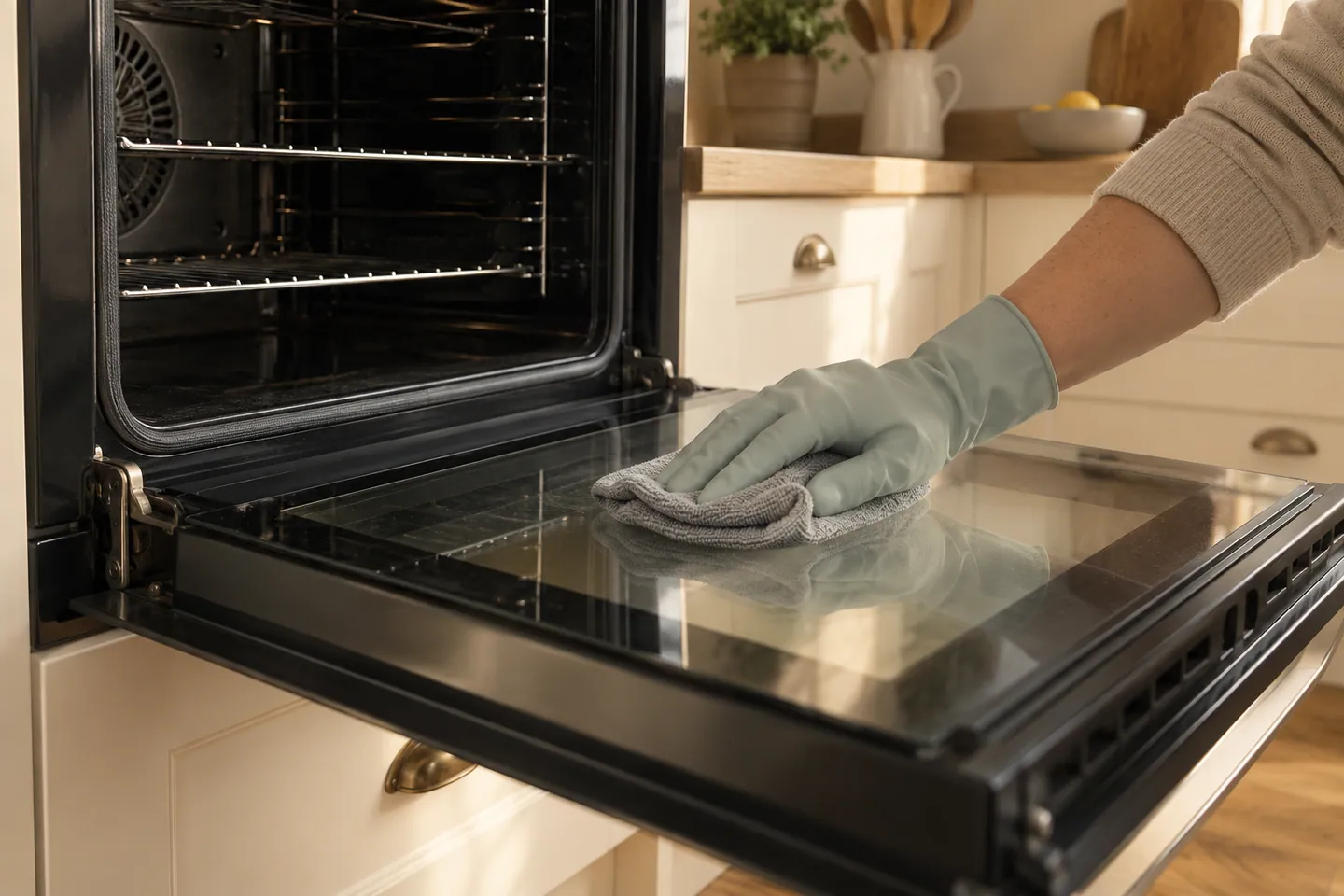
Begin with where the roasting residue landed
After a roast, the most obvious mark may be on the glass, while much of the residue sits on a tray or beneath the cookware. When requesting oven cleaning in Deptford, explain the areas involved and whether the oven has been used since. You do not need to identify the cleaning method before making the enquiry.
John’s serves Deptford within its London coverage. Give the full address, model where known and compartments required when arranging the visit. A brief that identifies the actual surfaces is more useful than estimating the job from the darkness of a patch alone.
Look at the material beneath the mark
A removable tray, an enamel wall and a specialist liner can collect similar-looking deposits but have different care needs. Say which surface appears affected and mention any special features in the manual. If you cannot identify the finish, describe the part and provide the model rather than scraping a patch to investigate. If the deposit sits near an element or a panel edge, name that location without removing covers to follow where it goes.
Mention previous cleaning attempts and existing damage. Repeated heating can leave colour changes as well as food residue, and a worn coating is different from a layer sitting on top of it. The colour of a mark does not determine the treatment. Its location, material and condition give the conversation a practical direction.
Look beyond the most noticeable area when deciding what to request. Include the shelves used for roasting, any separate grill pan and the other cavity if you have a double oven. A concentrated deposit can be the reason for calling without defining the whole job or establishing which accessories you want included.
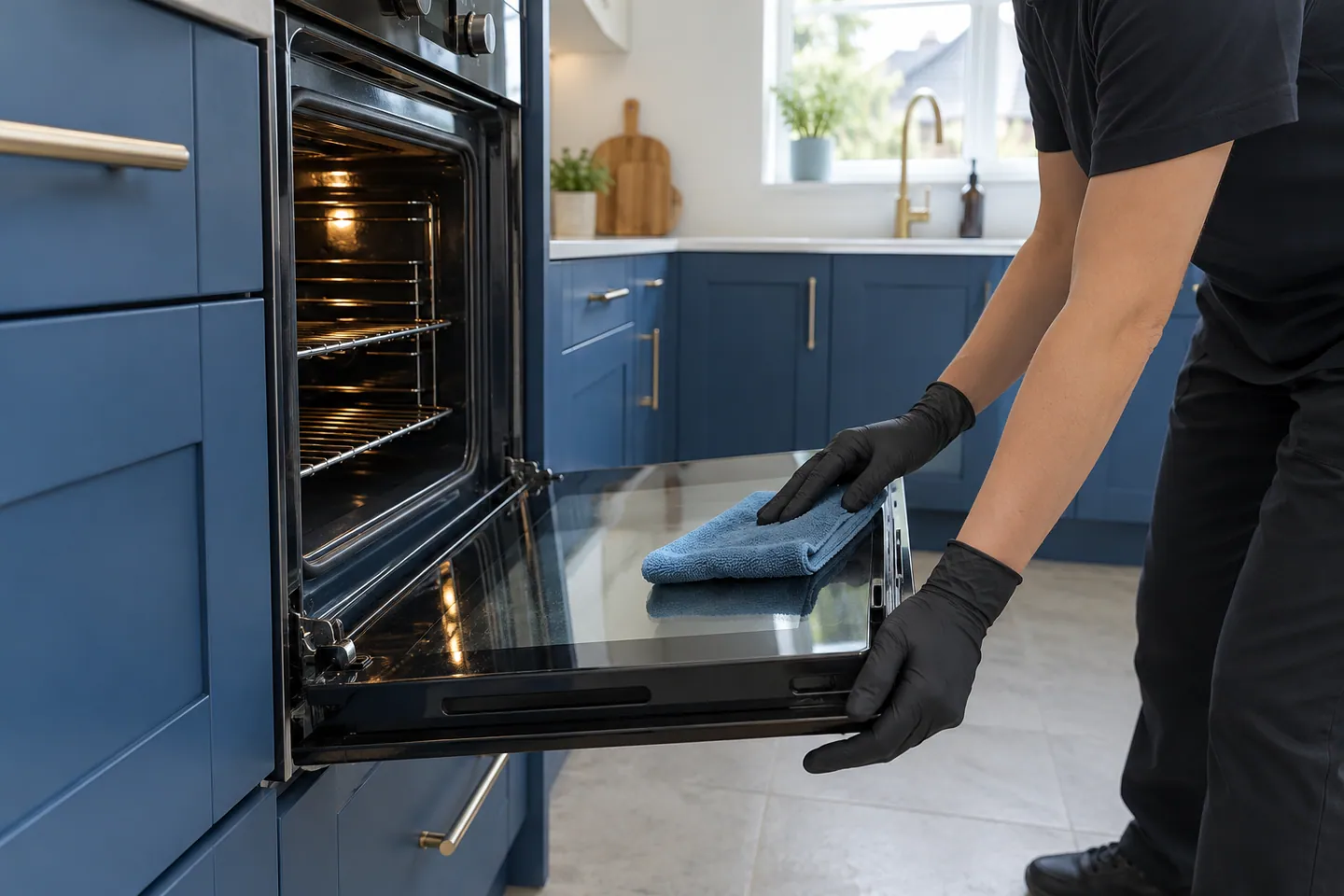
Describe roasting work across the oven types
The amount of cleaning depends on the actual compartments and fittings as well as the residue. Use the category to organise your description, then add the condition of each part.
| Configuration | What to distinguish | Useful detail for a quote |
|---|---|---|
| Single oven | Roasting and grilling may share the same cavity | Identify the tray, racks and glass affected within that cooking space. |
| Double oven | One compartment can hold most of the roasting deposits | Describe both cavities and state which are included. |
| Range cooker | Different cavities can have different use and finishes | List the cooking spaces and accessories requiring attention individually. |
Residue on a hob needs its own description. Ask about hob cleaning if the cooking surface also needs attention, rather than treating splashes above the oven as part of the cavity clean.
Agree the surfaces around the main concern
Tell us which cavity surfaces, shelves, trays and exterior areas you want cleaned. Include the glass and describe whether residue appears between panes, as access depends on the model. Mention catalytic liners and self-cleaning functions before booking. If an extra roasting tin needs attention, name it as separate cookware and ask whether it can be included in the quote.
Cleaning addresses cooking deposits on the parts included in the quotation. It cannot renew worn enamel, repair components or reverse every permanent stain. Report faults and damaged glass before booking. Glass access between panes depends on construction, and movement of a fitted appliance should not be inferred from a general oven-cleaning request.
Leave the oven cold and the marks described
Allow the appliance to cool fully, remove food and loose cookware outside the brief, and clear the nearby working area. Keep included trays and racks identifiable and have the manual available where possible. Make the route to the kitchen straightforward and leave enough room for the door to open.
Avoid a last-minute attempt with additional products or aggressive scraping. Tell the team what has already been used on the troublesome area. Leave glass, liners and fitted parts in place. If another person provides entry, share the priority marks and accessory list so the initial enquiry and the visit concern the same work.
Quote the oven, not the size of one patch
Published single-oven guides are £50–75, with doubles at £75–100 and ranges at £100–130. Confirm the actual figure after describing the model, compartments, condition and fittings. One dark area does not establish a separate fixed price or explain the work required elsewhere in the appliance.
Typical oven cleaning may take around one to two hours, depending on deposits and the work included. Ask about the allowance before planning another commitment immediately afterwards. If roasting has left surrounding surfaces needing attention, enquire about kitchen deep cleaning separately and identify the additional areas.
Roasting trays, glass and cooking cavities

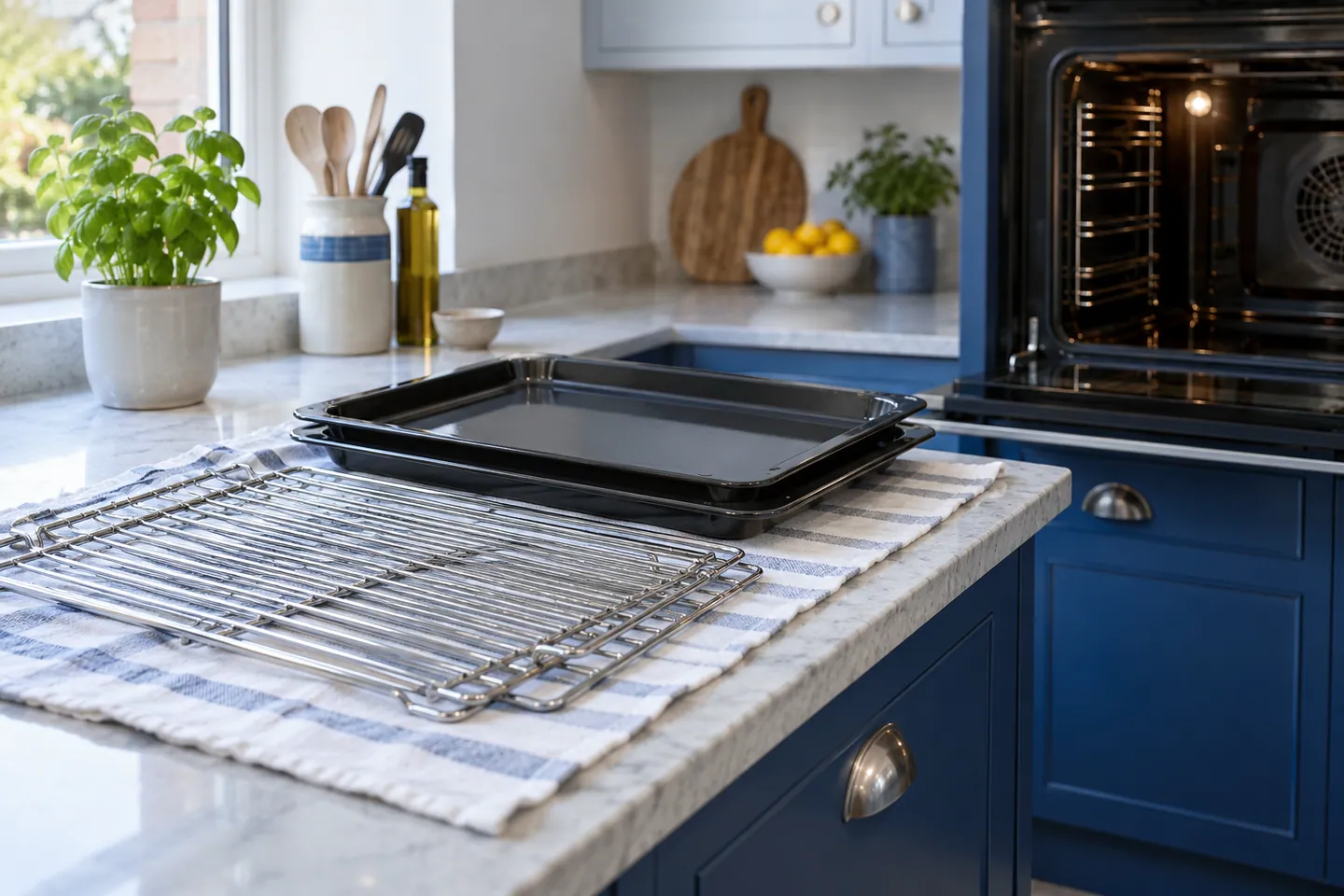
Make the next roast easier to follow up
Use the manufacturer’s instructions for routine care of trays, the cavity and specialist liners. Once cold and safe, deal with suitable fresh spills before they are heated repeatedly. Check the accessories used for a particular meal instead of judging the whole oven only through the front glass.
Base future professional cleaning on the deposits that develop with your cooking. Recognise any permanent mark remaining after the clean so it is not repeatedly attacked as new dirt. Keep the model reference and accessory list available for later enquiries, updating them when cookware or the cooking routine changes.
Questions about dark cooking deposits
Is every black patch burnt-on food?
Not necessarily. Staining, wear and damaged finishes can affect appearance too. Describe the surface and location and mention what you know, rather than diagnosing the patch from its colour.
Should I clean the roasting tray first?
Follow its care instructions for ordinary use, but do not add an intensive treatment simply to prepare for the appointment. Identify the tray and tell the team about previous cleaning attempts.
What if residue appears on a specialist liner?
Mention the model and liner type where known and keep the manual available. A panel with a special finish should not be treated automatically like an ordinary removable metal tray.
Can I request the whole double oven after one messy roast?
Describe both compartments and confirm the intended work. The roast may explain the main concern, while the quotation should still identify the cavities and accessories you want included.
Will a clean fix an unusual cooking smell?
Explain the smell and any known operating problem before booking. Do not assume residue is the cause; technical concerns need appropriate advice separately from surface cleaning.
What is useful to check after the visit?
Review the named surfaces and fittings, ask about remaining marks and confirm guidance for using the model again. That gives you a realistic baseline for subsequent cooking and care.
Nearby area guides
Find the right locality in our service areas directory, or explore these nearby guides for another address.
Discuss an oven clean in Deptford
Call with the address, appliance details and work you want included to arrange a suitable appointment.