
Cricklewood / The service guide
Oven Cleaning Cricklewood
An oven door needs room to open and leave a workable area around the appliance. For cleaning in Cricklewood, explain any restriction before arranging the visit. Identify the oven, fittings and surfaces needing attention so the booking reflects the access you actually have and the work you want done.
- Explain door-opening restrictions before booking
- Clear movable belongings from the working area
- Match the cleaning request to the actual installation
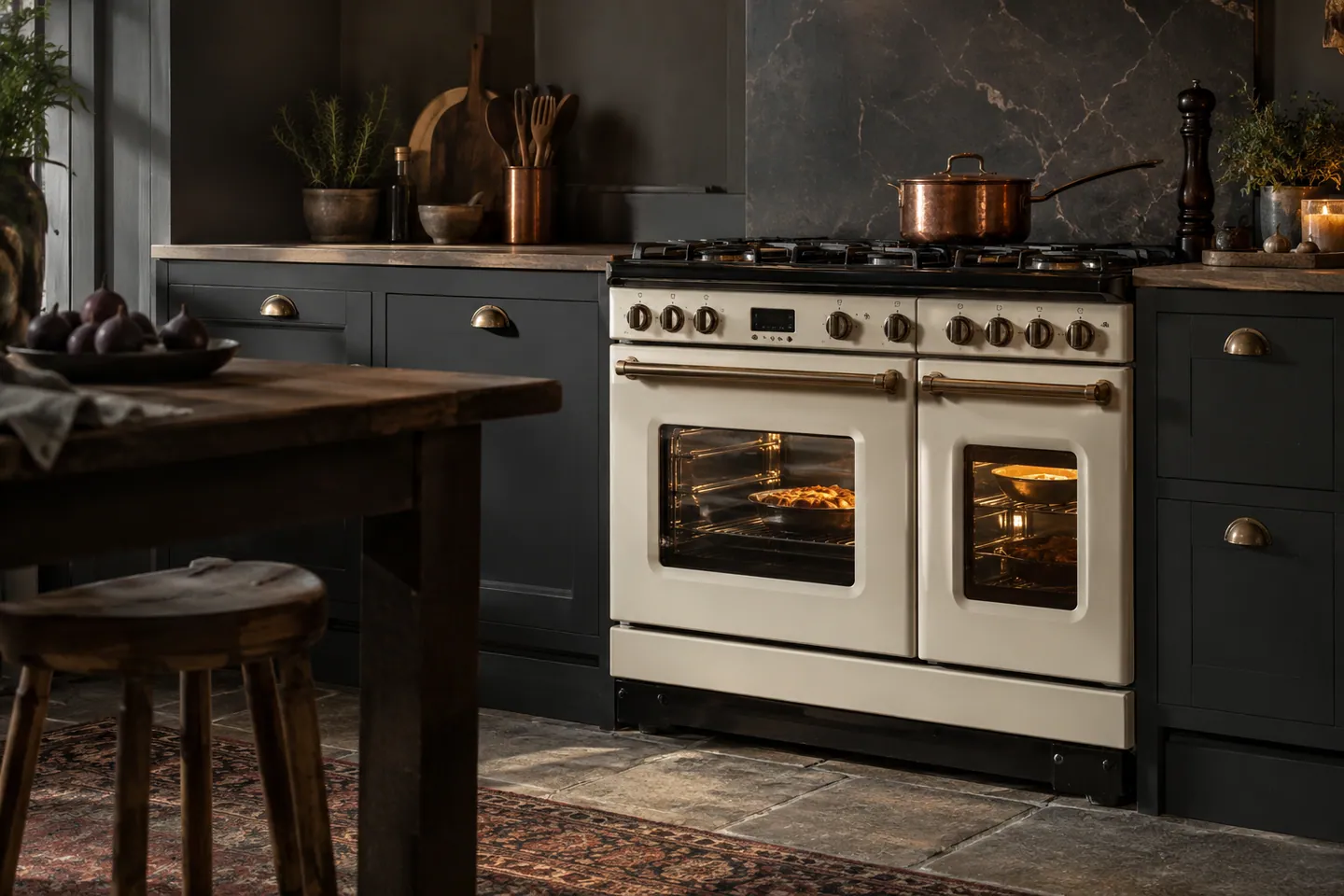
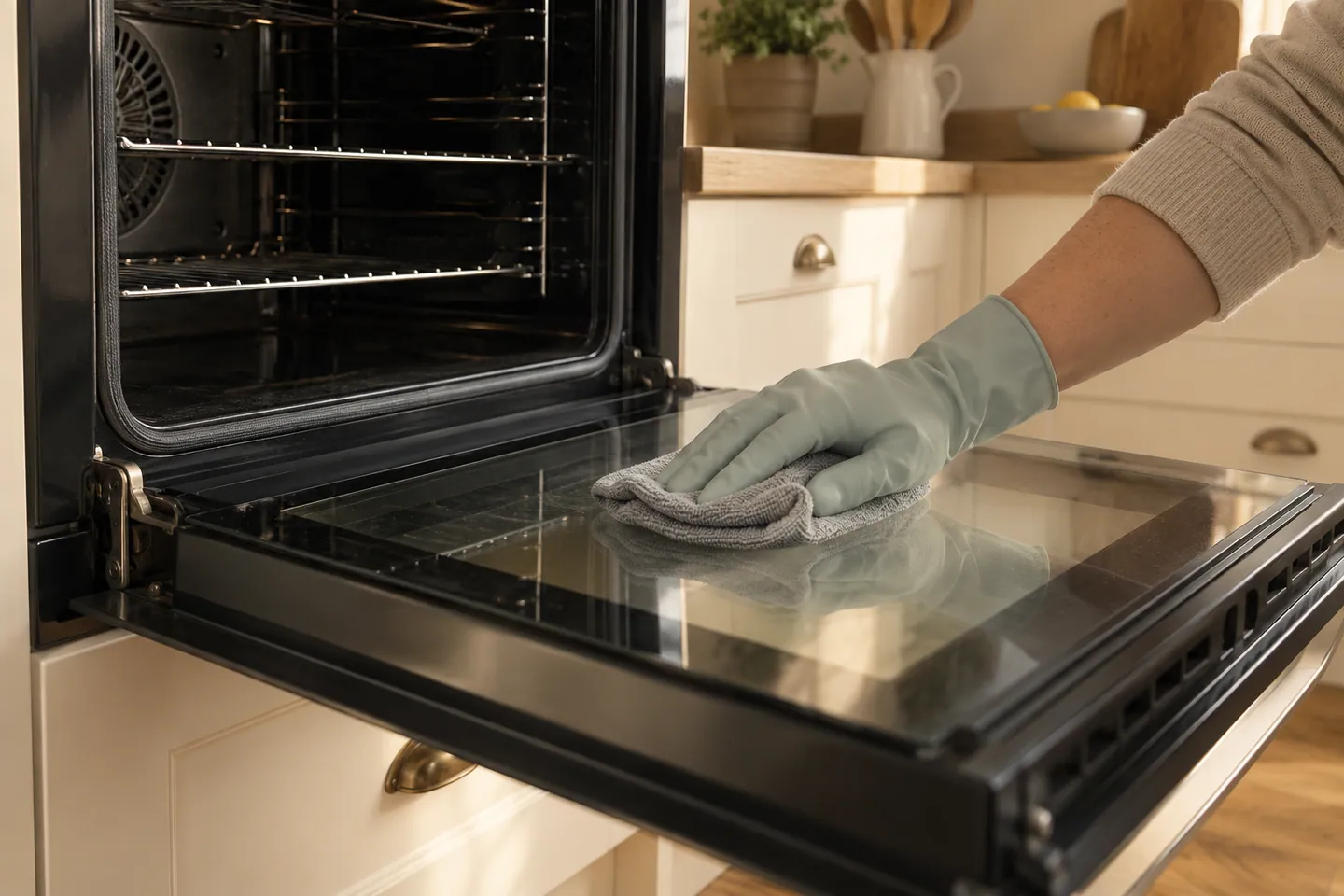
Describe the space in front of the oven
A bin, trolley or stored cookware can restrict the space where an oven door opens. A fixed obstacle presents a different question from something you can move easily. When asking about oven cleaning in Cricklewood, explain the obstruction and whether the door opens fully, rather than trying to judge the whole job from a photograph of the closed appliance.
We serve Cricklewood as part of our London coverage. Give us the full address and entry arrangements when booking. Explain the position of any fixed obstruction beside the door and what can be moved before arrival, so we understand the working space at your property.
Separate a clear floor from appliance access
Start by identifying what can be moved without changing the installation. Loose belongings can usually be cleared before arrival, while a cupboard, fitted panel or appliance connection needs a different discussion. Tell the booking team if the door catches something or a rack cannot slide forwards fully. Those observations describe access without requiring you to diagnose a hinge or cabinet problem.
Then identify the surfaces needing attention: the cavity, glass, removable racks and trays, or the exterior. Good working room helps with the visit, but it does not establish which glass layers open on the model. Keep the make and model available where possible and explain any specialist lining or unusual fitting.
Describe the restriction with the appliance in its normal position. For example, explain whether a nearby cupboard must remain closed while the oven opens, or whether the problem concerns drawing a tray out rather than opening the door itself. The distinction helps make the conversation specific. There is no need to recreate an awkward movement just to demonstrate it when enquiring.
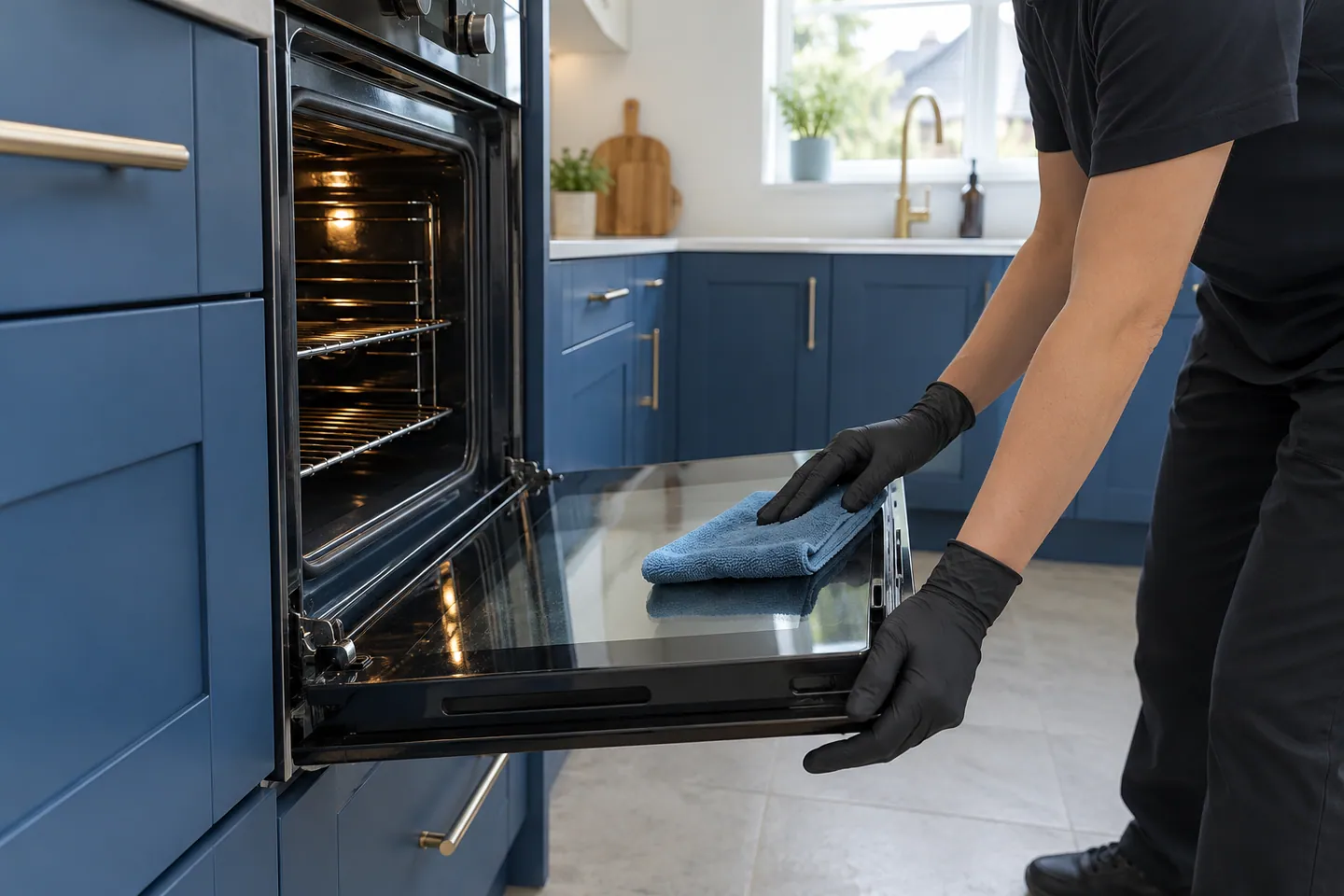
Relate door access to the oven arrangement
Use the actual compartments to describe the appliance. Similar front dimensions can conceal different doors and accessory arrangements, each needing enough room to reach the requested work.
| Configuration | What to distinguish | Useful detail for a quote |
|---|---|---|
| Single oven | One main door gives access to the cavity and its fittings | Explain whether the door opens fully and the racks can come forwards. |
| Double oven | Two doors may have different opening space | Describe access to each compartment, not just the larger lower cavity. |
| Range cooker | Several doors can share the same working area | List the required cavities and any restriction affecting an individual door. |
A hob above the oven is another cleaning item. If it needs attention, ask about hob cleaning and describe its type. The room needed for oven work should not be used as an assumption that every surrounding appliance is included.
Agree the work in the existing position
We clean the cavity, door glass, exterior and removable racks or trays listed in your quote. Tell us which areas need attention and whether anything blocks the door or the movement of a shelf. For marks between glass panes, provide the model so we can discuss door access. Mention catalytic liners or a self-cleaning function before the appointment.
Leave fitted appliances and their connections undisturbed. Cleaning is not a repair or a change to the kitchen installation. Report damaged glass, loose components or operating faults beforehand. Scratches, worn enamel and permanent stains may remain after cooking deposits are addressed; explain any important mark before agreeing the work.
Make the movable space available
Allow the oven to cool completely, remove food and loose pans, and clear belongings from the approach and door area. Keep the included trays identifiable, especially if some are normally stored elsewhere. A quick check with the door open can help you describe the available space without taking anything apart.
Do not remove glass, liners or supports as preparation. If a restriction remains after loose belongings are cleared, tell the team before the appointment. Where another person provides entry, share the appliance details and access concern so the cleaner receives the same information that was used to arrange the visit.
Include access details when requesting the quote
Published oven guides are £50–75 for a single, £75–100 for a double and £100–130 for a range. Ask for the figure for your model, compartments, fittings and condition. Describe the access restriction at the same time so the proposed work and price refer to the actual appliance.
Some oven cleans take around one to two hours, depending on the deposits and scope. Ask about the allowance for your appointment rather than placing another commitment against an assumed finish. If surrounding surfaces need attention, request kitchen deep cleaning separately, with the additional areas identified.
Oven interiors, doors and removable fittings

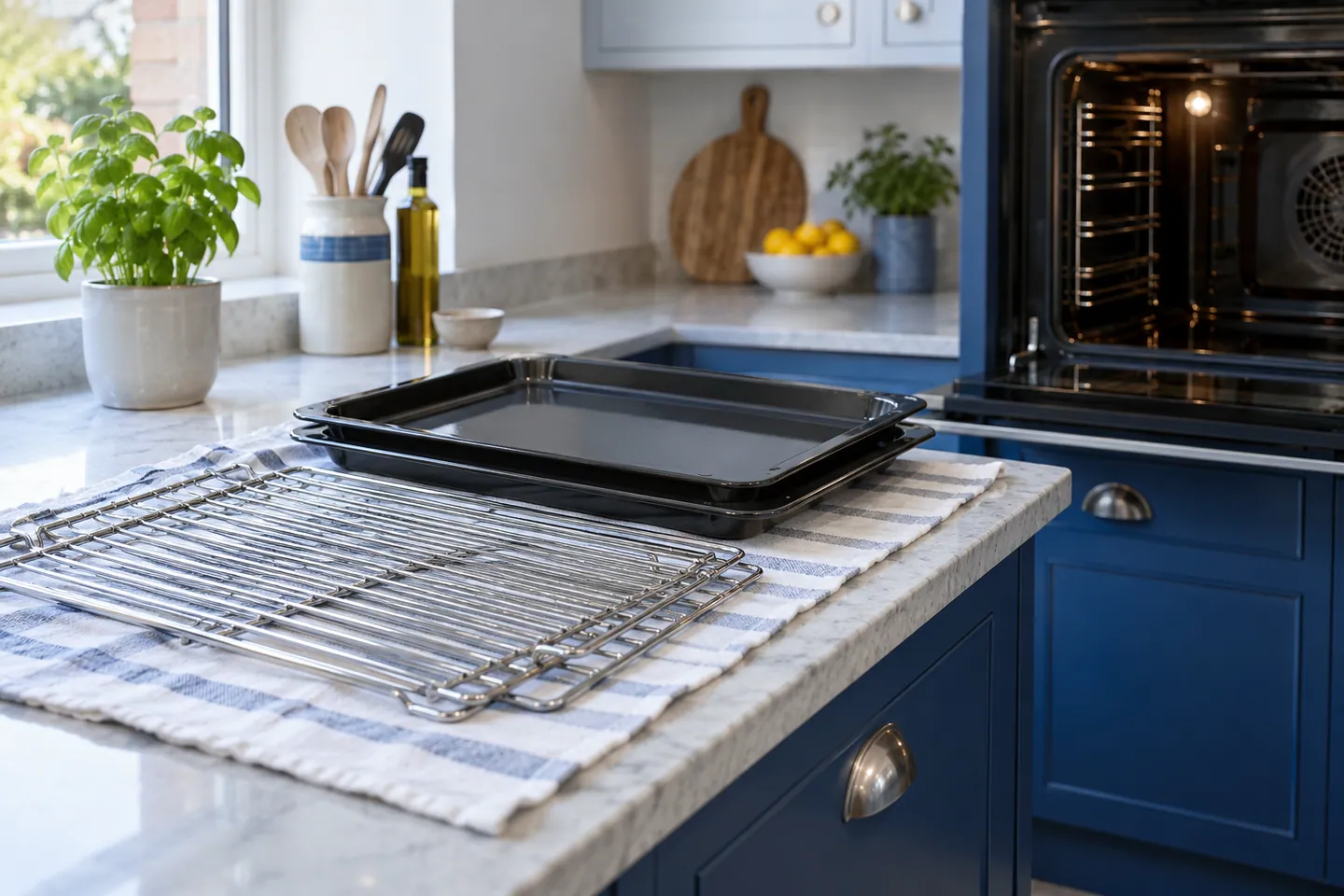
Keep everyday cleaning within comfortable reach
Follow the manual for routine care, particularly for specialist surfaces. Once the oven is cold and safe, deal with suitable fresh spills and check removable trays as well as the cavity. Keeping ordinary cooking residue manageable is more useful than repeatedly reaching into an awkward space with an improvised tool.
Review how quickly deposits return with your cooking habits. Plan professional attention when routine care is no longer enough and update any access details that have changed. If the door begins catching or moving differently, report that concern separately rather than assuming a more intensive clean will correct the mechanism.
Planning around the oven door
Should I measure the gap in front of the door?
A clear description can start the enquiry. Explain whether the door opens fully and what restricts it; provide further detail if requested rather than moving the appliance to improve the gap.
What if a movable trolley is the obstruction?
Clear it from the working area before the agreed visit where practical. Mention any fixed restriction that remains so the appointment is planned around the real access.
Does a clear floor mean all glass can be reached?
No. Floor space and door construction are separate matters. Identify the model and the location of glass residue so the proposed work reflects both access and design.
Can a neighbour provide entry?
Agree the arrangement when booking and pass on the appliance brief. The person present should know about the door restriction and which compartments and fittings were included.
What should I do about a sticking hinge?
Describe it before booking and leave the door assembled. A mechanical concern needs appropriate advice; do not force the hinge or assume cleaning includes adjusting it.
Can I book only the oven despite limited room?
Explain the actual access and requested parts first. The team can discuss the work and appointment with that information, without turning the enquiry into a wider kitchen-cleaning request.
Nearby area guides
Find the right locality in our service areas directory, or explore these nearby guides for another address.
Discuss an oven clean in Cricklewood
Call with the address, appliance details and work you want included to arrange a suitable appointment.