
Chalk Farm / The service guide
Oven Cleaning Chalk Farm
A recently acquired oven with little residue may need ordinary care rather than an immediate professional clean. For Chalk Farm, look at the cold surfaces and fittings, check the model instructions and tell us what still concerns you. We can quote for specific cleaning needs without treating every faint mark as a major job.
- Judge the present condition rather than ownership dates
- Try the routine care allowed by the manual
- Ask for help with a clearly identified remaining task
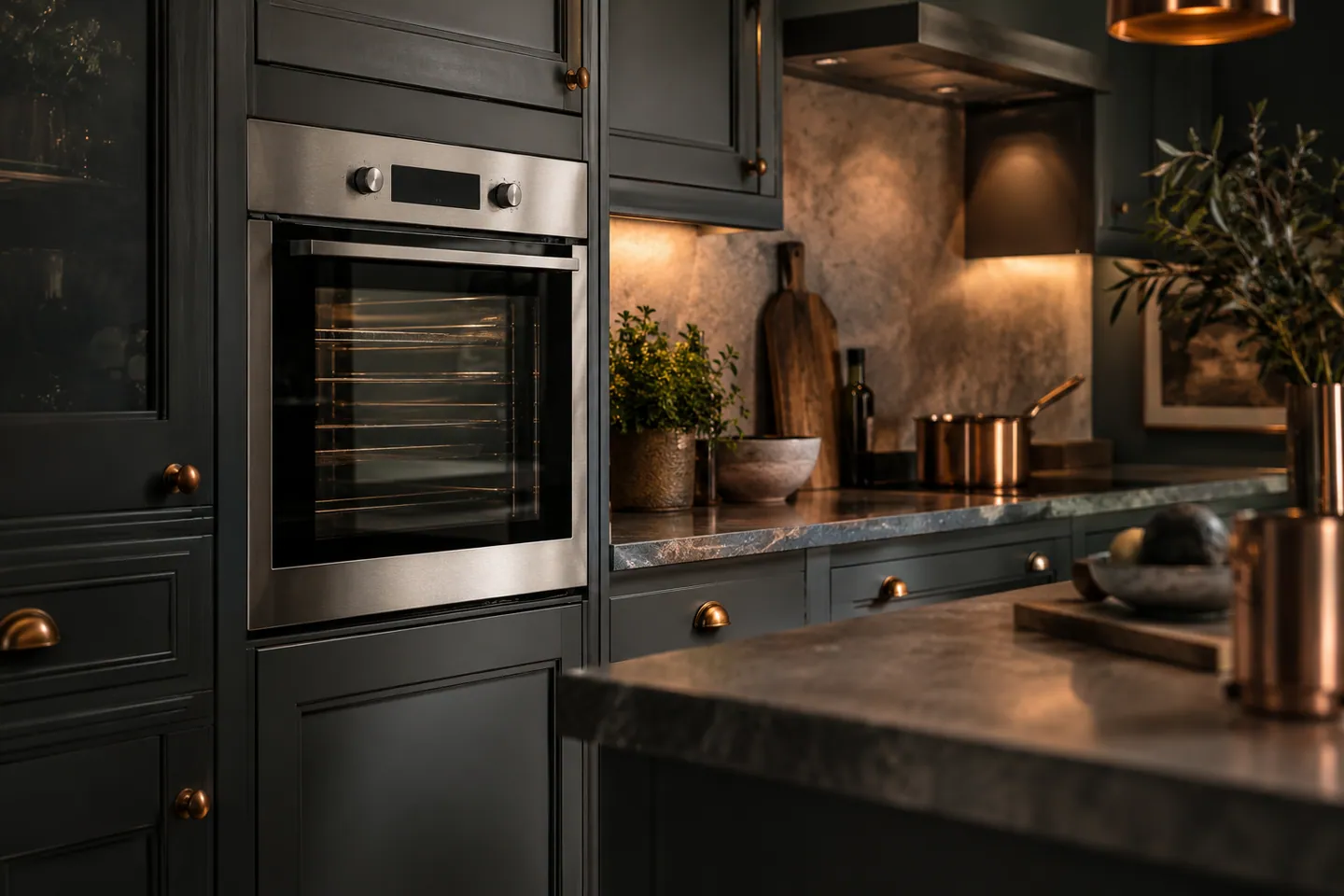
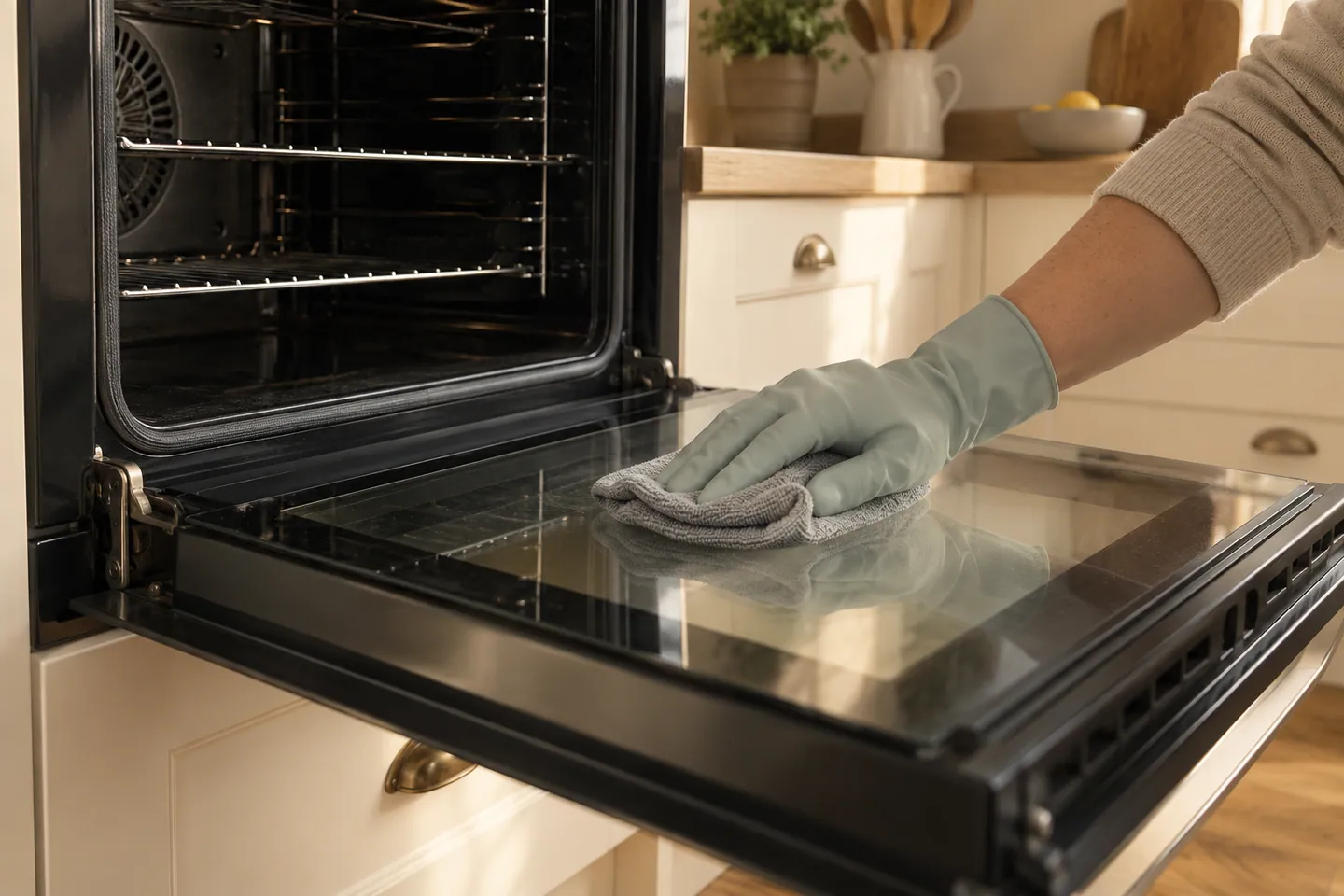
A new-to-you oven does not always need a deep clean
Acquiring an oven is a useful moment to learn its care instructions, but the date alone does not say how dirty it is. A lightly marked tray or fresh splash may be manageable with the method in the manual. Look at the cold cavity, glass and fittings before deciding whether you want professional help, and identify the part that routine care is not addressing.
We serve Chalk Farm through our London oven cleaning service. Tell us the full postcode, model where known and the work you want quoted. You can describe one concern without claiming the whole appliance is heavily soiled; an honest account helps keep the request proportionate to its condition.
Make the ordinary-care decision on the actual surface
Check the manual for the material you are looking at. A removable coated tray, exposed glass and a specialist liner need their own instructions, even if all carry only a small amount of residue. Use the permitted routine method rather than escalating to scraping because you want every mark gone before the first meal.
If a mark does not change, reconsider what it might be before repeating the same effort. It could be staining, wear or residue in a position you cannot normally reach. Less residue can mean less work is needed, while one troublesome area may still justify asking for help. Describe that area so the quotation can answer the need rather than the age of your ownership.
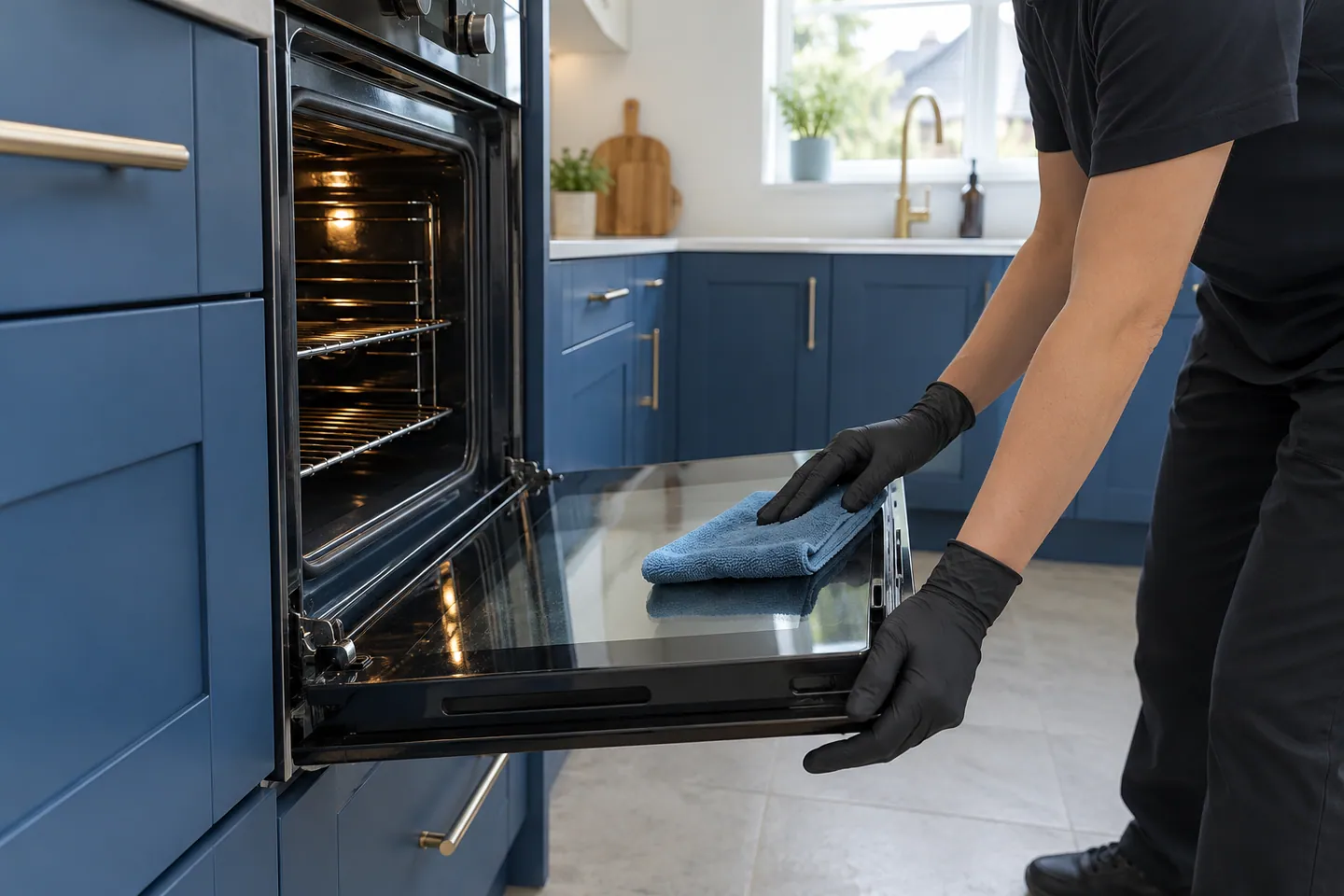
Check the quieter spaces as well as the obvious one
Count cooking chambers and a separate grill, then look at each space you may want included. A tidy main cavity does not reveal the condition of a smaller compartment or accessories stored in a drawer. The layout helps you make a complete decision without automatically requesting every possible task.
| Configuration | What to distinguish | Useful detail for a quote |
|---|---|---|
| Single oven | One chamber may need only a tray or glass concern described. | List the components you want considered rather than the number of settings. |
| Double oven | A second space can have different residue and use. | Tell us which compartments need attention after you have checked both. |
| Range cooker | Several ovens and a grill may vary in condition. | Name the cooking spaces requested and distinguish storage from heated chambers. |
The hob may need a different level of attention. Request hob cleaning separately if wanted and identify its surface. That lets you choose appliance work by condition rather than assuming a recently acquired cooker requires one all-inclusive package.
What we do when professional cleaning would help
If ordinary care has left a stubborn rack, marked glass or residue in the cavity, tell us which part needs help. We clean the reachable oven surfaces and suitable removable fittings you request, with internal glass access checked against the door design. Mention specialist liners, a self-cleaning feature or a separately bought accessory so we can account for that component before quoting.
Cleaning is not a technical assessment of a recently acquired appliance and does not renew damaged enamel, glass or coatings. Report known faults separately and seek appropriate advice for operating concerns. After the visit, review the requested parts and ask about any remaining mark so ordinary care can focus on new deposits rather than stable wear.
Prepare for help without doing extra treatments
Let the oven cool completely and remove food, unrelated cookware and stored belongings. Keep the requested shelves and trays available. Clear room at the open door and leave fixed panels and glass assembled. There is no need to run a special programme or apply another product simply because a professional visit is approaching.
If you have already used something, tell us what and when. Arrange entry and mention practical restrictions. Other room surfaces need their own request through kitchen deep cleaning; choosing oven cleaning does not mean every cupboard or worktop in the newly organised kitchen needs the same attention.
Use the price to decide on the work you want
Published guides are £50–£75 for singles, £75–£100 for doubles and £100–£130 for ranges. Ask for the Chalk Farm total using the model, condition and components requested. Check what is included, VAT treatment and any relevant parking or access costs rather than assuming a lightly marked appliance has a particular discount.
Extractor cleaning has a separate £25–£40 guide. Some oven visits take around one to two hours, but the actual appliance and additions affect the allowance. Discuss timing and next-use advice before arranging meals or another commitment around the appointment; a small visible mark does not establish an exact completion time.
Looking closely before choosing a fuller clean

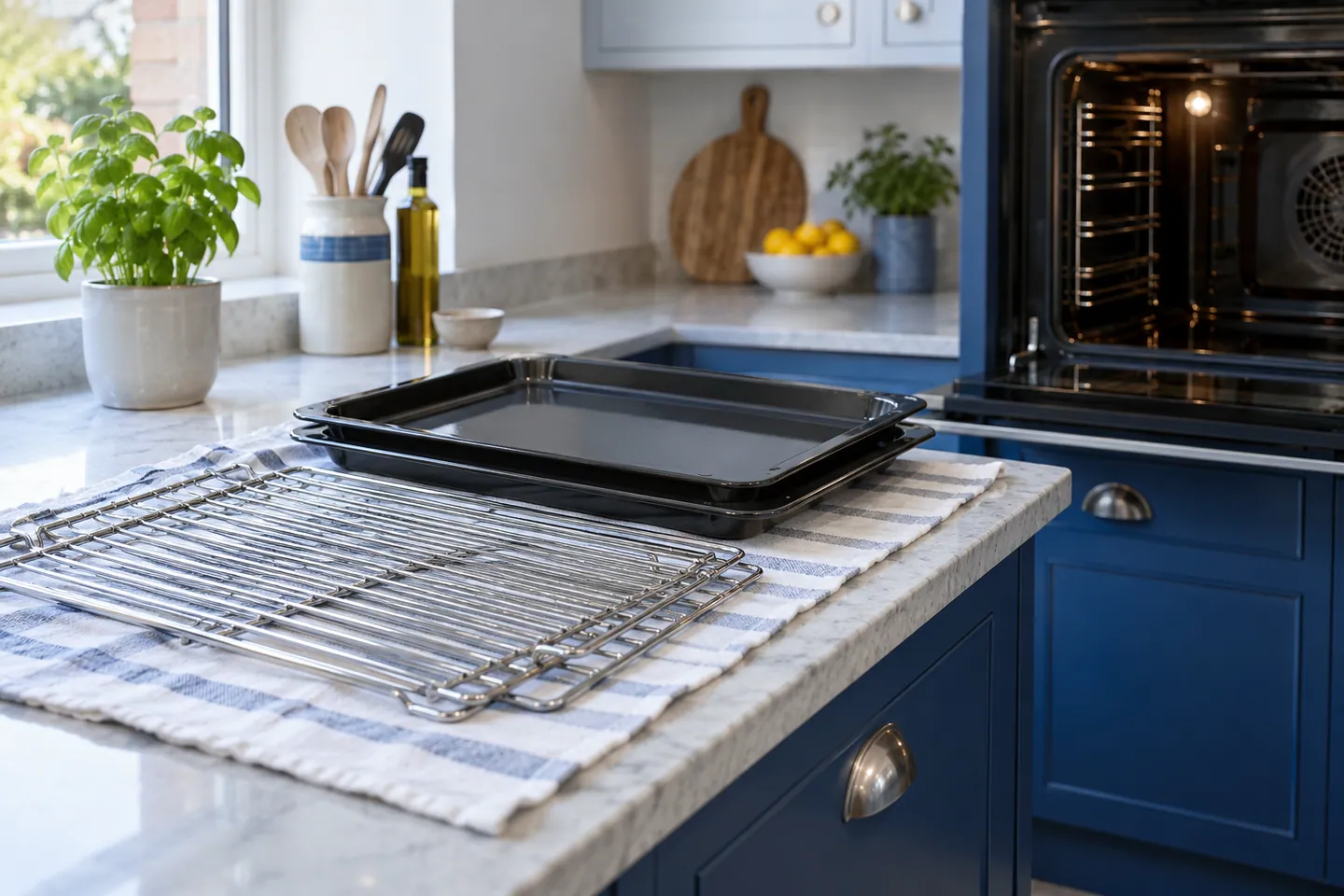
Let a modest routine protect the starting condition
Once surfaces are cool, deal with suitable fresh spills and check trays before storing them. Follow the instructions for coated pieces and leave ventilation clear. Use foil or liners only in positions the manufacturer permits. These ordinary tasks help you see which deposits you can manage and when you would value more help.
There is no need to set a professional-cleaning interval from the day you acquired the oven. Review what builds up under your own cooking instead. The daily oven-care article offers general habits alongside the model manual, keeping care connected to actual use rather than an arbitrary calendar.
Questions about light residue and when to ask for help
Must I book immediately after acquiring an oven?
Decide from its present condition and your needs, not ownership dates alone. Check the manual and ordinary-care options, then tell us about any deposits or areas that still concern you.
What if a small mark will not shift?
Describe its position and the material, with the model if possible. Repeating a harsher method is not always useful; the mark may be staining, wear or an area with limited access.
Can I ask about only one concern?
Yes. Explain it clearly, while identifying the appliance and requested components. We can discuss the work and price without assuming every visible surface has the same level of residue.
Does little residue prove the oven works correctly?
No. Clean appearance and operating condition are separate matters. Report symptoms and arrange appropriate appliance advice where needed instead of treating cleaning as a technical check.
Should I book future visits on a fixed cycle?
Use the deposits left by your cooking as the guide. Routine care and accessory washing can vary between parts, so one timetable need not suit every oven or household.
Nearby area guides
Find the right locality in our service areas directory, or explore these nearby guides for another address.
Discuss an oven clean in Chalk Farm
Call with the address, appliance details and work you want included to arrange a suitable appointment.