
Aldgate / The service guide
Oven Cleaning Aldgate
Choose an oven clean by looking at what needs attention, rather than choosing a package by its name alone. This Aldgate guide helps you separate appliance types, suitable cleaning work and optional extras, then prepare the details needed for a useful quotation.
- Compare the cavities and fittings that need attention
- Separate removable deposits from changes to the finish
- Use the quote to organise a clearly defined visit
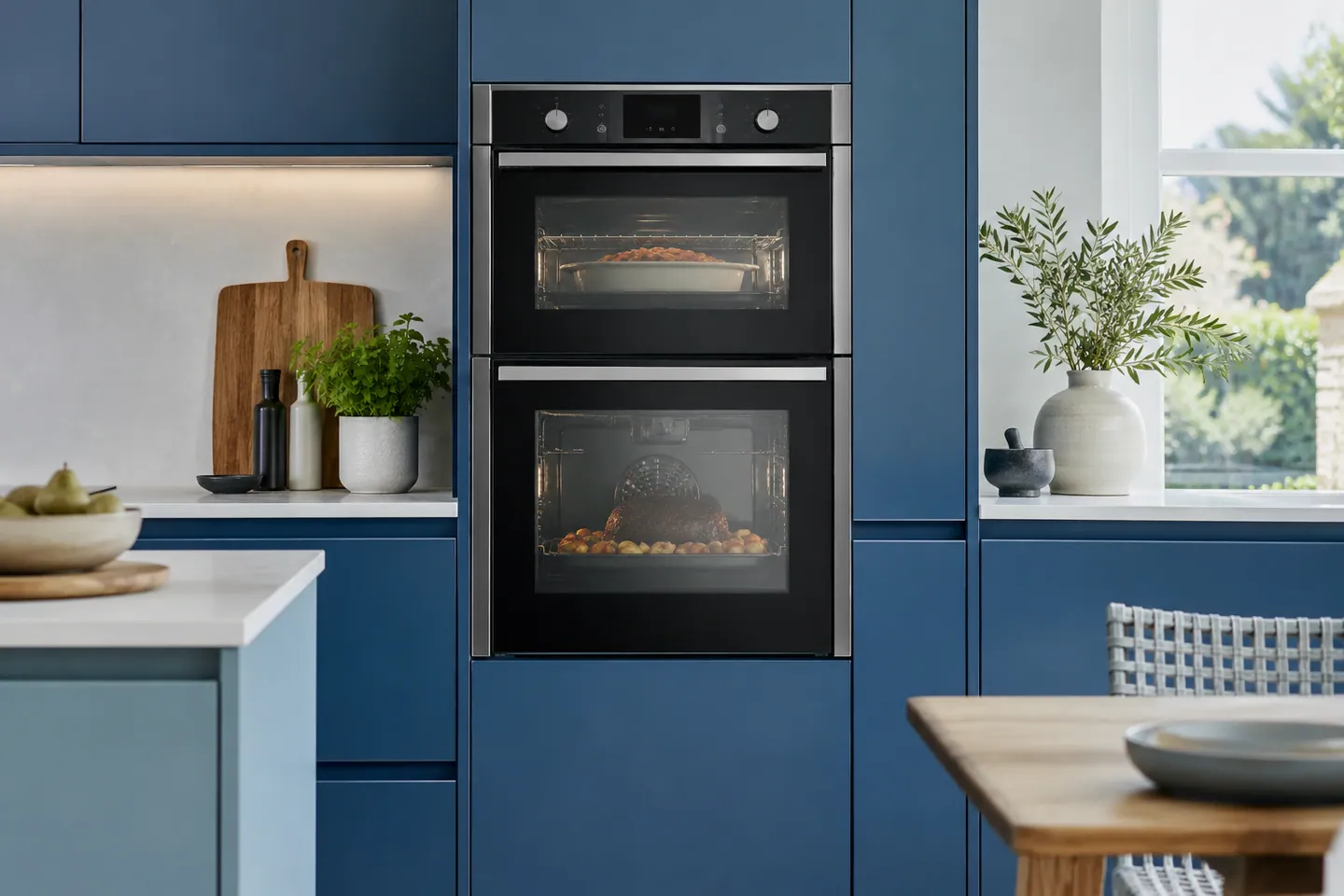
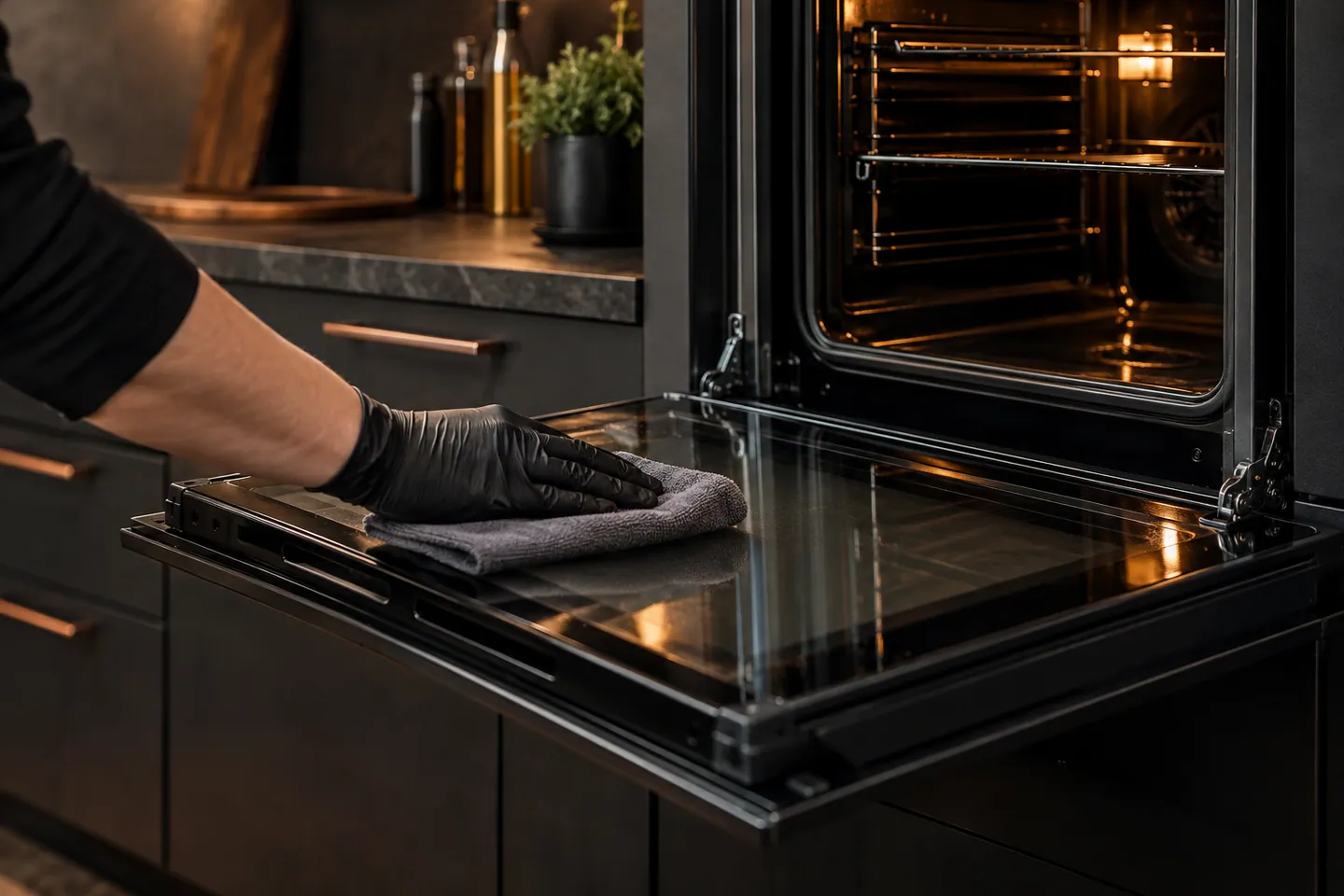
Begin with the parts you want to use comfortably
A dirty shelf, obscured door glass and residue on the oven floor can be three different reasons to seek help with the same appliance. You do not need to decide how each will be treated before making an enquiry. A description of where the deposits sit, how the oven is arranged and what matters most to you gives the conversation a useful direction.
For an Aldgate address, John’s Oven Cleaning can discuss the oven cleaning service alongside the model and its condition. London coverage is available; agree a suitable appointment for the particular property when you call. If a cabinet hides the model label, describe the cavity layout and accessible fittings instead of pulling the appliance out to investigate.
Read the deposits before choosing the work
Food residue on a roasting tin is different from a change in the enamel beneath it. Likewise, a hazy door may have deposits on an accessible glass surface or marks in a space that requires model-specific access. Point out the location without labelling every dark patch as removable grease. The cleaner can then discuss the surfaces and components that can reasonably form part of the job.
A useful result is an appliance with the agreed suitable surfaces and fittings cleaned, plus a clear explanation of what remains. Cleaning removes suitable deposits; it does not renew a damaged finish. If you have a concern about a particular mark, make that part of the initial conversation so the expected outcome is understood before work begins.
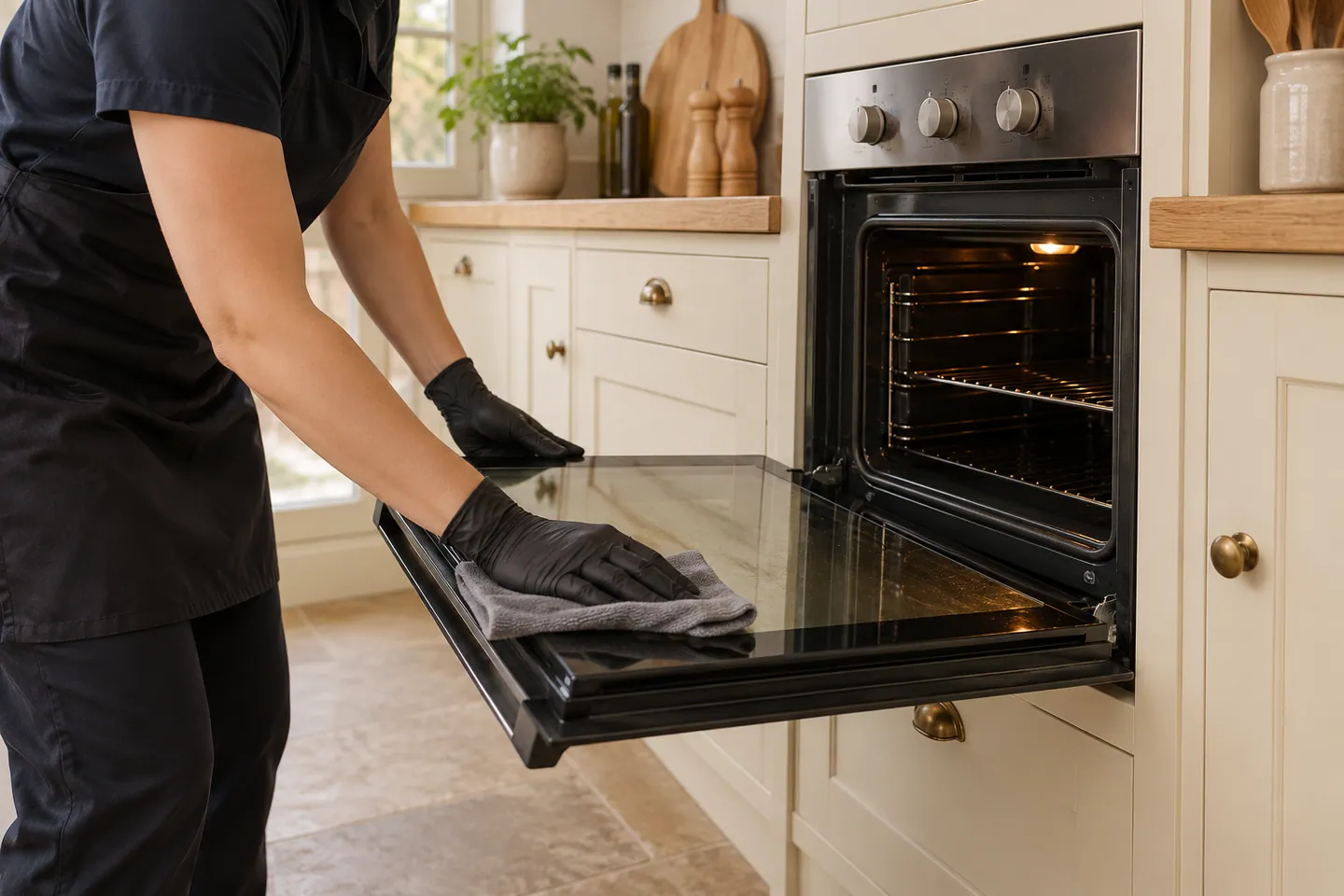
Compare the layout, not just the outside width
Use the table to describe your appliance. The headings identify common configurations; the actual model and the work agreed determine the quotation.
| Configuration | What to distinguish | Useful detail for a quote |
|---|---|---|
| Single cavity | One cooking chamber, sometimes with a shared grill | Identify the grill arrangement and list shelves, runners and trays. |
| Double oven | Two chambers that may be used very differently | State which cavities and accessories you want included, even when one is used infrequently. |
| Range cooker | Several possible cavity, grill and storage arrangements | Count cooking compartments separately from storage drawers, then ask about each additional appliance. |
An oven and a hob can share a cooker housing while still needing separate cleaning work. If the cooking surface also needs attention, request a quote for the hob and describe its material. Treat extractor work as another item to discuss, rather than an automatic part of a range cooker booking.
An agreed scope makes the finished job easier to review
Suitable accessible cavity surfaces, door glass and removable shelves or trays can all be discussed at quotation stage. The exact list matters more than a broad phrase such as ‘the whole cooker’. Mention telescopic fittings, unusual liners and any accessory that was not supplied with the appliance. Their design and condition can affect whether the same treatment is appropriate.
Before the appointment, ask which door components can be accessed and whether any planned disassembly is suitable for the model. Replacement parts and repairs require a separate arrangement. A heater that does not work or a damaged seal should be reported as an appliance issue. Including a clean in your plans does not resolve a mechanical fault or authorise work on connections.
Prepare the kitchen without preparing the chemicals
Let the oven become fully cold and remove food from the work area. Move loose belongings away from the approach and keep enough room for the door to open. If you need help arranging entry, settle that when booking so the person present can identify the oven and explain any relevant condition information.
Leave fitted parts in place unless a specific preparation has been agreed. Do not apply an additional product just before the visit. If a treatment has already been used, name it and explain when. For a larger job, describe the additional surfaces when enquiring about a separate kitchen clean; the oven appointment alone does not define that wider work.
Turn a guide price into a quote for your appliance
Use the published guides as a starting budget: single ovens £50–75, doubles £75–100 and range cookers £100–130. Extractor cleaning has a separate guide of £25–40. These bands describe different work, so check the total for the combination you actually want. Explain the model, cavities, accessories and condition, then ask what the quotation includes.
Timing needs the same practical approach. Around one to two hours is a typical oven-cleaning guide, with the actual allowance influenced by the appliance and scope. If you have a fixed commitment afterwards, mention it while arranging the visit. Discuss address access and any applicable charges at the same time, rather than leaving them out of the booking conversation.
A closer look at the surfaces and fittings


Keep a small record of what needs attention next
After the work, ask about any marks that remain and the advice for cooking again. Then follow the manual for routine care of that particular model. Once the oven is cold and safe, attend to suitable fresh spills and check trays as well as the cavity. A clean-looking door does not tell you whether an accessory has fresh food residue.
Base the next professional enquiry on what builds up with your cooking. Noting whether the problem returns on glass, shelves or the oven floor gives you a better description than simply calling the appliance dirty. It also helps distinguish new deposits from stable cosmetic marks that cleaning has already been unable to change.
Questions to help define the job
What if I only notice one troublesome area?
Describe it first, but also identify the rest of the oven and the parts you want included. A concentrated problem on one tray or glass panel does not, by itself, define the full job or a separate price.
Does a cooker drawer count as another oven?
Some drawers provide storage and others have a cooking or warming function. Explain the actual arrangement, using the model information where available, so the quoted work does not rely on an assumption about its purpose.
Should I supply a cleaning product I already own?
Ask before planning to do so. Name any product recently used on the appliance. Suitable treatment depends on the surfaces and existing residues, not simply on which bottle happens to be available in the kitchen.
Can the clean include accessories from another appliance?
Mention each item before booking, especially if its coating or origin differs. The cleaner needs to consider suitability and include any agreed additional work in the quote rather than treating every loose tray as part of the oven.
How can I make an Aldgate enquiry more useful?
Call 020 3404 4096 with the full postcode, cavity layout, relevant condition details and preferred timing. State the result you want to discuss, then confirm the work, total price and appointment arrangements.
Aldgate and nearby area guides
Find your locality in the service areas directory. These nearby pages can also help with an enquiry for another address in London.
Talk through the appliance and the work
Call with the Aldgate postcode and oven details to agree the next steps for your booking.